
8 Apple Blossom Tattoos to Inspire Your Design
You're probably in the same spot many clients are in when they first bring up apple blossom tattoos. They love the softness of the flower, but they haven't decided what role it should play yet. Should it be a tiny fine-line bloom on the wrist, a branch that follows the forearm, a painterly color piece, or something more symbolic with dates, initials, or orchard imagery?
That choice matters more than most might expect. The strongest apple blossom tattoo isn't the one that looks best in a reference photo. It's the one that fits the skin space you have, carries the meaning you want, and holds up in a way you're comfortable maintaining. A delicate pink blossom can feel perfect on day one and still be the wrong build if you want long-term clarity with minimal touch-ups. A larger branch can solve that problem, but only if you want the visual presence that comes with it.
Apple blossoms already carry a long symbolic history tied to love, desire, renewal, hope, seasonal change, and the tension between promise and fragility, which is part of why the motif keeps showing up in modern tattooing and not just in folklore or myth (apple blossom symbolism and tattoo history).
The eight ideas below are organized to help you make an actual decision, not just collect inspiration. Each one translates style, scale, placement, and meaning into the kinds of questions worth answering before you book. If you want help narrowing it down, Think Tank Tattoo offers complimentary consultations to refine style, placement, sizing, and timing.
Table of Contents
1. Minimalist Single Blossom
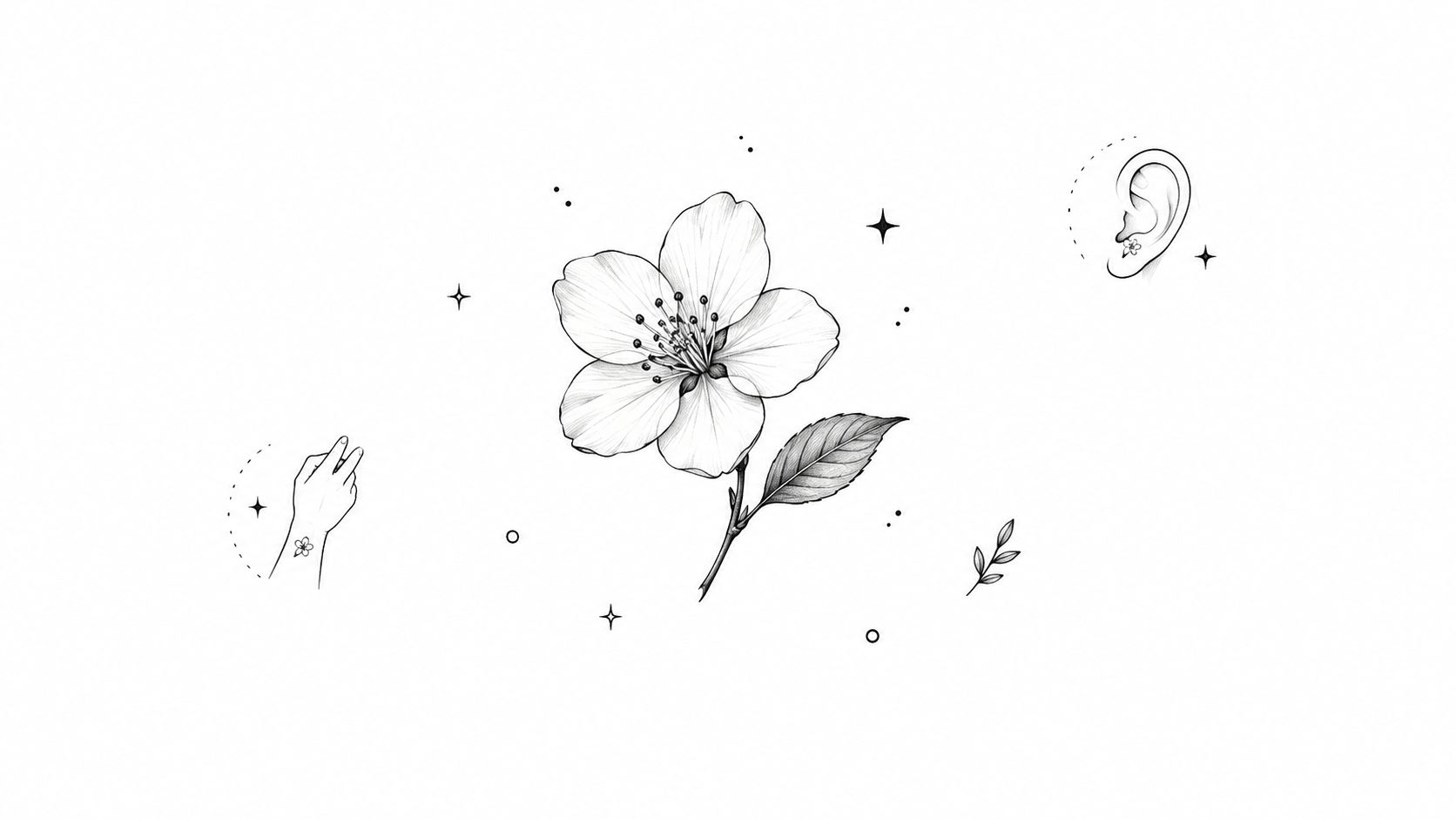
A single blossom works best when you want restraint, not empty detail. This is the version many first-time clients gravitate toward because it reads softly, fits small placements, and doesn't demand a large commitment of skin. Done well, it can look clean and intentional on the wrist, inner ankle, or just behind the ear.
The trade-off is durability. Tiny petals, very light lines, and open interior space can soften quickly if the design is pushed too small. Apple blossom tattoos in a minimal format need enough room for the five-petaled structure to stay readable after healing and normal wear.
Best way to plan it
Ask one practical question before anything else. Do you want this tattoo to whisper or to last with less maintenance? You can have subtle, but subtle still needs structure.
A minimalist blossom usually works better when the artist builds it with slightly stronger line weight than the client first imagines. That doesn't make it look heavy. It gives the flower a backbone.
Practical rule: If a petal edge only works when it's viewed up close on a phone screen, it's probably too delicate for the size you chose.
For placement, small doesn't mean any spot will do. Areas with enough flat skin tend to keep the blossom shape cleaner than highly compressed or constantly rubbing spots.
Wrist placement: Good if you want visibility, but expect more exposure to daily wear and sunlight.
Behind the ear: Elegant, but tiny work here needs disciplined sizing so it doesn't blur into a soft shape.
Inner ankle: Nice for a discreet design, though friction from socks and shoes can make aftercare less forgiving.
This is also a good format if you want to pair the flower with something secondary, like a meaningful date or coordinates. Just don't cram too much into the same tiny footprint. A blossom with one companion detail usually ages better than a blossom trying to carry text, numerals, and decorative extras all at once.
Here's the kind of reference that helps at consultation stage:
2. Japanese-Inspired Apple Blossom Branch
A client usually chooses a branch piece for one reason. They want the tattoo to move with the body, not sit like a sticker in one spot.
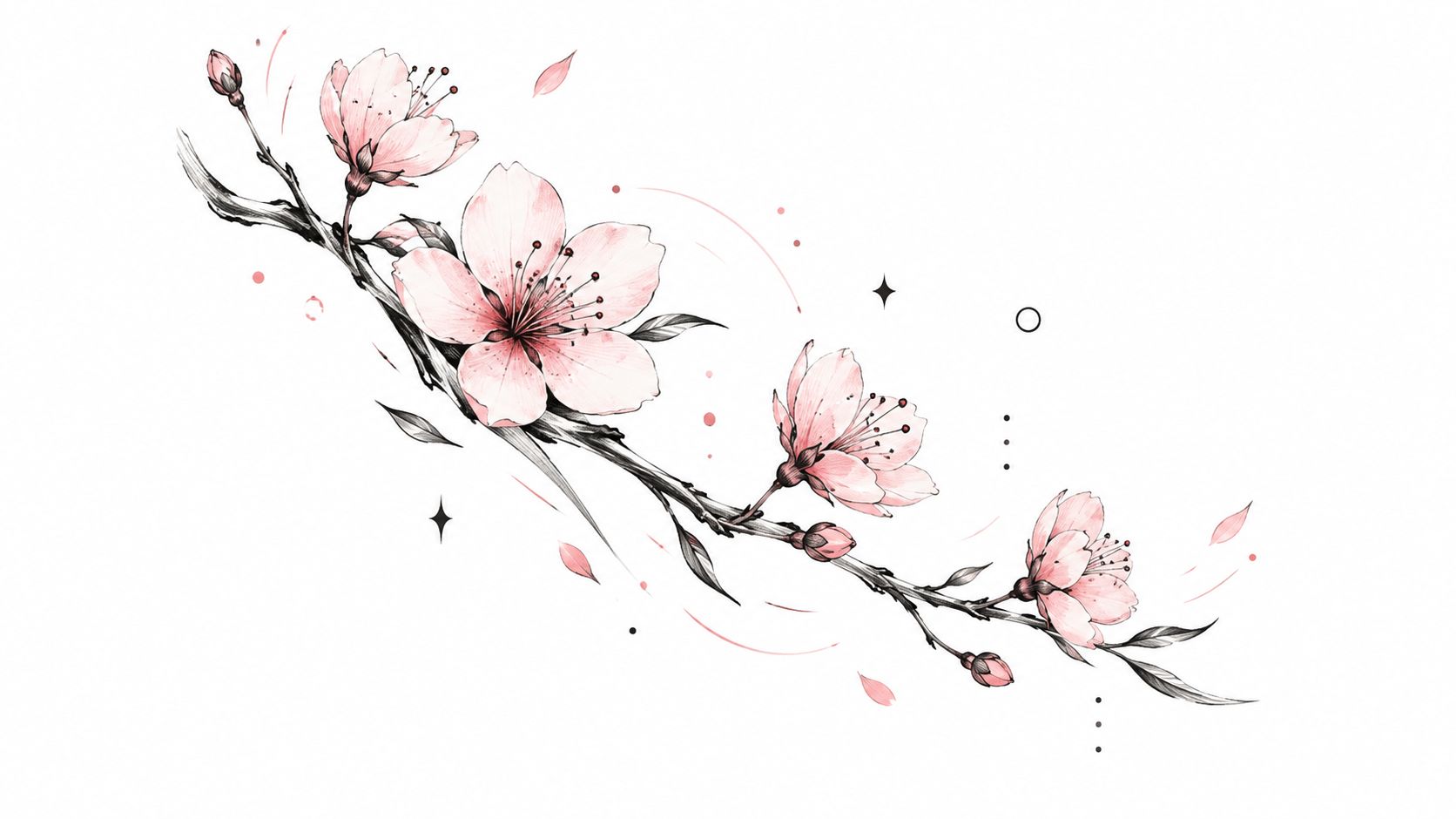
That changes the planning. With a Japanese-inspired apple blossom branch, the branch line does as much work as the flowers. It sets direction, creates breathing room, and determines whether the piece feels calm, dramatic, or crowded. Apple blossoms can borrow the spacing and flow people like in sakura cherry blossom tattoo ideas, but the goal is adaptation, not imitation. Apple blossoms are fuller and more rounded, so the design needs a slightly different rhythm.
The first decision is artistic treatment. Some clients want brush-like movement with simplified petals and a strong silhouette. Others want more botanical clarity so the flower still reads clearly as apple blossom, even from a few feet away. Both can work. The trade-off is readability versus atmosphere. The more stylized the piece becomes, the more important stem placement, petal spacing, and negative space become.
Placement matters just as much as style here, because the branch has to travel somewhere.
On the forearm, a gentle diagonal usually reads better than a straight vertical line. On the shoulder cap or upper arm, the branch can wrap and taper with the muscle shape. On the calf, I'd plan for a narrower top and a softer spread lower down so the design doesn't look cut off when the leg turns. This is one of those concepts where a stencil check from multiple angles saves problems later.
Meaning fits into this format naturally if you plan it through bloom stages instead of extra symbols. A few buds can mark a beginning. Open blossoms can represent a relationship, a child, recovery, or a season that changed your life. If you want the piece to feel reflective rather than decorative, ask yourself a better consultation question: do you want the branch to show growth, memory, or resilience? That answer affects the spacing, number of blooms, and even whether the branch looks fresh or weathered.
A short consult for this style usually comes down to four choices:
Flow: Do you want a soft curve, a wrap that follows the limb, or a more upright branch with a formal look?
Scale: Should it read as a slim accent from a distance, or a fuller composition with room for buds, leaves, and negative space?
Color approach: Black and gray usually holds structure longer. Limited pink accents can work if you accept more maintenance from sun exposure over time.
Density: Scattered blossoms feel quieter. Clustered blossoms feel richer and more decorative.
Clients often try to add too much to branch work because the layout looks spacious on paper. Skin uses space faster than people expect. Leaving open areas between blossoms is what gives this style its control.
Bring references for mood, line flow, and placement on the body. Let the artist draw the branch for your anatomy instead of copying someone else's blossom map. That is usually the difference between a branch tattoo that feels composed and one that feels pasted on.
3. Watercolor Apple Blossom Cluster
A watercolor cluster fits the client who wants the tattoo to read like a wash of spring color first, flower study second. Apple blossoms do well in that treatment because their soft pinks, whites, and light greens already have a natural fade at the edges. On skin, that can look beautiful across the shoulder cap, upper thigh, collarbone area, or upper chest where the body gives the composition room to spread.
The trade-off is readability over time.
Watercolor pieces age best when they are designed with structure underneath the softness. Pale petals without any darker reference points can blur into one another as the tattoo settles and as sun exposure breaks color down. If a client brings me this idea, I usually ask two planning questions early: do you want the cluster to feel airy and abstract, or clearly floral from a few feet away? And are you choosing watercolor for the motion of it, or just for soft color? Those answers change the design.
A stronger version of this concept usually includes a few quiet anchors:
a darker center in some blossoms
light linework in select petals or leaves
stems or buds that hold the composition together
negative space between blooms so the cluster does not turn into one pink cloud
If you are comparing references, study watercolor tattoo style examples with healed results in mind. Fresh photos show the bloom of the color. Healed work shows whether the composition still reads.
Placement matters more here than in harder-lined floral work. Ribs, upper arm, back, and thigh usually protect delicate color better than hands, forearms, or ankles. Scale matters too. A tiny watercolor cluster often loses its painterly effect because there is not enough room for soft transitions. A medium piece usually gives better results.
This style also carries a different kind of meaning. A branch tattoo can suggest direction or growth. A watercolor cluster feels more emotional and atmospheric. It suits clients who want to mark a season, a relationship, or a memory without spelling it out through obvious symbols.
Go into the consult ready to choose three things: how loose you want the edges, how much hidden structure you are comfortable with, and whether you are willing to maintain softer color with careful sun protection and possible touch-ups later. That makes watercolor a planned decision, not just a pretty reference.
4. Botanical Line Drawing with Latin Names
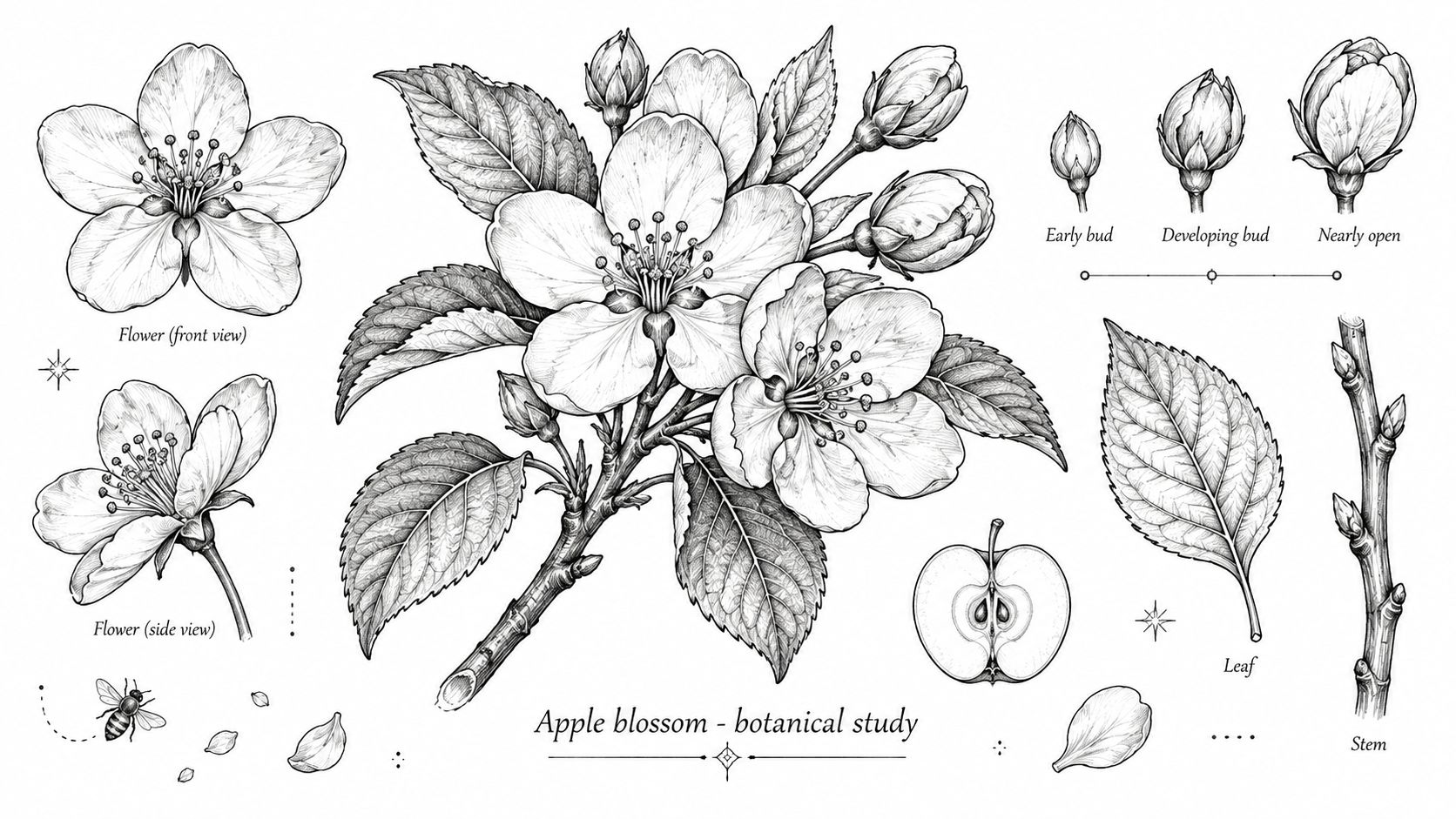
This is for the client who wants the blossom to feel observed, not stylized. A botanical line drawing treats the flower like a specimen. You can include buds, open blooms, leaves, stem structure, or even different growth stages, then pair the piece with Latin nomenclature for a cleaner academic feel.
It works especially well on the forearm, calf, outer upper arm, or along the side of the torso where the design can breathe vertically. Black ink is usually the strongest choice here because the appeal comes from precision, not painterly color.
Why this format feels different
A botanical tattoo tells people you chose the plant on purpose. That matters if your connection is to orchards, a family tree, a specific place, or a more scientific love of plant life. It also solves a common problem with floral tattoos, which is that many flowers become visually interchangeable once they're simplified too much.
One industry summary discussing tattoo demand also pointed to the scale of floral visibility online. A 2020 Instagram hashtag analysis listed rose tattoos at 3,482,229 posts, peonies at 649,000 posts, and hibiscus in the tens of thousands, while the same summary reported that about 32% of American adults have at least one tattoo, 22% have multiple tattoos, and the global tattoo market was valued at USD 1.95 billion in 2023 with a projection to reach USD 4.49 billion by 2032, implying a 9.7% CAGR (tattoo market and floral visibility summary). Apple blossoms aren't isolated in that data, but it shows the scale of competition and why a more distinctive treatment can matter.
A botanical treatment is often the difference between “pretty flower” and “specific flower with a reason.”
Before booking, decide whether you want strict realism or a cleaner hybrid. Strict specimen layouts can look beautiful, but they need space. If you also want Latin names, don't tuck them into a size that forces the lettering to compete with the petals.
5. Apple Blossom with Meaningful Symbolism Integration
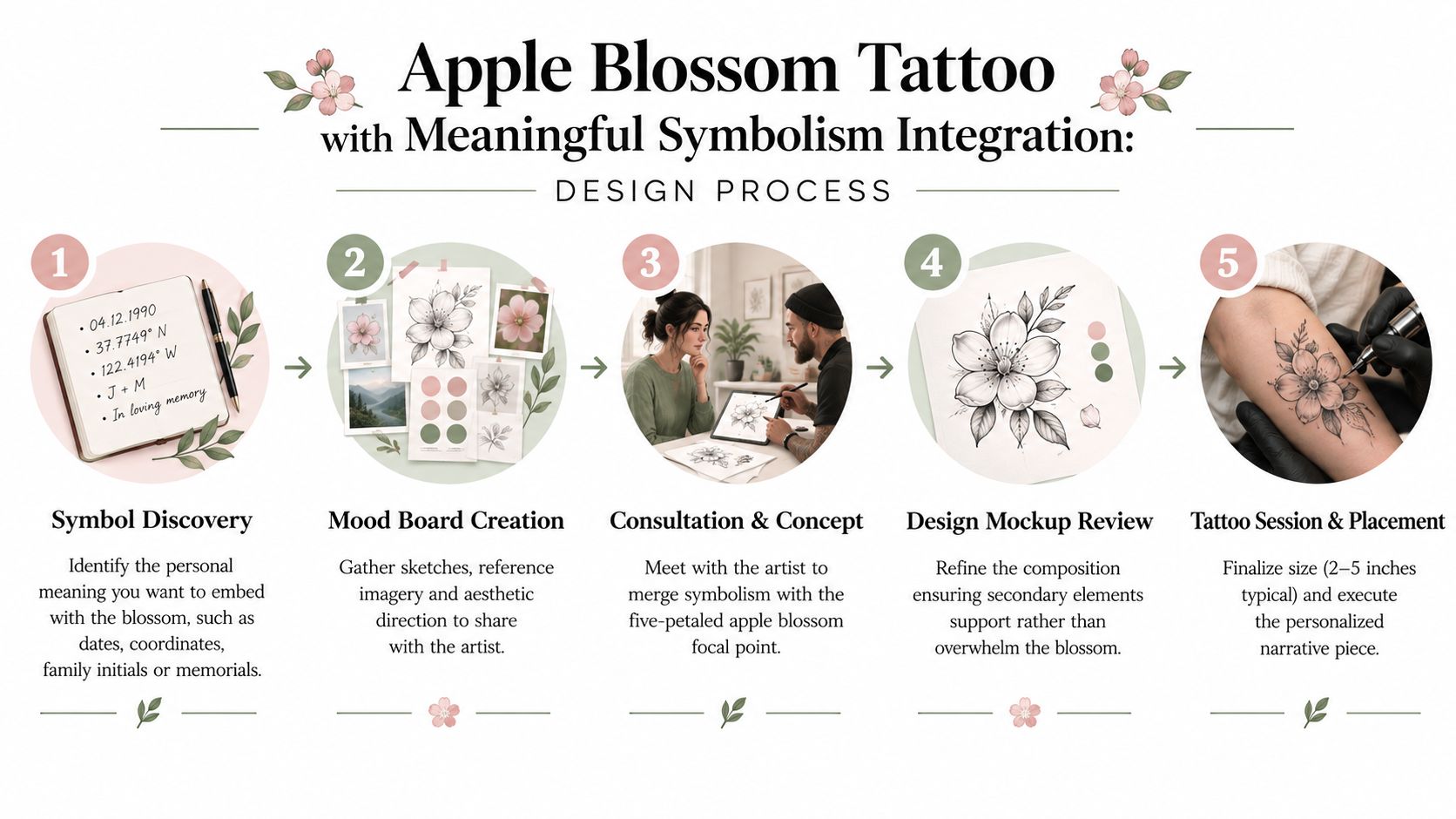
A client usually realizes this style is harder than it looks the moment they try to describe it. They want an apple blossom tattoo for a person, a loss, a family line, a place, or a turning point. Then they add dates, initials, fruit, birds, handwriting, and a quote, and the design starts pulling in five directions at once.
The fix is simple. Pick the meaning first, then choose the symbols that support it.
Apple blossoms already carry a built-in mood of growth, fragility, and transition. Personal symbolism works best when it sharpens that message instead of competing with it. A birth date woven into a branch can feel intimate. Coordinates can anchor the piece to a hometown or orchard. A single developing apple changes the story from bloom to continuation. Even small choices like an open gate, a fallen petal, or a broken twig shift the emotional read.
The consultation question I would ask first is: what should someone understand from this piece without reading an explanation?
That answer affects the whole plan. If the meaning is private, keep the symbolism quieter and let the blossom stay dominant. If the tattoo is meant to clearly honor a person or event, text or recognizable reference points may need a more visible role. Neither approach is better. They just age and read differently.
A useful way to sort the concept is by decision type:
Personal meaning: Is this about remembrance, recovery, family, faith, or heritage?
Artistic treatment: Should the symbols be obvious, or tucked into the composition so the tattoo still reads as a floral piece first?
Scale: Can the idea stay clear in a small design, or does it need enough room for separate elements to breathe?
Placement: Will this sit somewhere people see often, like the forearm, or somewhere more private, like the ribs or upper thigh?
Existing symbolism writeups often reduce apple blossoms to broad ideas like love or renewal, but a more layered reading can also support themes of tenderness, uncertainty, and early-stage change, as discussed in this apple blossom symbolic interpretation. That matters during design planning, because a memorial piece, a fertility piece, and a recovery piece should not all be drawn the same way.
Here is the practical trade-off. Every added symbol asks for space, hierarchy, and line weight. If you want one blossom for each family member, plus initials and a date, the composition can tip into clutter fast. In that case, I would usually simplify the floral count or move the tattoo to a placement that gives the story room to read cleanly.
Written notes help more than a crowded screenshot folder. Two or three sentences about who or what the tattoo represents will usually give the artist better direction than ten references that do not agree with each other.
6. Large-Scale Apple Blossom Back or Chest Piece
A large apple blossom piece usually starts with a specific frustration. The client wants petals that stay soft, branches that read like branches, and enough room for the tattoo to feel intentional instead of packed tight. Back and chest placements solve that, but they also ask for more planning up front.
The first decision is artistic treatment. Do you want a broad floral sweep across the upper chest, a back panel with open skin between branches, or a wrap that moves from shoulder into pectoral or scapula? Those are different tattoos, not small variations of the same idea. One reads decorative and body-aware. Another reads narrative, almost like a botanical scene.
Large scale also changes personal meaning. A single blossom can carry a quiet message. A chest or back composition can show stages of bloom, broken and regrowing branches, fruit buds, or seasonal contrast. If the piece is tied to recovery, family, or a major life shift, ask yourself one practical question before the consultation: do you want the story readable at a glance, or do you want it embedded in the composition for people to notice slowly?
Scale brings real advantages, but it also exposes weak planning. On a big piece, empty areas, awkward symmetry, and rushed filler stand out fast. That is why I prefer to map these designs by body movement first, then place blossoms second. On the chest, collarbones, sternum, and shoulder caps affect flow. On the back, spine line, shoulder blades, and how low the design drops matter just as much as the flowers.
A consultation for this kind of tattoo goes better if you arrive with answers to four decisions:
How much coverage feels right: Upper chest only, half back, shoulder wrap, or full back panel.
How visible you want it day to day: Chest pieces interact with necklines and open shirts. Back pieces stay more private.
Whether you want one-session impact or staged work: Large floral tattoos are often built over multiple appointments.
How much detail you want to maintain long term: Fine petal veining and soft color transitions can look beautiful, but they need enough spacing to age well.
Placement changes the trade-off. A back piece gives the artist the most room for branch structure, spacing, and depth. A chest piece keeps the tattoo closer to the heart and can feel more personal, but it has to work with the center line of the body and can look stiff if the design is mirrored too perfectly. Shoulder-to-chest wraps are often the best middle ground if you want movement without committing to a full panel.
Softness is easier to preserve at this size. Petals can overlap without blurring together, and the design can breathe. The trade-off is time, cost, and healing commitment. Large work usually means longer sessions, more tenderness afterward, and a stronger need to protect the tattoo from friction, sweat, and sun while it settles.
7. Delicate Apple Blossom Sternum or Ribcage Design
A client usually chooses the sternum or ribs for one of two reasons. They want the tattoo to feel private, or they want the design to move with the body instead of sitting flat on it. Apple blossoms do that well because a blossom, bud, and short branch can follow the center chest or sweep along the rib line without looking forced.
This placement rewards restraint. Too much detail turns muddy fast. Too little structure can make the tattoo look scattered, especially once the body shifts with breathing, twisting, and posture.
The first decision is artistic treatment. A sternum piece often works best with a controlled shape, such as one central blossom with two smaller blooms or a narrow branch that tapers cleanly. Rib placements usually tolerate more asymmetry. They can climb, arc, or drift slightly, which gives the flower cluster a softer feel.
Scale matters more here than many clients expect. If the blossom is meant to read as delicate, it still needs enough room between petals to hold up over time. On ribs and along the underbust, I would rather simplify petal count than shrink the whole design until it loses clarity.
Use the consultation to answer practical questions, not just style questions. Ask:
Do you want symmetry or flow: Sternum designs look stronger when the center line is intentional. Rib designs usually look better with movement than strict balance.
Will this area stay mostly private or show with swimwear and lower necklines: That affects how high or low the branch should sit.
Do you want fine-line softness or slightly bolder outlines: Fine lines can look beautiful here, but a little more definition often ages better on high-motion skin.
Can you protect the area while it heals: Tight bras, compressive tops, waistbands, and sleep position all matter with these placements.
An independent tattoo guide notes that fine details and delicate color need careful aftercare and steady sun protection, while surface healing takes about 2 to 4 weeks and deeper healing can take up to 6 months (apple tattoo healing and longevity considerations). On the sternum and ribs, that usually means planning around friction before the appointment, not after.
Pain tolerance should also be part of the design brief. The sternum and ribs are sensitive for many clients, so longer branchwork with repeated passes may be harder to sit through than a compact blossom cluster. If someone wants a very delicate tattoo in this area but has a low tolerance for long sessions, a simpler composition usually gives the better result.
A good version of this tattoo feels intentional at rest, in motion, and in clothing. That is the standard to aim for.
8. Colorful Apple Blossom with Realistic Detail
If you want the blossom to feel almost touchable, realism is the path. Soft petal transitions, pale pink edges, subtle green leaves, and natural depth can make the flower look three-dimensional in a way simpler styles won't. This is usually strongest on the upper arm, thigh, calf, or shoulder, where the artist has enough room to model form instead of flattening it.
Realistic color apple blossom tattoos are beautiful when the artist respects one basic truth. The lightest tones can't do all the work.
For a look at how artists approach this kind of finish, color realism tattoo examples are useful reference points during consultation.
Color choices that age better
Expert color-theory guidance ranks black as the most stable tattoo pigment, with dark blue or navy and dark green also highly stable. Red is moderate, yellow is among the first colors to visibly fade, and pastel pinks and whites fade fastest (tattoo color stability guidance). That matters a lot here because apple blossom palettes often rely on exactly those fragile tones.
So the best realistic blossom tattoos usually use soft pink and white as highlight language, not structural language. The structure comes from darker leaves, selective shadow, and enough contrast around the blossom edges to keep the flower from dissolving into skin tone over time.
This video can help you evaluate whether a more detailed color approach is the direction you want:
If you're planning realism, ask to see healed examples of color floral work. Fresh tattoos always look brighter. Healed work tells you how the artist builds lasting contrast.
Use realistic color when: You want depth, painterly detail, and you're willing to protect it.
Choose black and gray instead when: You love floral realism but want lower maintenance and stronger long-term readability.
Ask for controlled contrast: Especially if your favorite references are very pale.
8-Style Apple Blossom Tattoo Comparison
Design | 🔄 Complexity | ⚡ Resources & time | ⭐ Expected outcome | 📊 Ideal use cases | 💡 Key advantages / tips |
|---|---|---|---|---|---|
Minimalist Single Blossom | Low, fine-line skill required | Short session 30–60 min; low cost | Subtle, clean elegance; longevity depends on line weight (⭐⭐⭐) | First-time clients, wrists/ankles/behind ear, discreet pieces | Affordable, quick healing; choose placement with enough skin space and plan touch-ups |
Japanese-Inspired Apple Blossom Branch | High, compositional flow & style fidelity | Medium–long session 2–4 hrs; mid cost ($300–600+) | Strong artistic presence with graceful flow (⭐⭐⭐⭐) | Collectors, forearm/calf/shoulder wraps, fans of Eastern aesthetics | Sophisticated visual impact; bring references and book experienced artist |
Watercolor Apple Blossom Cluster | High, color blending & soft edges | 2–3 hrs typical; higher cost ($400–700+); more maintenance | Vibrant, painterly statement but colors fade faster (⭐⭐⭐) | Modern/artistic clients, upper arm/thigh/chest clusters | Unique, expressive style; protect from sun and plan periodic touch-ups |
Botanical Line Drawing with Latin Names | High, botanical accuracy & fine detail | 2–3 hrs; mid–high cost; needs botanical-savvy artist | Timeless, educational, highly detailed (⭐⭐⭐⭐) | Botanists, educators, nature lovers; forearm/upper arm specimen layouts | Intellectually meaningful; use larger size (≥3") for detail and provide references |
Apple Blossom with Meaningful Symbolism Integration | Medium–high, custom composition & balance | Variable 1–3+ hrs; variable cost ($250–500+) | Deeply personal narrative pieces; outcome varies with concept execution (⭐⭐⭐⭐) | Collectors marking milestones, memorials, personalized sleeves | Highly customizable; prepare symbolism notes, mockups, and communicate clearly with artist |
Large-Scale Apple Blossom Back or Chest Piece | Very high, multi-element composition & planning | Multi-session 15–25+ hrs; high investment ($1,500–5,000+) | Maximum visual impact and gallery-quality result (⭐⭐⭐⭐⭐) | Serious collectors, flagship portfolio pieces, full-back/chest projects | Phased planning advised; book experienced artists, long-term scheduling and aftercare required |
Delicate Apple Blossom Sternum or Ribcage Design | Medium, placement precision & contour work | 1–2 hrs; medium cost ($200–400); sensitive area | Flattering, intimate placement; healing can be trickier (⭐⭐⭐) | Clients seeking feminine, concealable art; sternum/ribcage/underboob | Expect higher pain and careful aftercare; wear loose clothing and consult on placement height |
Colorful Apple Blossom with Realistic Detail | Very high, master-level color realism | 2–4+ hrs; high cost ($400–800+); limited specialist pool | Photorealistic, dimensional botanical realism (⭐⭐⭐⭐⭐) | Serious collectors, photorealism fans, showcase portfolio pieces | Demands master artist and meticulous aftercare; verify portfolio and pigment quality before booking |
Turn Inspiration Into a Consultation-Ready Concept
The easiest way to get stuck with apple blossom tattoos is to make decisions in the wrong order. A common approach is to start with a saved image and try to force it onto a placement later. It usually works better to narrow the idea through four choices first: visual style, meaningful elements, placement, and realistic size.
Start with style. Do you want minimal linework, a flowing branch, watercolor softness, botanical precision, symbolic storytelling, large-scale composition, an intimate torso placement, or realistic color? If you can answer that cleanly, the rest of the planning gets easier. The design doesn't need to do everything at once.
Then decide how much meaning the piece needs to carry. Some clients want the blossom purely because it's beautiful and seasonally rich. Others want it to represent recovery, family, romance, vulnerability, or a specific place. Bring reference images, but also bring a plain-language explanation of what the tattoo is supposed to say. That often improves the final design more than adding extra symbols.
Placement comes next, and practicality should lead. Small wrist and ankle pieces read differently from ribcage branches or back pieces. Sun exposure, friction, and available flat skin all affect how the tattoo will age. Ask directly how your preferred line weight or color palette is likely to hold up in that spot. If you're choosing delicate pinks, whites, or very fine detail, ask what adjustments would help the design stay readable longer.
Size should be the last honest decision, not the first compromise. If the blossom shape, branch movement, or text elements need more room, give them more room. A slightly larger tattoo often looks softer and cleaner because it doesn't have to fight for space. If you want help planning carefully, it's also worth reading these tattoo regret prevention tips before you book.
For local planning, Think Tank Tattoo is one option to consider if you want a collaborative custom process. The studio offers complimentary consultations, books by phone or email, is located on South Broadway in Denver, has a $100 shop minimum, and requires a non-refundable $100 appointment deposit. It's also relevant to know up front that appointments are for clients 18 and older only. Those details help you move from inspiration to a design conversation that's ready to book.
If you're narrowing down apple blossom tattoos and want help turning references into a design that fits your skin, placement, and maintenance goals, Think Tank can help with that process. Their artists offer complimentary consultations for custom work, from small single blooms to larger botanical pieces. You can explore options and start the conversation at Think Tank Tattoo.
Comments