
Geometric Bear Tattoos: 2026 Style Guide & Symbolism
A geometric bear tattoo can signal strength, protection, independence, transformation, or a connection to nature, but the same animal can communicate very different ideas depending on its visual language. A clean line drawing feels restrained. A faceted polygon bear feels contemporary. A mandala can make the design feel spiritual, while a sleeve composition turns the bear into part of a larger personal scene.
The right choice isn't just the most attractive reference image. You'll also need to consider line density, scale, placement, color, future expansion, healing, and the artist's technical strengths. The eight concepts below treat each bear as a design decision, not a decorative example. Think Tank Tattoo's complimentary consultations can help Denver clients refine the direction, placement, and timing before committing to a custom piece.
Table of Contents
1. Minimalist Line-Work Bear Head - Precision matters more than detail
2. Geometric Bear Constellation and Star Pattern - Protect the negative space
3. Geometric Low-Poly Bear Head - Depth has a maintenance cost
4. Abstract Geometric Bear Split-Face Design - Plan the composition before the appointment
5. Sacred Geometry Bear With Mandala Integration - Choose the construction method
6. Tribal Geometric Bear With Indigenous Influences - Cultural knowledge belongs in the process
7. Geometric Bear Watercolor Blend Hybrid Design - Color needs realistic planning
8. Geometric Bear Sleeve Integration Design - Large work rewards flexibility
1. Minimalist Line-Work Bear Head
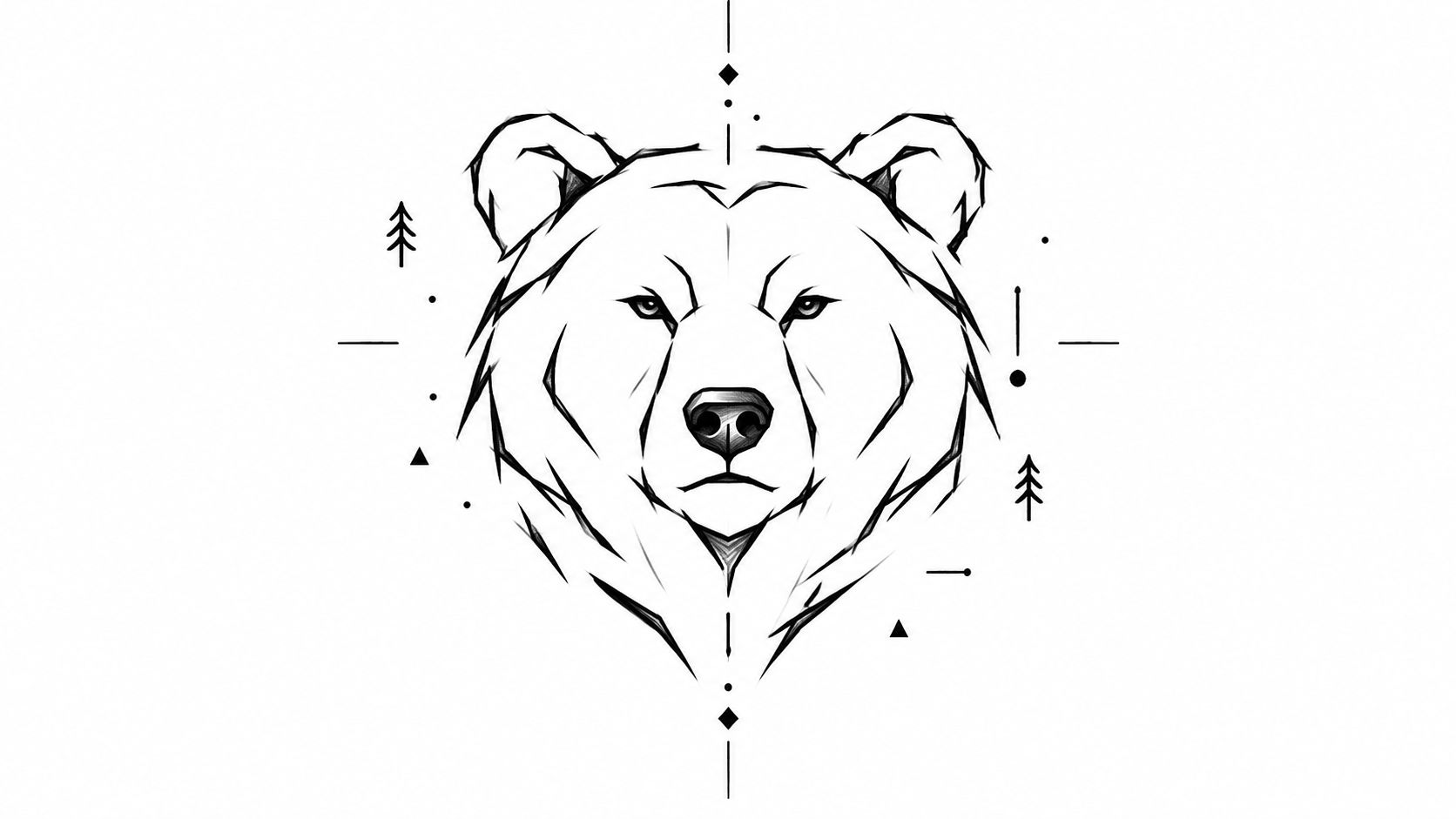
Could a bear head express strength without becoming the dominant feature of your tattoo? A minimalist geometric design answers that question through a restrained outline, using a few controlled lines to define the ears, muzzle, eyes, and angular planes. It suits clients who want bear symbolism with a lighter visual footprint.
The forearm, outer wrist, or behind the ear can support this concept, but each placement changes the design decision. The forearm offers a steadier, more forgiving surface and usually allows clearer geometry. The wrist moves, creases, and experiences friction, so the artist may need to simplify the face further. Areas directly over joints make consistent spacing harder to maintain.
A reference such as this premium bear decal sticker can help you compare the silhouette before the consultation. Artists influenced by reduced animal linework, including Dr. Woo and Jonboy Tattoos, may provide useful direction, but references should guide proportion and mood rather than become designs to copy. Matching bear heads can suit partners, siblings, or friends when they share selected structural lines without being identical.
Precision matters more than detail
Minimalism leaves little room to disguise an uneven line. Ask how the artist will set line weight, spacing, and final size for your skin and placement. Guidance for geometric tattoos recommends primary lines around 0.8 to 1.2 mm and negative gaps of 1.5 to 2.5 mm to support clarity as the tattoo settles. Review the geometric tattoo line and spacing guidance for the reasoning behind those dimensions.
Practical rule: If the bear only reads clearly at extreme close range, the design may be too small or delicate for that location.
Bring linework references you like, then let the artist adapt the geometry to your skin, movement, and intended scale. Larger versions may preserve more facial structure, but they also require more time and careful completion. Follow the studio's aftercare instructions, and judge any future refresh from the healed tattoo rather than its freshly finished appearance.
2. Geometric Bear Constellation and Star Pattern
A constellation bear combines two kinds of structure. The bear's silhouette comes from angular lines and connected points, while stars, dots, and celestial paths create a second layer of meaning. The concept suits astronomy enthusiasts, nature lovers, and clients who connect the bear's strength with guidance, family, or a particular night sky.
The most personal version begins with a clear celestial question. Do you want a recognizable zodiac constellation, a general star field, or an invented pattern that feels cosmic? A specific constellation can anchor the design to a birthday, relationship, place, or private milestone. If you want the symbolism to be legible to others, discuss whether zodiac marks or constellation names should appear at all.
The star constellation tattoo guide can help you clarify the celestial side before you meet with an artist. Bring separate references for the bear and the star pattern, because combining two finished examples often creates a design that's too crowded.
Protect the negative space
Dot spacing and line weight determine whether the tattoo reads as a bear first or as a loose collection of points. A forearm, upper arm, or leg can provide enough room for the outline and stars to breathe. On a small, highly mobile area, the dots may need to be reduced or removed so the main silhouette stays clear.
Use the consultation to decide which elements deserve emphasis. A family constellation might sit inside the bear's head, while a few larger stars can extend beyond the outline and create movement. Matching designs can share the same constellation language while using different bear profiles, which keeps the connection personal rather than overly literal.
3. Geometric Low-Poly Bear Head
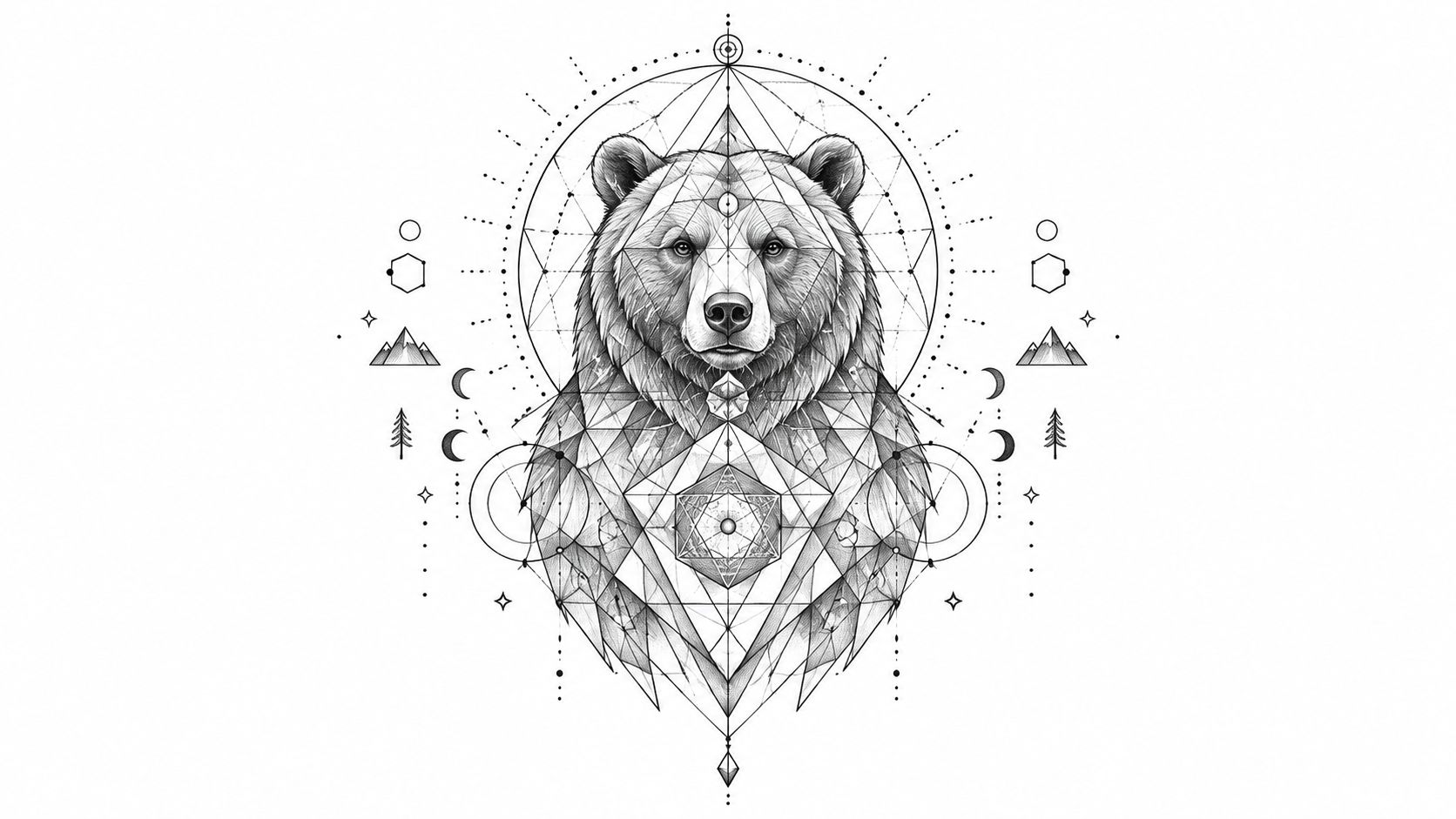
A low-poly bear is built from facets. Triangles and irregular polygons divide the head into planes, creating a crystalline or digitally rendered appearance. Each plane can remain black and gray, receive selective shading, or carry a controlled color treatment.
This concept is a strong choice for someone who wants a modern statement with apparent depth. The upper arm, thigh, and calf generally offer enough surface area for the artist to vary polygon size without turning the face into visual noise. A tiny low-poly bear often loses the distinction between individual facets, so the design should be scaled according to the number of planes, not just the desired physical size.
Instagram tattoo communities have helped make low-poly animal work familiar, and artists who specialize in geometric construction often approach the same bear very differently. One artist may use broad, graphic facets. Another may build a denser crystalline effect. Bring high-quality references, but ask the artist to explain what they'd change for your anatomy and skin.
Depth has a maintenance cost
A faceted bear can look dimensional through contrast alone, or through solid color and gradients. More color and denser shading increase the visual impact, but they also add ink saturation, session complexity, and future maintenance considerations. Placement with less direct sun exposure can help protect color, while consistent sun protection remains important once the tattoo has healed.
Discuss whether the design should be grayscale, limited to one accent color, or fully colored. If you want multiple colors, ask how the artist will separate adjacent facets so the bear doesn't become a patchwork of competing tones. The artist should also explain healing and aftercare for a densely worked piece, including when the surface has settled enough to judge the final balance.
A low-poly bear pairs naturally with mountains, forests, or topographic shapes. Keep those additions subordinate unless the tattoo is intended to become a larger scenic composition.
4. Abstract Geometric Bear Split-Face Design
A split-face bear makes the design itself carry the message. One side may use realistic fur and facial anatomy, while the other uses polygons, negative space, or strict linework. A vertical division can suggest balance and duality. A diagonal division feels more active and can imply change, tension, or movement.
This works best when the two halves have a defined relationship. “Wild and tamed,” “past and present,” and “instinct and reason” are useful starting points, but the artist needs to know which side represents which idea. Without that decision, the tattoo can become an attractive experiment with no visual hierarchy.
The upper arm and thigh provide room for the face to remain symmetrical enough to recognize while still allowing the contrast to develop. A smaller placement may force the realistic half to become simplified, which can be a better result than trying to reproduce fine fur detail at an unsuitable scale.
Plan the composition before the appointment
A split design deserves an extended consultation. Bring references for both halves, including examples of realistic bear anatomy and the geometric treatment you prefer. The artist should prepare sketches and adjust the central division, eye placement, muzzle proportions, and contrast before tattooing begins.
A successful split face looks intentional from across the room and rewarding up close. If the concept only reads when someone explains it, the division needs stronger structure.
This format can also support other duality symbols, such as day and night or organic and mechanical forms. Keep additions limited until the bear works on its own. A three-dimensional body surface can distort a perfectly straight division, so placement should follow the arm or thigh's natural direction rather than fight it.
Ask about the artist's experience with conceptual pieces and how they handle transitions between realistic shading and graphic geometry. Complex work may require a substantial sitting or more than one appointment, so confirm the plan, healing intervals, and aftercare before booking.
5. Sacred Geometry Bear With Mandala Integration
A sacred-geometry bear gives the animal a wider visual framework. Triangles, circles, hexagons, and radial mandala structures can break apart the bear's silhouette or extend outward from it. The result often appeals to clients who associate the bear with transformation, spiritual development, balance, or protection.
The design needs enough room for its geometry to remain clean. A shoulder piece can use the curve of the deltoid to create a radiating mandala. A large arm design can place the bear as the focal point and use repeating forms to connect toward the elbow or chest. A back piece offers the most freedom, but it also requires careful planning because the artist must preserve symmetry across a broad, curved surface.
Clients sometimes begin with an attractive mandala reference and add a bear afterward. That approach can produce a crowded center. Start instead with the bear's silhouette and decide which geometric pattern supports its meaning. The sacred geometry tattoo design discussion can help you identify the visual language you respond to before narrowing the custom concept.
Choose the construction method
Dotwork creates a softer gradient and can make the mandala feel atmospheric. Bold linework gives the design stronger graphic authority. A controlled combination of both can separate the bear from the surrounding pattern, but too many competing techniques weaken the focal point.
Larger back, chest, or arm projects may require two to three sessions, as reflected in the planning guidance for this format. Confirm session spacing with your artist rather than treating a general schedule as a guarantee. Talk through grayscale, limited color, or full color, and consider how the piece might expand into a sleeve or connect with future work.
A mandala's symmetry also makes consultation especially important. Small changes in the bear's expression, ear angle, or muzzle can affect the surrounding radial geometry. The artist should test the design against your body's movement and natural landmarks before finalizing the stencil.
6. Tribal Geometric Bear With Indigenous Influences
A geometric bear drawing from Indigenous influences requires more than selecting angular shapes from an online reference. Native American, Indigenous Canadian, Pacific Northwest, and other traditions contain distinct visual systems, histories, and meanings. A design that borrows recognizable symbols without a personal or cultural connection can become an unconsidered imitation rather than respectful custom work.
Begin with your own relationship to the subject. If the bear represents family, ancestry, community, or a specific cultural tradition, say so during the consultation. Research the bear symbolism associated with that tradition, then work with an artist who understands the relevant forms and can explain what the selected patterns mean.
Cultural knowledge belongs in the process
Ask about the artist's background, training, and experience with Indigenous design. When possible, commissioning an artist with actual Indigenous heritage or a documented connection to the tradition is the more responsible route. The artist should be willing to discuss whether a symbol is appropriate for personal use, how it should be adapted, and which elements shouldn't be copied.
Respect starts before the stencil. A custom design should reflect a genuine connection, not just the appearance of authenticity.
Angular lines, negative space, and strong silhouettes can produce a powerful bear without copying a ceremonial or community-specific mark. Consider a custom composition based on your own personal story, family story, or relationship to the animal. That approach may be less visually literal, but it can create a more honest tattoo.
Placement should follow the design's cultural and visual intent. An upper arm or back can support a broad silhouette and allow the artist to keep pattern groups distinct. Avoid shrinking a culturally detailed concept into a small space to make it easier to wear. Discuss visibility, future expansion, and aftercare, especially if the piece includes dense blackwork.
7. Geometric Bear Watercolor Blend Hybrid Design
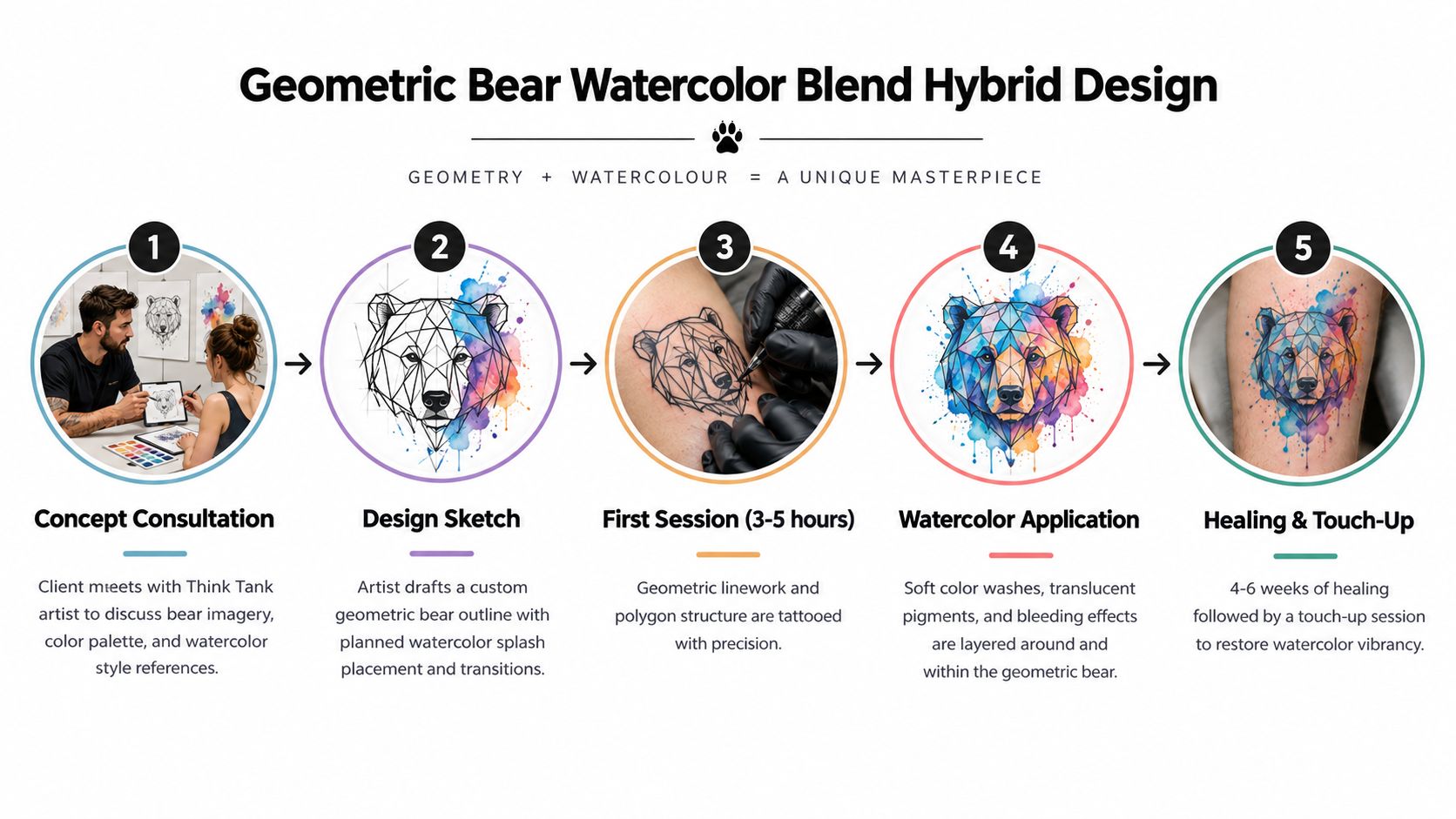
This hybrid keeps the bear's structure angular while introducing watercolor-style washes, translucent color, and soft edges. The contrast is the appeal. Geometry gives the bear definition and visual discipline, while watercolor effects suggest scenery, emotion, weather, or movement.
The strongest designs decide which role each technique plays. The geometric lines should carry the bear's identity. The watercolor can move behind the head, break through selected facets, or create a controlled background. If color spreads across every edge, the bear may lose its structural clarity. If the washes are too restrained, the hybrid may look like a standard geometric tattoo with a small color accent.
Use references that show the specific watercolor behavior you like, such as diluted gradients, broad washes, or paint-like splashes. Your artist should have experience with both geometric construction and color-based work. A watercolor specialist may produce beautiful color but less convincing geometry, while a geometric specialist may build precise facets without achieving the loose painterly effect you want.
Color needs realistic planning
Discuss pigment choices, contrast, and how the color will interact with your skin tone. Color-heavy work needs consistent sun protection after healing, and it may require future refreshment as the tones soften. The plan notes for this format include an initial touch-up discussion around three to six months, but the correct timing depends on how your tattoo heals and what your artist observes.
A forearm, upper arm, thigh, or calf can provide room for color to extend beyond the bear without forcing the composition into a cramped shape. Sun exposure and friction should influence placement. Talk through session length, investment, aftercare, and pigment sourcing before you commit, especially if the design combines dense linework with broad color areas.
This treatment suits a bear connected to a specific environment. Watercolor mountain forms, pine silhouettes, or autumn tones can add context, but the background should support rather than bury the face.
8. Geometric Bear Sleeve Integration Design
A sleeve bear shouldn't be designed as an isolated sticker placed into empty space. It needs a role within the entire arm composition. The bear might be the focal point near the upper arm, a transition between animals and scene elements, or one element in a repeating geometric system that connects shoulder, bicep, forearm, and wrist.
Begin with the full vision, even if you're only ready to tattoo the bear first. Bring a mood board showing sleeve compositions, geometric patterns, companion animals, natural elements, and negative-space treatments you like. Your artist can then size the bear according to the eventual flow instead of making it too large to connect comfortably with later work.
Large work rewards flexibility
A sleeve evolves. The artist may adjust a polygon angle, background density, or transition pattern after seeing how the first section heals and how your arm moves. That flexibility isn't a failure of planning. It allows the composition to respond to real anatomy rather than forcing a flat reference onto a three-dimensional limb.
For a major sleeve project, plan at least three months between major sessions for healing and assessment, as outlined in the supplied sleeve planning guidance. Use that time to document progress, communicate changes, and confirm the next section. Ask for a session-by-session budget breakdown, but understand that complexity, placement, and the amount of work required can change the final plan.
A geometric bear sleeve may combine the bear with wolves, mountains, trees, topographic lines, constellations, or mandala transitions. Keep one visual system dominant. Too many unrelated motifs make the arm feel like separate tattoos, while consistent line weights and repeated shapes create continuity.
The tattoo sleeve design planning guide is useful preparation for a consultation. Show healed work from the artist whenever possible, not only fresh portfolio images. Expert geometric-animal guidance recommends judging healed photos at one to two years, because fresh ink can't show how spacing, contrast, and line edges will settle. Bold outlines with selective detail generally remain more legible than ultra-fine construction, and expert guidance places pure ultra-fine work's potential refresh point around eight to ten years, while stronger linework may remain readable for 15 to 20 years. These are planning ranges, not promises, and your artist should assess the specific design and placement. (Geometric tattoo longevity guidance)
8-Style Geometric Bear Tattoo Comparison
Design | Complexity 🔄 | Resources & Time ⚡ | Expected Outcomes ⭐📊 | Ideal Use Cases & Tips 💡 |
|---|---|---|---|---|
Minimalist Line-Work Bear Head | Moderate, expert steady linework required 🔄 | Quick (1–2 hrs); single ink; lower cost ⚡ | Understated elegance; ages well; low maintenance ⭐📊 | First-timers or minimalist collections. Tip: prefer slightly thicker lines for longevity 💡 |
Geometric Bear Constellation/Star Pattern | Moderate, precise dot/line spacing important 🔄 | ~2–3 hrs; monochrome; low–moderate cost ⚡ | Symbolic, tasteful impact; dot blur risk without care ⭐📊 | Astronomy/nature lovers. Tip: discuss dot spacing and placement to avoid blur 💡 |
Geometric Low-Poly Bear Head | Moderate, polygon mapping and tonal translation 🔄 | 2–4 hrs; color adds sessions and cost; skill-dependent ⚡ | High visual/3D impact; color maintenance required ⭐📊 | Design-focused clients. Tip: plan colors for aging and schedule touch-ups 💡 |
Abstract Geometric Split-Face Design | High, balancing contrasting styles and symmetry 🔄🔄 | Longer session(s) (3–5+ hrs); higher cost; multi-technique ⚡ | Very high artistic impact; concept-driven; visible flaws noticeable ⭐📊 | Artistic/ conceptual clients. Tip: extended mockups and iterations are essential 💡 |
Sacred Geometry Bear with Mandala Integration | High, requires precise symmetry & dotwork 🔄🔄 | Time-intensive (3–6+ hrs or multi-session); higher cost ⚡ | Strong spiritual/visual impact; scales well for large canvases ⭐📊 | Spiritual/transformational clients. Tip: plan expansion and color/dotwork strategy early 💡 |
Tribal Geometric Bear with Indigenous Influences | High, cultural knowledge and authenticity required 🔄🔄 | Variable time; requires culturally-informed artist; possible custom commissioning ⚡ | Deep cultural significance when respectful; high visual weight ⭐📊 | Clients with ancestral ties or respectful intent. Tip: commission indigenous artists and research meanings 💡 |
Geometric Bear Watercolor Blend Hybrid Design | Very high, combines watercolor technique with precise geometry 🔄🔄🔄 | Long sessions (3–5+ hrs); multi-color work; higher cost; maintenance needed ⚡ | Highly striking and social-media friendly; color fade risk; needs touch-ups ⭐📊 | Art-forward clients seeking unique pieces. Tip: confirm artist's watercolor portfolio and pigment quality 💡 |
Geometric Bear Sleeve Integration Design | Very high, multi-session composition and cohesion required 🔄🔄🔄 | Months–years of sessions; significant cost; ongoing collaboration ⚡ | Major long-term impact; fully custom cohesive narrative; high commitment ⭐📊 | Serious collectors and large-scale projects. Tip: plan timeline, budget, and consistent artist continuity up front 💡 |
Turn a Bear Concept Into a Tattoo Plan
The best geometric bear tattoo starts with a decision about what must remain clear. If you want a restrained piece, choose minimalist linework or a negative-space bear and give the artist enough scale to preserve the face. If you want a contemporary statement, consider a low-poly head or a watercolor hybrid, but accept that denser color, shading, and facet work require more planning and may need future maintenance.
Symbolism can guide the supporting elements. A constellation adds a personal celestial reference. A mandala introduces radial structure and spiritual or transformational associations. A culturally specific geometric treatment requires deeper research and an artist with relevant knowledge, not just a collection of similar-looking images. A sleeve integration design makes sense when the bear belongs to a larger composition rather than needing to stand alone.
Longevity should influence the design from the beginning. Expert guidance says bold structural lines with adequate negative space tend to age more predictably than ultra-fine, crowded geometry. For geometric tattooing, recommended primary line weights of 0.8 to 1.2 mm and negative gaps of 1.5 to 2.5 mm are useful technical discussion points, not universal prescriptions. The artist still needs to adapt the design to your skin, placement, scale, and desired detail.
Before booking, bring references and define the bear's meaning in plain language. Confirm the intended size, placement, color approach, future expansion, artist experience, session structure, and aftercare requirements. Ask to see healed examples when available, because fresh work can hide how closely packed lines and dots will settle.
For Denver clients, Think Tank Tattoo offers complimentary consultations to discuss design direction, placement, and timing. The studio's artists work across styles, so the consultation is a practical opportunity to match your geometric bear concept with the right technical approach. Think Tank Tattoo was established in 2002 and serves adults 18 and older in a professional South Broadway studio. The shop requires a non-refundable $100 deposit to reserve an appointment and lists a $100 minimum, so confirm current booking details directly with the studio.
A good consultation won't just confirm that a bear looks impressive. It will test whether the concept fits your story, your body, your schedule, and the way the design needs to age.
Bring your bear references, preferred placement, and any ideas for constellations, mandalas, color, or sleeve expansion to Think Tank Tattoo. Schedule a complimentary consultation with the Denver team to refine the concept, discuss timing and aftercare, and identify an artist suited to the technique you want.
Comments