
8 First Tattoo Designs for Beginners in 2026
You're sitting in the tattoo chair with three ideas open on your phone: a tiny symbol, a short phrase, and a larger custom design you saved because it looked beautiful on someone else. You like all three, but you're unsure what the first session will feel like, whether the placement will work, or how the tattoo will look after the skin settles.
The best first tattoo designs balance meaning, size, pain tolerance, healing demands, and long-term readability. A small tattoo isn't automatically the easiest choice, and a meaningful tattoo isn't automatically a good design. The right option should suit your body, your schedule, your skin history, and the way you expect your taste to develop.
The eight ideas below move from lower commitment to more planning-intensive. Each one includes practical guidance on session length, discomfort, healing, placement, future touch-ups, and the questions worth asking before the stencil goes on. Think Tank Tattoo, a Denver studio on South Broadway established in 2002, offers complimentary consultations to discuss design direction, placement, and timing.
Table of Contents
1. Minimalist Line Work
Minimalist line work is often the least intimidating way to enter tattooing. A simple leaf, geometric shape, animal outline, or small constellation can usually be planned without the visual weight of heavy shading or dense color. The session may be relatively brief, but the design still needs enough space for the lines to remain distinct as the skin changes over time.
A line tattoo can be delicate without being microscopic. If the artist reduces a botanical stem or animal silhouette too far, nearby lines may crowd together and lose clarity. Ask to see the design at its intended size, placed on a photograph or stencil of the actual body area, rather than judging it only on a phone screen.
What makes it practical for a first session
Good locations include the inner arm, calf, and ankle, although each area brings different sensations and healing concerns. The inner arm may be convenient to monitor, while the ankle can experience more friction from socks and shoes. Areas with frequent movement, rubbing, or sun exposure may need more careful aftercare.
Minimalist work often heals with less visual drama than a large saturated piece, but that doesn't mean you can ignore it. Tattooing creates a wound, and published surveys estimate post-tattoo infectious complications in approximately 0.5% to 6% of tattooed people according to a systematic review. Ask about sterile or single-use needles, fresh disposable barriers, ink handling, and written aftercare instructions.
Practical rule: Choose the simplest design that still has enough line weight, spacing, and personal significance to justify keeping it.
Consultation-ready checklist
Line weight: How will the chosen line thickness affect long-term visibility?
Scale: What's the smallest size that keeps the design readable?
Placement: Will movement, clothing, or sun exposure affect healing?
Maintenance: Is a future touch-up realistic for this location and style?
Aftercare: What cleaning, covering, and sun-avoidance instructions apply?
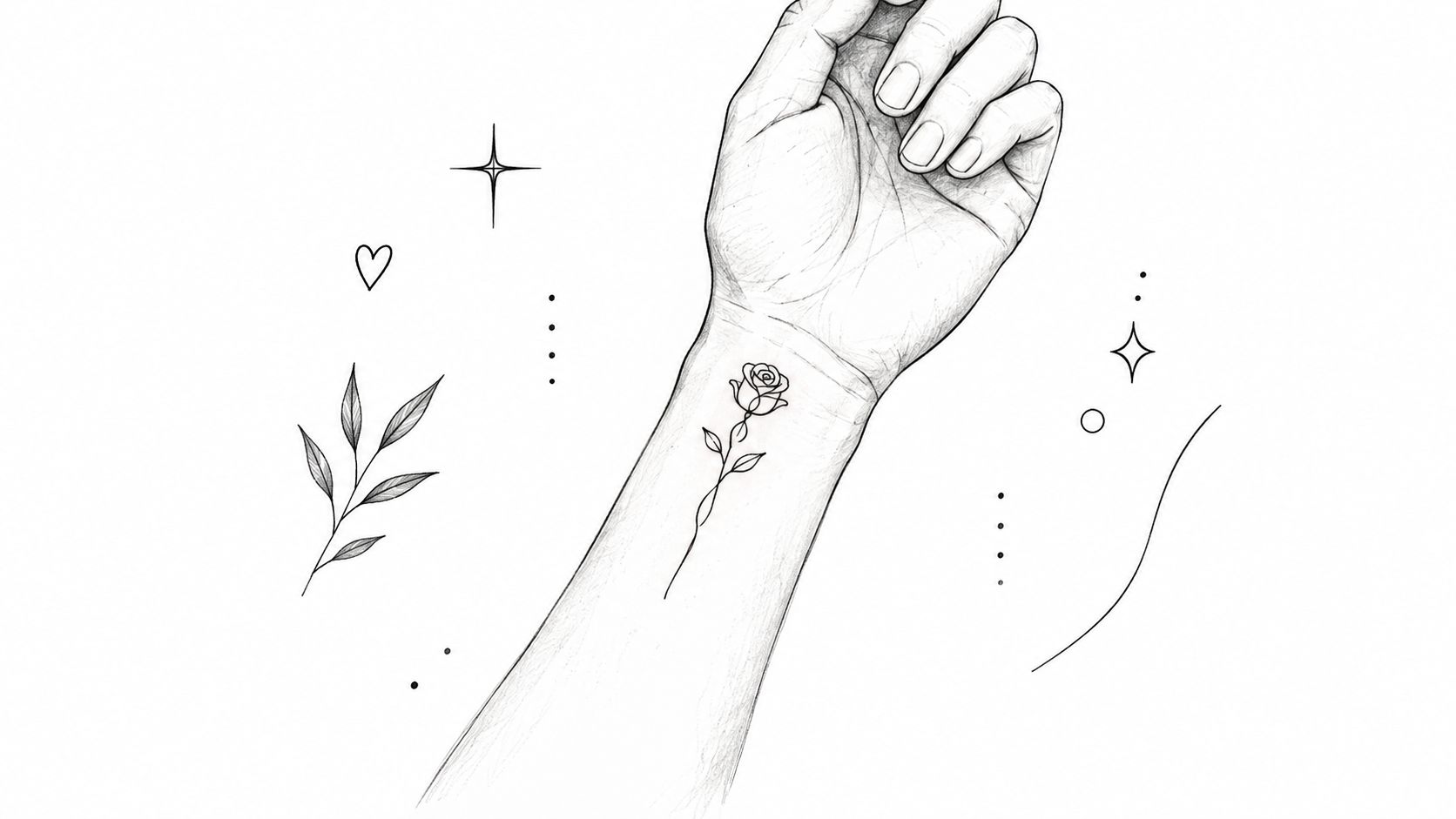
2. Small Symbolic or Meaningful Tattoo
You bring in a tiny sketch with a lot behind it. That is common for a first tattoo, and it can work well if the image still reads clearly once it is reduced to skin.
Small symbols suit first-timers because they usually mean a shorter appointment, a simpler heal, and an easier decision on placement. The catch is that personal meaning can make people cling to details that do not survive at a small scale. A pet silhouette, a simple animal form, a birthplace marker, or a pared-back object often holds up better than a miniature scene with too many fine parts.
Before you book, put the meaning into one plain sentence. Then ask a harder question. Will that sentence still feel true years from now, outside the breakup, the trip, the milestone, or the phase that inspired it? Symbols tied to a steady value or long-term memory usually age better emotionally than designs chosen to capture a passing mood.
A wider point shows up in consumer polling. In a YouGov poll, some U.S. adults said they would consider tattoos that represent a favorite animal, flower, or symbol, and a similar share said they would choose a design mainly because they like how it looks. Among tattooed respondents, both answers were more common in the survey results. In practice, that tracks with what happens in consultations. Meaning gets people in the door. Good shape, spacing, and size are what make the tattoo last well.
Placement changes the whole experience. If you want a daily reminder, the wrist or forearm keeps it visible, but those spots also keep the tattoo in your line of sight during healing. If you want less attention and more room to grow later, the upper arm, shoulder, or thigh gives the design more breathing space and often makes future additions easier. Touch-ups matter too. Tiny symbols with narrow gaps can soften over time, so ask how the design will age in that exact spot.
Bring these questions to the appointment:
Meaning: Can I describe why this matters in one clear sentence?
Size: What details should be removed so it stays readable later?
Placement: Do I want to see it every day or keep it more private?
Session and healing: How long will this take, and will this area be awkward to heal?
Future changes: Will this stand alone well, and is a touch-up realistic here?
3. Simple Text, Quote, or Meaningful Words
You bring in a word that has mattered to you for years. On your phone, it looks clean and easy. On skin, it has to survive stencil size, body movement, healing, and time. That is why text can be a very good first tattoo, but only if you judge it like a tattoo, not like typed copy.
A single word usually gives the artist more control than a long quote. There is less chance of crowding, fewer places for spacing to fail, and a better shot at keeping the piece readable later. Longer phrases can still work, especially if the wording is personal and settled, but they often need more length on the body or a line break that feels balanced instead of forced.
The main trade-off is simple. The smaller and fancier the lettering, the harder it is to keep clear.
Script fonts are where first-timers get caught. Thin upstrokes, tight loops, and decorative flourishes can look elegant in a reference image, then blur together once they are scaled down. Clean serif or sans serif lettering often ages better, even if it feels less dramatic on day one. Good artists adjust letter shapes, spacing, and line weight for skin. They are not being careless with your chosen font. They are trying to make sure the tattoo still reads well later.
Placement matters here in a different way than it does for a symbol tattoo. Text needs a surface that lets the letters sit evenly. The inner forearm, upper arm, chest, and thigh usually make that easier. Areas that bend, crease, or stretch a lot can distort the stencil and make healing less predictable. If you want something discreet, do not solve that by shrinking the text until it is barely readable.
Before the appointment, proof the exact wording like it is going on a sign you cannot take back. Check spelling, punctuation, date format, accent marks, names, and Roman numerals. Then check it again on the final stencil photo, not just in the message thread.
Bring this with you:
Wording: Is this the exact version, with every character checked twice?
Font: Will this style still read clearly at the size I want?
Size: What is the smallest this can go without losing clarity later?
Placement: Does this body area stay stable enough for lettering?
Session and healing: How long will this take, and will this spot rub or crease while it heals?
Future touch-ups: If the edges soften, will this be easy to refresh without making it too heavy?
4. Birth Flower or Birth Month Symbol
A lot of first-timers land on a birth flower because it feels personal without locking them into lettering or a highly literal image. It also gives you a practical starting point. The month narrows the subject, then the artist can shape it to suit your pain tolerance, budget, placement, and how much detail you want to heal well on skin.
The main trade-off is detail versus size. Some flowers read clearly as a simple outline. Others depend on layered petals, small leaves, or soft shading to look like themselves. If you want the tattoo small, ask which features need to stay and which ones can be stripped back. That decision matters more for a first tattoo than the flower's symbolism.
Accuracy is another choice, not a rule. A botanical approach works well if you care about real petal shape, leaf structure, and stem movement. A stylized version usually gives you more freedom with composition, especially if the design needs to fit a wrist, ankle, or another tighter spot. For larger placements like the upper arm, shoulder, thigh, or calf, the artist has more room to keep the flower recognizable without crowding it.
Color changes the experience too. Black and gray often keeps a floral tattoo cleaner at a smaller scale and usually makes future additions easier to match. Color can make the piece feel closer to the actual flower, but it adds more decisions about palette, saturation, healing, and refreshes later. Skin reactions are also part of that conversation. Dermatology literature notes that tattoo reactions can include inflammation, infection, scarring, allergic or granulomatous reactions, and delayed hypersensitivity. Red ink is more frequently associated with adverse reactions, although any pigment can cause one as discussed in this dermatology review.
If you are still choosing the flower itself, this guide to popular flowers for tattoos is a useful visual reference. Bring a few examples that show the structure you like, the amount of detail you want, and whether you prefer it delicate, graphic, or ornamental.
Bring these questions to your consult:
Flower choice: Does this flower still read clearly at the size I want?
Style: Should this be botanical, illustrative, ornamental, or simplified?
Placement: Will this body area give the petals and stem enough room?
Session length and pain: Is this still a manageable first session in this spot?
Healing: Will clothing, shoes, or movement irritate this placement?
Future touch-ups: If fine lines soften, can this be refreshed cleanly?
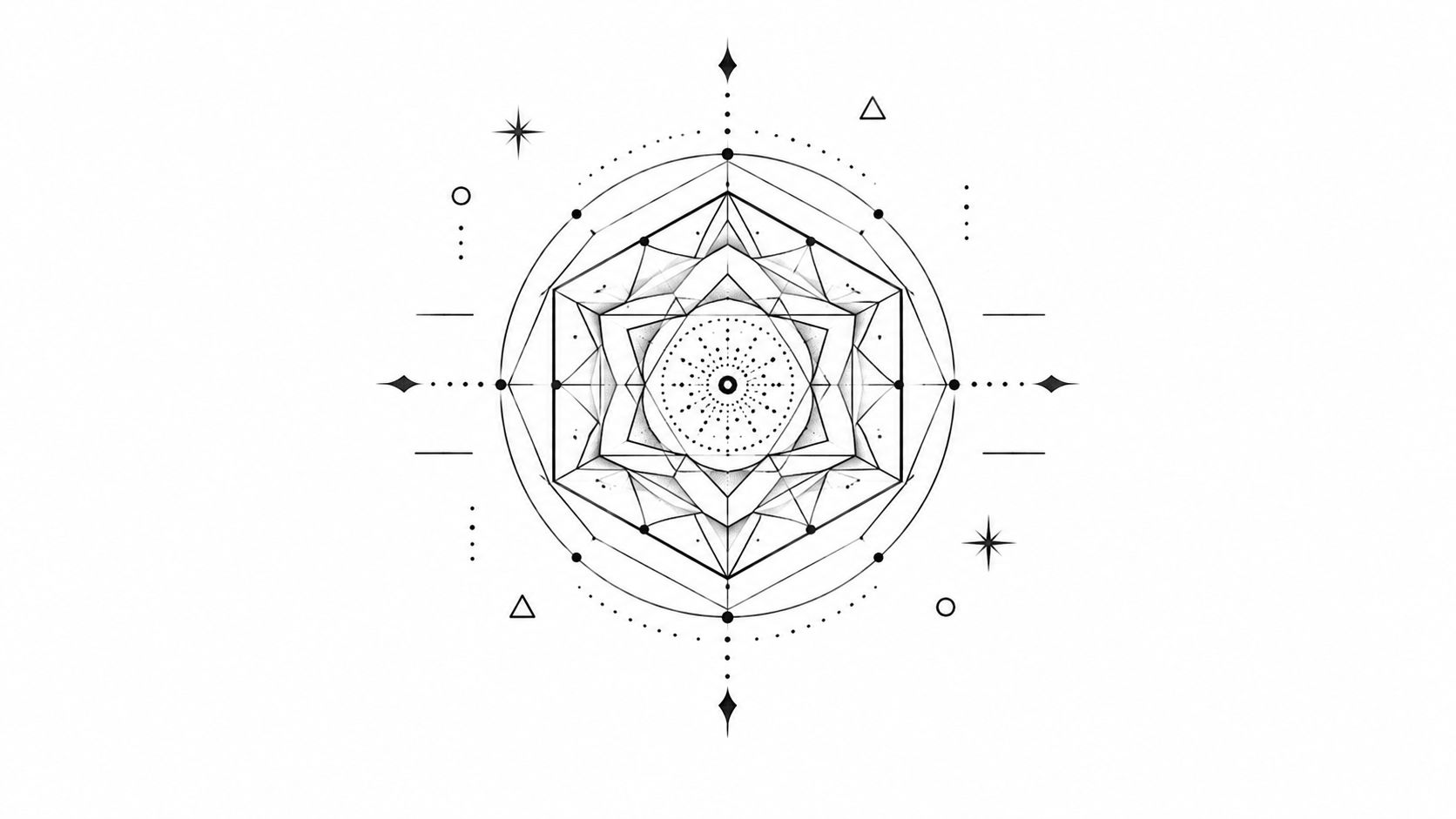
5. Constellation or Celestial Design
You pick a constellation because it feels small, calm, and hard to get wrong. Then the stencil goes on, and the first real question shows up. Will those dots and lines still read clearly on skin at the size you want?
That is the main trade-off with constellation and celestial tattoos. They look simple, but simplicity gives you less room to hide spacing problems. If the stars sit too close together, they can blur into each other over time. If the connecting lines are extremely fine, they may soften enough that the pattern loses its shape. For a first tattoo, that usually makes this option strongest when the design stays clean and the artist builds it for skin, not for a phone screen.
Placement matters more here than many first-timers expect. A constellation needs enough room for the distance between points to make sense visually. The inner arm, shoulder, thigh, and upper back usually give that design some breathing room. A narrow wrist or ankle can still work, but often only if the arrangement is simplified. If you also want a moon phase, coordinates, a date, or a planet, session time goes up and the piece stops being a quick, low-pressure first tattoo.
Pain is usually manageable when the design is mostly dots and short lines. Add packed stars, shaded halos, or a dark space background, and the experience changes fast. Healing changes too. A sparse design is still a real tattoo and still needs proper aftercare, especially in spots that rub against sleeves, waistbands, socks, or watch straps.
Personal meaning helps this style, but restraint helps it age well. A birth constellation, a night sky from a specific place, or a single moon element can say enough without turning the tattoo into a cluster of separate symbols. I usually advise clients to decide what the focal point is first, then let everything else support it.
Bring these questions to your consult:
Accuracy: Do I want this mapped true to the constellation, or interpreted more loosely?
Size and spacing: Will each star stay distinct at the size I can comfortably wear?
Placement: Does this area give the design enough width to read properly?
Session length and pain: Am I keeping this light, or adding enough detail to make it a longer appointment?
Healing and touch-ups: If dots or fine lines soften later, can this be refreshed without crowding the design?
6. Small Animal or Pet Portrait
You walk in wanting your dog's face on your forearm. Then the hard part starts. A first tattoo can absolutely be a pet piece, but the version that works best is usually the one that matches your tolerance for time, detail, healing, and future upkeep.
There is a big difference between a small animal design and a true portrait. A black silhouette, paw-forward profile, or simple illustrated pet can stay readable at a modest size because the shape does the work. A recognizable portrait asks much more from the skin. Eyes need space. Muzzle shape needs room. Fur patterns need to be simplified so the face still reads once it heals.
That trade-off matters more than sentiment.
If this is your first session, decide what you need the tattoo to do. Memorial piece. Daily reminder. Clean visual nod to your pet without chasing photo realism. That choice affects appointment length, placement, and whether touch-ups are likely later.
Reference photos often decide the result before the stencil is even printed. Bring images with clear eyes, normal proportions, and light that shows markings instead of flattening them. A few solid photos are more useful than one favorite snapshot taken in poor light. Good artists adapt reference for skin, not for the camera. If you are considering realism, it helps to review what to look for in a pet portrait tattoo artist, especially healed work.
Placement should serve the design, not just the spot you first thought of. Upper arm, shoulder, thigh, and calf usually give a portrait enough stable space to breathe. Areas with constant friction or lots of movement can make a detailed first tattoo harder to heal comfortably and harder to keep crisp over time. Color can capture markings well, but it also adds decisions about saturation, skin tone, and later refreshing.
Bring this to the consultation:
Design level: Do I want a silhouette, a simple illustration, or a recognizable portrait?
Reference photos: Which images show the face, eyes, and markings clearly?
Size: What is the smallest size that still keeps the expression readable?
Placement: Does this body area give the face enough room without distortion?
Session and upkeep: Am I choosing a version that fits my first-tattoo pain tolerance and likely touch-up needs?
7. Geometric or Abstract Design
A lot of first-timers are drawn to geometry because it feels clear before it feels emotional. You may not want a flower, a quote, or a portrait. You may want shape, balance, and a design that reads well from across the room. That can work very well for a first tattoo, but only if the pattern fits skin as well as it fits paper.
With geometric and abstract work, precision is the whole job. Circles, mirrored lines, dot grids, mandalas, architectural forms, and repeating patterns all depend on spacing staying consistent once the body bends, twists, and relaxes. An artist may need to shift parts of the design so it looks balanced on an arm, shoulder, chest, or leg instead of mathematically perfect only in the stencil.
This style also changes fast with scale. A simple abstract shape with open space can be a straightforward first session. Dense dot work, tight tessellation, or layered symmetry usually asks for more time, more stillness, and a bit more patience with discomfort because the same area gets worked over again. If the design relies on tiny gaps, ask early what the minimum readable size really is. Going too small is where clean geometry starts to blur into visual noise.
Planning ahead matters more here than many people expect. Some pieces are strongest as a single, self-contained mark. Others only make sense if they will eventually connect into a half sleeve, wrap around a limb, or frame another tattoo later. I often tell first-timers to decide this before the stencil is locked in, because crowded edges and closed shapes can limit future options.
Healing and maintenance are part of the choice too. Fine lines and sharp intersections can soften over time, especially on spots that get sun, rubbing, or constant movement. That does not make geometry a bad first tattoo. It means placement, line weight, and spacing should be chosen with future touch-ups in mind.
Bring this to the consultation:
Shape and meaning: Do I want pure abstraction, symmetry, or a design with a recognizable subject hidden in it?
Size: What is the smallest version that keeps the pattern open and readable?
Placement: Will this area distort the symmetry when I move naturally?
Session length: Is this still a first-tattoo-friendly amount of detail?
Future plans: Should the edges stay open for later additions or finish as a standalone piece?
8. Placement-Specific Design
You pick a design you love, then realize it either disappears on the body part you had in mind or makes healing harder than you expected. That happens all the time with first tattoos. Starting with placement can prevent it.
Placement changes more than appearance. It changes how long the session feels, how much the area moves while you sit, how easy the tattoo is to protect afterward, and how often it will need extra care over the years. The same small design can be first-tattoo-friendly on one part of the body and frustrating on another.
Here is the practical version.
The wrist gives you daily visibility and a shape that suits narrow designs, but it also gets sun, movement, and regular contact with sleeves, watches, and bags. The ankle can hold a clean small piece, yet shoes and socks may rub during healing. Behind the ear stays fairly discreet and works best with simple shapes because the space is curved and limited. The ribcage gives an artist more room to work with, but many first-timers find the breathing, sensitivity, and longer working time harder to manage.
That is why I usually fit the artwork to the body area first. A slim vertical motif may sit naturally on the wrist or ankle. A compact mark usually reads better behind the ear than anything packed with tiny detail. On the ribcage, a design can be larger and flow well with the body, but only if you are realistic about healing, clothing, sleep position, and your tolerance for a longer appointment.
Lifestyle matters as much as taste. If you train often, wear uniforms, travel a lot, or spend the day in footwear that rubs, say that before the stencil goes on. If you need the tattoo hidden for work, judge concealment in normal clothes and in different seasons, not only under studio lighting. For a solid overview of these trade-offs, review this first tattoo placement guide.
A short video can also help you think through placement and the practical tattoo experience.
Consultation-ready checklist
Placement fit: Does this design suit the shape and movement of that body area?
Session length: Will this spot keep the tattoo small and manageable for a first appointment?
Healing: What clothing, footwear, sleep position, or exercise habits will irritate it?
Visibility: Do you want to see it every day, hide it easily, or keep it private?
Future touch-ups: Will sun, friction, or movement make this placement harder to maintain over time?
8-Option First Tattoo Comparison
Design | 🔄 Implementation complexity | 💡 Resource & skill requirements | ⭐ Expected outcomes (quality/longevity) | 📊 Ideal use cases | ⚡ Key advantages |
|---|---|---|---|---|---|
Minimalist Line Work | Low–Moderate: precise steady lines required | Minimal equipment; high artist precision for clean lines | Crisp, timeless look; may blur or need touch-ups in 5–10 years | First-timers wanting subtle, elegant art; small-to-medium placements | Quick sessions; low cost; easy to expand |
Small Symbolic or Meaningful Tattoo | Low: simple shapes/text with focused meaning | Modest; design consultation recommended to ensure symbolism | Discreet, meaningful result; small details may blur over time | Personal milestones, concealable meaningful marks | Strong emotional value; easy to hide; low session time |
Simple Text / Quote / Words | Low–Moderate: typography precision essential | Requires typography skill and proofreading | High personal resonance; small text risks illegibility as skin ages | Mantras, dates, short quotes or names | Highly customizable; quick execution |
Birth Flower / Birth Month Symbol | Moderate–High: botanical detail varies by style | Experienced artist for realistic/color work; longer sessions if detailed | Beautiful, symbolic result; color may fade faster; ages elegantly if well executed | Birth identity tattoos; botanical aesthetics; collectors | Recognizable symbolism; timeless botanical appeal |
Constellation / Celestial Design | Low–Moderate: dot/line spacing critical | Fine dot and line work; attention to spacing and scale | Timeless, symbolic pieces; tiny dots may blur if too small | Zodiac, cosmic connection, subtle symbolic pieces | Universal symbolism; scalable from tiny to larger scenes |
Small Animal or Pet Portrait | High: realism demands advanced technique | High skill; quality reference photos; longer sessions for realism | Highly personal, emotive outcome; realism costly and may need touch-ups | Pet tributes, personalized memorials, unique artwork | Deep emotional connection; unique and highly personal |
Geometric or Abstract Design | Moderate–High: mathematical precision required | Precise line work skills; careful layout and symmetry checks | Striking modern aesthetic; small imperfections are obvious | Modern aesthetics, sleeves, and foundational pieces | Scalable, ages well; versatile for expansion |
Placement-Specific Design (wrist/ankle/behind ear/ribcage) | Variable: depends on chosen area and design | Planning for anatomy, skin movement, pain and healing | Optimized appearance for location; healing and aging vary by site | First-timers balancing visibility, concealment, and pain | Strategic control of visibility/pain; tailored comfort and longevity |
Turn Your Shortlist Into a First Appointment
You don't need to arrive with one perfect answer. Narrow the eight first tattoo designs to one or two candidates, then compare them against the same practical questions: Does the idea still matter without its original story? Does the size preserve the detail? Can you tolerate the placement? Will the design remain readable as the skin changes? Does it leave sensible options for future work or a cover-up?
A consultation is where those questions become a workable stencil. Bring reference images, but label what you like in each one. You might prefer the line weight from one tattoo, the composition from another, and the placement of a third. An experienced artist can combine those preferences into a design that fits your anatomy instead of copying an image that was made for someone else.
Ask about the session plan before you agree to the final size. A small tattoo may be a short appointment, while realism, dense geometry, saturated color, or a difficult placement can require more time and breaks. Pain also varies by location, skin sensitivity, technique, and how long the area is worked. Your artist can prepare you more accurately when you describe your concerns directly.
Healing deserves the same attention as the design. Tattooing creates a transdermal wound, and research identifies inappropriate hygiene measures and inadequate wound care as major risk factors for complications in this systematic review. Ask how the studio sterilizes reusable equipment, which supplies are single-use, how pigment is portioned, and which products contact freshly tattooed skin. After the appointment, follow the artist's cleaning and dressing instructions. If you have eczema, psoriasis, a history of keloid scarring, allergies, or an immune-related condition, discuss individualized concerns with a qualified clinician before booking.
Don't treat removal as an easy backup plan. Laser removal can involve pain, blistering, pigment changes, scarring, infection, allergic reactions, and incomplete removal as summarized in medical literature. A practitioner-reported analysis estimated complications in 8.1% of laser-removal sessions, including edema at 3.0% and blistering at 1.9% in the reported analysis. Those figures reinforce a simple principle: choose carefully at the beginning rather than relying on removal later.
Think Tank Tattoo offers complimentary consultations for discussing design direction, placement, timing, and artist fit. The Denver studio requires a non-refundable $100 deposit to reserve an appointment, has a $100 shop minimum, and serves clients 18 and older. Booking is available by phone or email, and you can use set up Google Calendar appointments as a planning reference when organizing your schedule.
Bring your shortlist, your questions, and enough flexibility to change the size or placement if the artist identifies a genuine long-term concern. The strongest first tattoo is not necessarily the smallest, trendiest, or most visible. It's the design you understand technically, can care for properly, and will be comfortable wearing as your life changes.
Think Tank Tattoo offers complimentary consultations to refine first tattoo designs, placement, timing, and artist fit before you commit. Visit Think Tank Tattoo to discuss your shortlist with the South Broadway Denver studio and arrange your appointment by phone or email.
Comments