
Inner Arm Tattoo Pain: What to Really Expect
Peer-reviewed research puts average maximum tattoo pain at 4.35 out of 10, so inner arm work is usually moderate, not the extreme people expect. There isn't a validated pain ranking for the inner arm specifically, which is why the usual pain charts oversimplify it.
Table of Contents
Why Inner Arm Tattoo Pain Is Not What the Charts Say
Most tattoo pain charts flatten the inner arm into one number, as if the whole area sends the same signal. The skin along the inner upper arm, inner forearm, and elbow crease does not behave that way. Those zones differ in sensitivity, tissue depth, and how close the needle works to more exposed nerve pathways.
A better question is simpler and more useful. What will your specific placement feel like, and what will make it easier or harder on the day?
That is why a chart number can mislead you. A soft, fleshy section high on the inner arm can feel steady and manageable, while a piece that creeps toward the elbow bend or the armpit side often feels sharper and harder to ignore. The same stencil can land on very different skin, and the skin matters as much as the design.
Practical rule: if a chart gives one fixed number for the inner arm, treat it like a rough guess, not a measurement of your exact tattoo.
Inner arm tattoo pain is usually moderate, but it is also personal. Session length, the amount of detail packed into one area, and how close the work gets to a crease or fold can all change how the needle feels. So can your own skin history, especially if the area gets irritated easily or has been tattooed before.
The useful takeaway is straightforward. Charts can help you start the conversation, but they cannot tell you how your inner arm will feel once the machine starts moving.
What the Research Says About Tattoo Pain
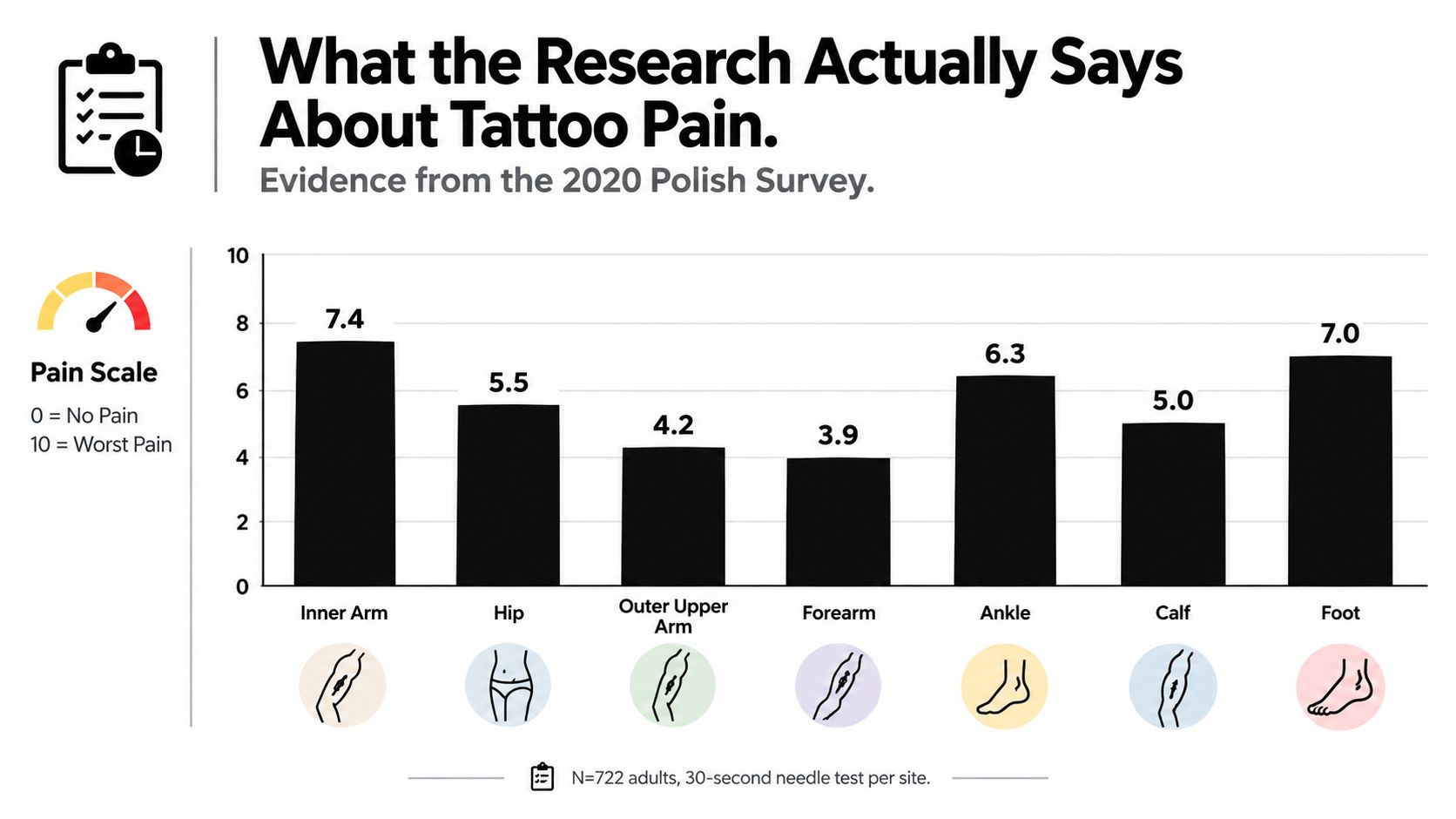
The clearest direct pain data comes from a 2020 survey of tattooed adults in Poland. It used an 11-point Numerical Rating Scale from 0 for no pain to 10 for the worst pain imaginable, and participants reported an average maximum pain of 4.35/10 during tattooing and 2.07/10 right afterward (survey data). That points to a moderate experience, not a collapse-out-of-the-chair experience.
The same study found no statistically meaningful difference in pain during tattooing between women and men, while women reported more pain immediately afterward. It also linked session length, bleeding, and stress with higher pain, which is the part many chart posts skip. For a plain-language look at how nerve signaling becomes pain, nerve pain explained simply is a useful companion read.
The study does not map the inner arm with precision. It grouped tattoo placements into broad areas like upper extremity, rather than separating the inner biceps, inner forearm, and the edge near the armpit. So when an online chart calls the inner arm a “7” or labels it one of the worst spots, that is an informal estimate, not a validated score.
That still leaves room for practical use. Charts are shorthand, useful for a first conversation, but they cannot tell you how a specific inner arm placement will feel once the machine starts moving. Pair them with placement, session length, and your own skin history, then plan from there.
The Anatomy Behind Your Inner Arm's Pain Zones
Think of the inner arm like a trail that changes terrain as it runs toward the shoulder and elbow. Some stretches have more padding, some have more motion, and some have sensory nerves close enough to the surface that the same needle pass can feel sharp in one spot and only scratchy in another.
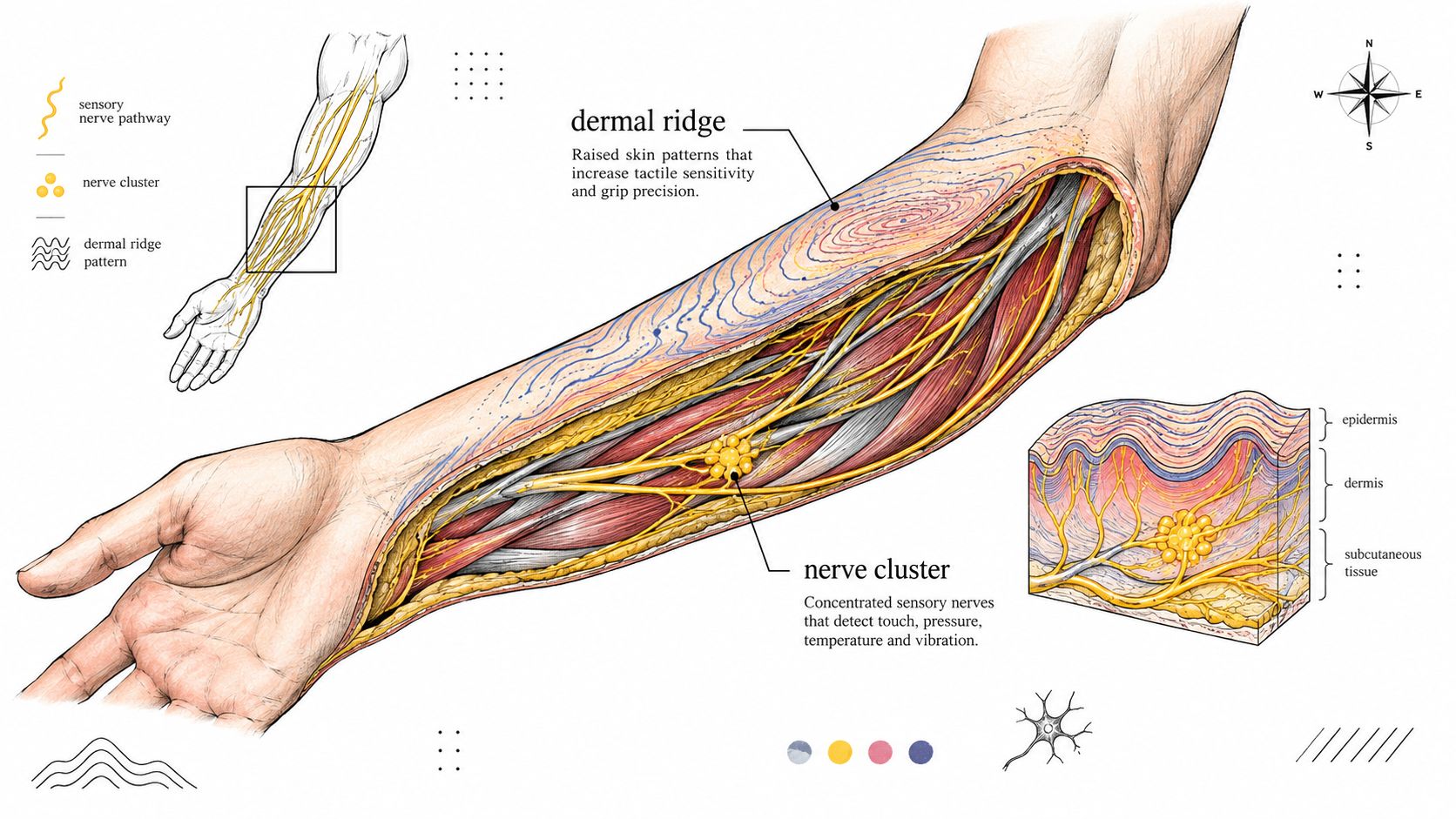
The medial upper arm is supplied by the medial brachial cutaneous nerve, while the medial forearm is supplied mainly by the medial antebrachial cutaneous nerve (anatomy reference). That's one reason the inner arm isn't one uniform pain zone. The armpit-side edge and the inner elbow are more likely to feel sharper or more electric, while a fleshy middle section often feels more like repetitive abrasion.
A microscopy study adds some objective support to the idea that sensory anatomy varies by region. It measured an average touch-dome density of 3.82 per square centimeter in forearm skin versus 1.30 per square centimeter in abdominal skin, about 2.9 times higher in the forearm (microscopy study). That doesn't translate directly into tattoo pain, but it does show that body regions are not wired or structured the same way.
The closer a design sits to the inner elbow crease or armpit fold, the more likely the sensation is to feel abrupt instead of dull.
That's the part to look at during a consultation. Map your design against the fold points, not just the broad label “inner arm.” A clean band of fleshier tissue usually feels different from a piece that crosses a crease, slides toward the axilla, or wraps into the forearm path.
The practical win here is simple. Once you can read the terrain, you can predict where the needle will feel manageable and where you'll want a shorter, slower pass.
Factors That Make Inner Arm Pain Vary Between People
Two people can sit for the same design and walk out with very different stories, and that doesn't mean one handled pain “better.” It usually means the session loaded the skin differently. The inner arm is sensitive, but the actual experience depends on several smaller factors acting together.
What changes the feeling most
Factor | Typical effect on pain | What you can do |
|---|---|---|
Closer to the elbow crease or armpit | Sharper, more intense sensation | Ask the artist to map the design away from folds when possible |
More soft tissue in the area | Often easier to sit through | Use this as a clue when deciding exact placement |
Dense color packing or repeated passes | More cumulative tenderness | Break the work into shorter sessions |
Long appointment length | Pain can build as the skin tires | Schedule shorter sittings when the design is large |
Fatigue or anxiety | Lower tolerance on the day | Rest, eat, and use steady breathing before you arrive |
Psoriasis, eczema, or keloid tendency | Higher risk of adverse reaction | Bring that history up in consultation first |
Recent medical coverage reports painful or itchy reactions in up to 10% of tattoo recipients, and dermatology reviews warn that active chronic skin disease like psoriasis or eczema can increase adverse reactions (reviewed coverage). If you have a skin condition, don't guess your way through it. Ask a professional who can look at your skin, your design, and your healing history together.
If you want a broader framework for understanding why the same touch can feel different from one day to the next, the pain neuroscience education guide gives a helpful mental model without turning the topic into a lecture.
What clients often mistake for “bad tolerance” is cumulative skin trauma. When discomfort climbs late in a long session, the skin may simply be getting more irritated, not telling you something is wrong.
That's why escalation matters. If the area gets increasingly tender as the appointment goes on, a shorter follow-up session is often smarter than forcing a marathon sitting.
Managing Pain Before and During Your Session
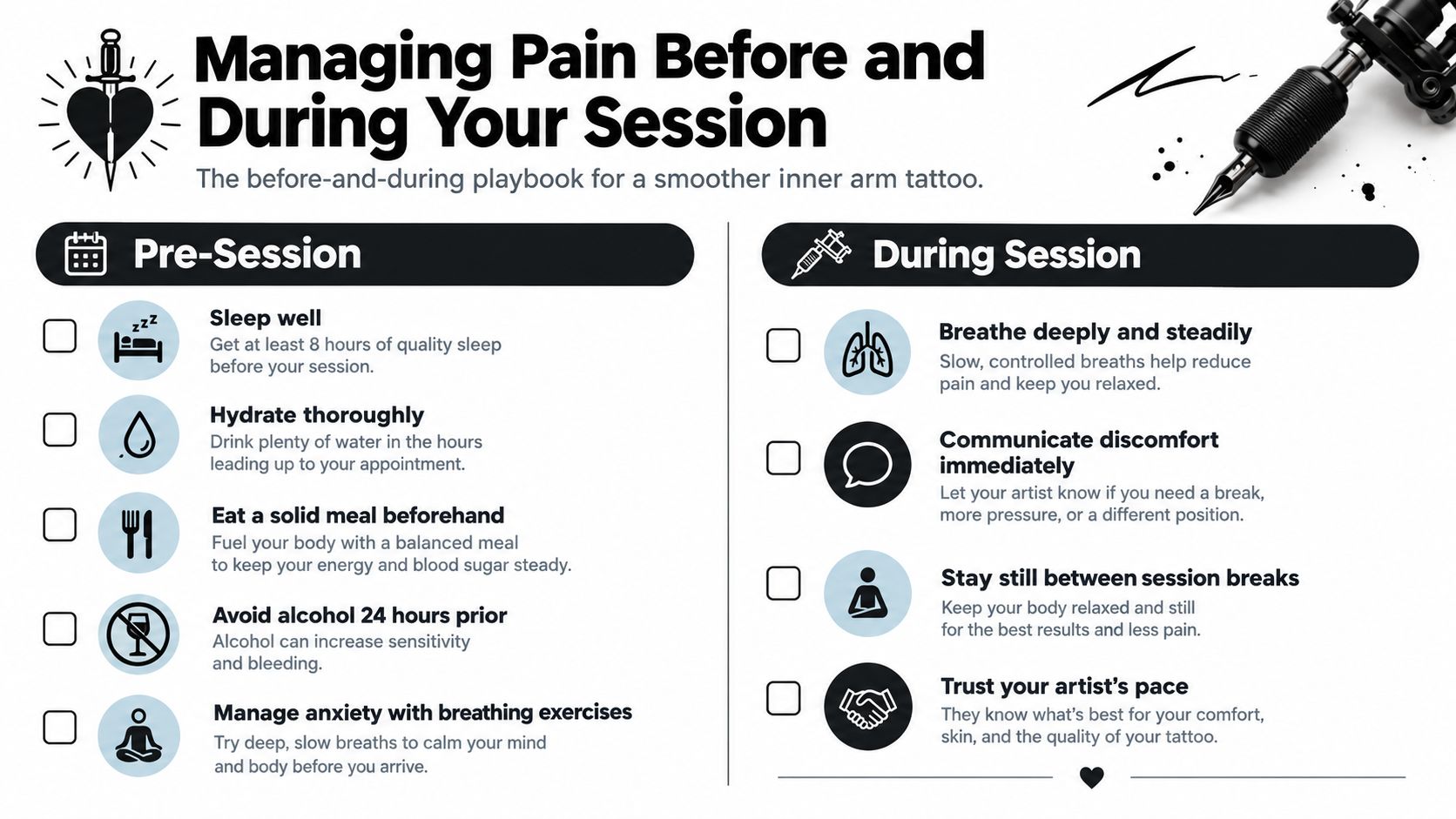
A good session starts before the needle touches skin. Sleep matters, food matters, and so does the way you plan the placement. If you're thinking about a first tattoo meal, this before-you-eat guide is a practical reference to pair with your appointment prep.
Before you walk in
Sleep as well as you can for the nights leading up to the appointment. Eat a real meal, not just a snack, and hydrate beforehand. Skip alcohol in the day before the session, since dehydration and bleeding make tattooing harder on the skin.
The biggest mental win is showing up with a clear placement plan. Know where the design sits relative to the elbow crease and the armpit fold, because those areas tend to feel different from the middle of the arm. If you're anxious, use slow breathing before you arrive, not only when the machine starts.
While you're in the chair
Ask for a slower pace if the area starts to sting harder than expected. Short breaks help, especially when the artist is working near a crease or moving across a more mobile section of skin. Keep your arm relaxed, because prolonged pressure on a bent or flexed arm can make the sensation feel worse.
You can also ask your artist to split a larger design into shorter sessions. That's not a sign of weakness. It's a smart way to keep the skin from getting overly irritated.
If the pain changes from steady discomfort to sharp, rising strain, speak up right away.
Some clients also find it useful to think in terms of nervous system control rather than grit. The mind-body approach to ending pain offers that broader lens, which can help when the fear of pain is bigger than the pain itself.
The goal isn't to white-knuckle the session. It's to keep the body calm enough that the needle feels like work on skin, not a fight with your whole system.
Normal Healing Versus Warning Signs After an Inner Arm Tattoo
A tattoo creates repeated punctures that place pigment below the dermo-epidermal junction, which disrupts the skin barrier and starts an inflammatory response. That response is normal. Redness, tenderness, warmth, and some swelling are part of expected healing, especially in the first few days.
A dermatology review describes tattoo inflammation as lasting up to about 10 days, followed by tissue formation for up to 3 months and remodeling for up to 1 year (dermatology review). Those are healing phases, not a promise that soreness should last that long. The benchmark is direction. Normal healing should gradually calm down over days, not intensify, so track the trend rather than any single hour.
The inner arm needs a little extra care because it bends, brushes against clothing, and catches friction at the elbow crease. Loose, clean clothing helps. So does avoiding picking, soaking, or pressing on the fresh tattoo when the skin is already irritated.
What's normal and what isn't
Normal early healing: mild swelling, tenderness, and redness that slowly improves.
Normal over the next days: peeling, tightness, itchiness, and sensitivity that trend downward.
Not normal: redness that spreads, marked swelling, pus, fever, or pain that gets worse after it had started to settle.
A retrospective study cited in the same review found roughly 70% of tattooed patients experienced acute skin reactions and 6% developed persistent complications. That is why the time course matters. A tattoo can be sore and still be healing normally, but worsening pain, especially with heat or spreading redness, deserves prompt medical attention.
A separate medical series found tattoo symptoms could begin anywhere from within one month to more than five years after tattooing, which is why delayed reactions should not be brushed off (clinical series). That does not mean every itch is a crisis. It means a fresh tattoo is not the only time to stay alert.
Rule of thumb: soreness should move down, not up. If it climbs, spreads, or comes with fever, get it checked.
For general tattoo illness warning signs, this tattoo flu guide is a useful companion, especially if you are trying to separate normal aftercare discomfort from something that needs a clinician.
Planning Your Inner Arm Piece the Smart Way
A good inner arm piece starts with a consultation, not with a pain chart. Bring reference images, point out exactly where you want the design to sit, and ask the artist to map the edges against the elbow crease and armpit fold. That one conversation can change the whole experience.
Think in terms of session sizing, not just tattoo size. A dense black piece, a shaded floral, and a fine-line script all load the skin differently, even when they cover the same amount of space. If it's your first inner arm tattoo, a smaller or less saturated start often gives you a cleaner read on your own tolerance.
That's also why a placement guide matters. This first tattoo placement resource is useful if you're deciding whether the inner arm is the right first step or whether you'd rather start with an easier spot and move inward later.
Think Tank Tattoo in Denver offers complimentary consultations, so you can talk through placement, timing, and style before booking. The studio's artists work across different approaches, which makes it easier to match the design to the area instead of forcing the area to fit the design.
Best planning move: ask for the exact points where the design will cross high-sensitivity zones before you reserve the appointment.
Pain on the inner arm isn't a fixed verdict. It's a variable you can shape with placement, pacing, and preparation, and that's usually the difference between a session you endure and one you handle well.
If you're planning an inner arm tattoo in Denver, book a consultation with Think Tank Tattoo and talk through placement, session length, and aftercare before you sit down. A clear plan makes the inner arm easier to manage, and the right artist will help you map the design so the pain stays as manageable as possible.
Comments