
How to Choose a Hygienic Tattoo Studio
You walk into a Denver tattoo shop with a design saved on your phone, ready to book, and notice polished floors, framed artwork, and a spotless reception desk. It feels reassuring, but a clean-looking room only tells you how the studio presents itself. It doesn't show whether reusable equipment is processed correctly, whether ink is protected from contamination, or whether barriers are replaced between clients.
Tattooing breaks the skin, so hygiene depends on repeatable controls rather than atmosphere. Published surveys have found infectious complications in roughly 0.5% to 6% of tattooed people, while bacterial tattoo infections have been estimated at roughly 1% to 5% in reviews of the evidence (CDC archival review). Choosing a hygienic tattoo studio means learning to verify what happens behind the scenes, before the machine touches you.
Table of Contents
Finding a Hygienic Tattoo Studio
A studio can look immaculate and still have weak infection-control habits. Dust-free shelves, stylish lighting, and organized artwork are useful signs of general professionalism, but they don't confirm that the artist separates contaminated tools from sterile supplies or handles ink without cross-contamination.
The scale of tattoo-related infections also makes process verification reasonable, not excessive. A review reported a 77% increase in cases since 2000, identifying 185 infection reports across the literature and 108 U.S. cases documented since 2000 (review summary from Healio). Better reporting has helped reveal infections that might previously have gone undocumented, but the practical lesson is straightforward: safety can't be judged by décor.
Practical rule: Don't ask only whether a shop is clean. Ask how the shop proves that each client receives clean, properly handled equipment.
A reliable studio should be comfortable explaining its sterilization workflow, showing how it protects high-touch surfaces, and describing what happens to reusable tools after a session. You don't need to audit the entire operation, but you should be able to identify whether the artist follows a controlled process or relies on confidence and appearances.
Essential Standards and Sterilization Practices
The first benchmark is steam autoclave sterilization for reusable skin-piercing tools. The process starts with cleaning, because an autoclave can't reliably compensate for blood, ink, tissue, or other material left on an instrument. Official tattoo guidance specifies cleaning tools first, followed by steam sterilization at about 121°C, with packaged items typically processed for 30 minutes at 121°C or 15 minutes at 133°C (New York City Department of Health tattoo manual).
A professional answer should also include monitoring. Biological, chemical, and physical checks help verify that the sterilizer is operating as intended. An artist who says only “we have an autoclave” hasn't answered the important question, which is whether the complete cleaning, packaging, cycle, and monitoring workflow is followed consistently.
What should be single-use
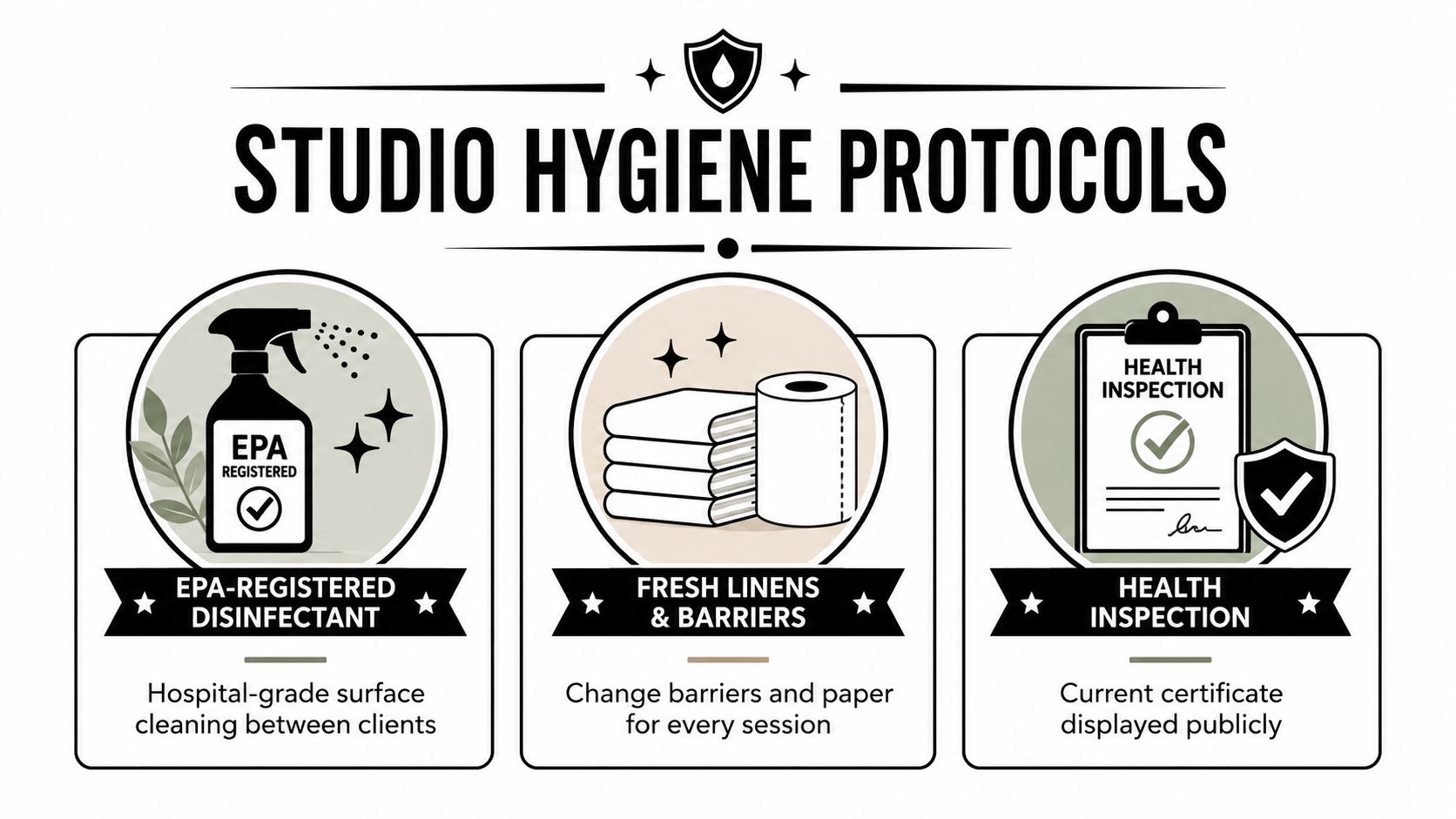
Some supplies shouldn't be cleaned and reused at all. Needles, disposable razors, ink caps, and protective coverings are examples of items that should be opened or placed fresh for your appointment. You should see sterile needle packaging opened in front of you, and ink should be poured into new, single-use cups rather than dispensed from a shared reservoir.
Skin preparation matters too. The artist should clean the tattoo area immediately before starting, use an appropriate antiseptic, and avoid touching the prepared skin with contaminated gloves or equipment. If the artist reaches for a phone, door handle, or personal item, they should replace their gloves before returning to the work area.
For readers who want more technical context, this guide to medical sterilization provides useful background on cleaning, packaging, and sterilization principles. You can also compare a studio's workflow with this practical resource on tattoo equipment sterilization, which focuses on the handling of reusable tools before and after a procedure.
Questions to Ask During Your Consultation
A consultation is the easiest time to evaluate a studio because you aren't already lying in the chair with a design underway. Ask direct questions, then listen for operational answers rather than reassuring adjectives.
Start with the equipment:
Sterilization cycle: Ask which reusable tools go through the autoclave and how the studio confirms that cycles have completed successfully.
Instrument workflow: Ask what happens after a tool is used. A sound answer should include separation of used equipment, cleaning, inspection, packaging, sterilization, and protected storage.
Needle packaging: Ask whether needles are single-use and opened in front of you. They should be.
Ink handling: Ask whether the artist pours ink into fresh disposable caps. Ink shouldn't be poured back into a bottle or accessed with equipment that has touched a client.
The distinction between a strong answer and a weak one is specificity. “We follow health regulations” is vague. “We use fresh caps, cover the machine and cord, change gloves after touching non-sterile surfaces, and process reusable tools through our cleaning and autoclave workflow” gives you something you can observe.
The same applies to barriers. Ask whether the artist covers the machine grip, cord, spray bottle, light controls, and other high-touch items with disposable barriers. These barriers don't replace cleaning, but they reduce contamination during a procedure and must be changed between clients.
Published guidance identifies failure to use sterile needles and cross-contamination from ink among preventable pitfalls, while infectious complications have been reported in roughly 0.5% to 6% of tattooed individuals (Ohio State Health guidance). A useful appointment-preparation resource is this list of questions to ask a tattoo artist, especially if this is your first session.
What to Observe During a Studio Visit
Watch the setup, not just the finished room. At reception, notice whether the public waiting area is kept distinct from the working stations and whether the tattoo area is organized for the task. A busy studio doesn't need to be silent or bare, but the artist's station should have a clear working surface, protected supplies, and a visible place for used items.
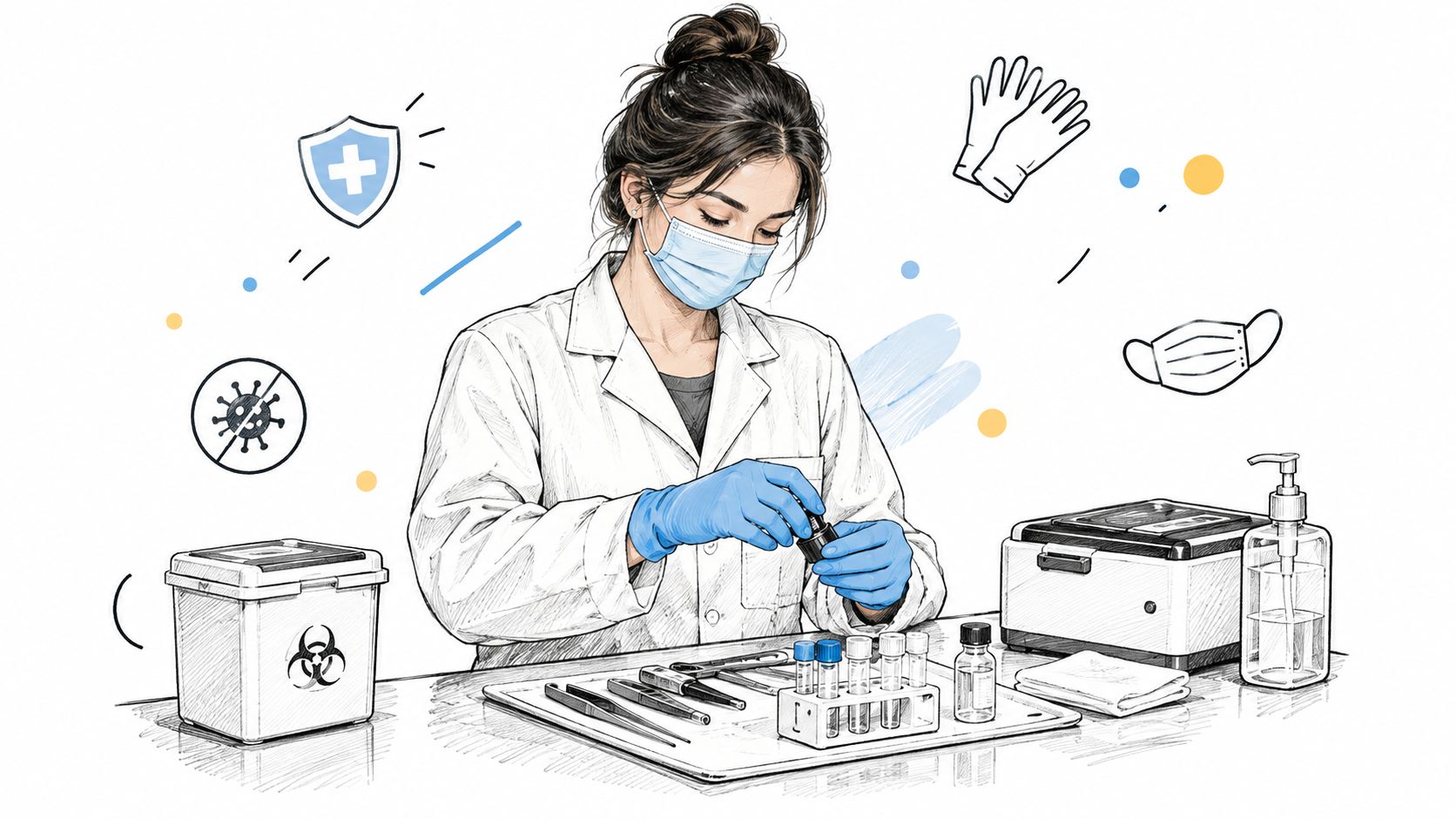
Look for the sequence of actions. The artist should prepare barriers, arrange supplies, wash their hands, put on gloves, and prepare your skin without repeatedly reaching into drawers or handling personal belongings. If they touch a phone, chair back, door, or face covering, they should change gloves before continuing with the tattoo.
Small details that reveal the process
Fresh plastic wrap, disposable table coverings, and protected machine cords show that the artist has planned for contamination points. A cluttered station with open product containers, personal drinks, loose paperwork, or uncovered equipment makes it harder to maintain a clean field.
The artist should also examine your skin before beginning. Recent guidance emphasizes single-use plastic wrap, low-level disinfection of chairs and tables, and avoiding tattooing near inflamed or rash-prone skin (Toronto Public Health tattoo guidance). A responsible artist will pause or reschedule if the planned area appears compromised instead of treating the appointment as more important than the condition of your skin.
The studio's layout can support good habits, but design cannot substitute for them. Ideas for arranging a functional workspace can be useful when assessing art studio ideas, yet your main focus should remain on what the artist does during setup.
The following visual provides another way to think about controlled handling and clean work environments:
Aftercare Guidance and Ongoing Safety
A tattoo leaves the studio with you, so the artist's process should continue through clear aftercare instructions. Before you leave, confirm when to remove the covering, how to wash the area, which products are appropriate, and how to protect it from clothing or bedding. Good guidance removes guesswork rather than relying on “keep it clean.”
Wash your hands before touching the tattoo. Clean it gently with a fragrance-free cleanser if recommended, then pat it dry with a clean towel or disposable paper. Apply moisturizer sparingly. A heavy layer can keep the surface damp and make irritation harder to assess.
Avoid scratching, picking, swimming, and unnecessary contact while the skin heals. The right routine may vary with the covering used and the tattoo's size or placement, so follow the artist's specific instructions instead of copying a routine from another appointment.
Aftercare guidance should explain what normal healing looks like and when to seek help. Increasing pain, spreading redness, worsening swelling, discharge, or feeling unwell should prompt medical advice. Do not assume those changes are merely part of a slow heal.
The CDC archival review reinforces why hand hygiene and sensible wound care matter, without predicting what will happen with an individual tattoo. Ask the artist to write down the routine if the instructions are easy to forget.
A responsible studio also explains who to contact with questions after the appointment. Clear follow-up advice shows that safety includes the healing period, not only the moment the needle is in your skin.
Red Flags and Decision Making
The most dangerous mistake is treating style as evidence of safety. A fashionable interior, expensive furniture, or a large social following can coexist with poor handling practices. Judge the studio by actions that reduce contamination, not by the visual identity it has built.
Some warning signs should end the conversation immediately:
Unclear sterilization: The artist can't explain how reusable tools are cleaned, packaged, sterilized, and stored.
Unwillingness to answer: Staff become defensive when you ask ordinary hygiene questions or refuse to explain their workflow.
Reused disposables: You see needles, razors, ink caps, or other designated single-use items being reused.
Bottle contamination: The artist dips a used needle or contaminated tool directly into an ink bottle, or pours unused ink back into it.
Glove problems: The artist works without gloves, keeps the same gloves after touching non-sterile objects, or continues after a glove tears.
Missing barriers: The machine, cord, spray bottle, chair controls, or other frequently touched surfaces aren't protected or disinfected between clients.
Poor skin assessment: The artist tattoos over inflamed, broken, or rash-prone skin instead of discussing the risk.
Pressure to skip questions: The studio pushes you to book immediately, discourages a consultation, or treats your concerns as an inconvenience.
Disposable needles alone don't make every studio safe. A single-use needle can still be contaminated by dirty gloves, an unprotected machine, a non-sterile ink cup, or a surface the artist touched and then brought back into the work area. The complete chain matters.
A hygienic tattoo studio doesn't need to perform safety theatrics. It needs to demonstrate ordinary controls consistently.
Be equally careful with vague claims such as “hospital clean” or “everything is sterile.” Ask what those words mean in practice. Can the artist describe the equipment workflow? Do you see new barriers and ink caps? Does the station remain controlled when the artist moves between tasks? Honest answers usually sound concrete because they describe actions, not marketing language.
Think Tank Tattoo is a Denver studio established in 2002 that offers complimentary consultations, where clients can discuss design direction, placement, timing, and safety before booking. The studio works with adults 18 and older and publishes practical information about equipment sterilization, which can help clients arrive prepared to ask better questions.
If a shop fails a basic hygiene check, leave, even if you like the artist's portfolio. A design can be recreated elsewhere. Avoiding an unsafe process is more important than preserving an appointment, deposit, or moment of enthusiasm.
Think Tank Tattoo offers complimentary consultations in Denver so you can discuss your design, placement, timing, and hygiene questions before your appointment. Review the studio's approach and request a consultation through Think Tank Tattoo before choosing the artist who will work with you.
Comments