
8 Vampire Bat Tattoo Ideas for Custom Inspiration
Can a vampire bat tattoo look unmistakably like a vampire bat without relying on fangs, red eyes, or a Halloween cliché? It can, but the strongest designs begin with more than a mood board. They consider the bat's anatomy, the intended symbolism, the available skin, and how the chosen style will age.
A vampire bat tattoo can communicate mystery, transformation, darkness, independence, or a love of horror while still feeling personal. The eight concepts below compare realistic portraiture, traditional flash, geometric abstraction, watercolor, gothic dark art, minimalist line work, biomechanical imagery, and tribal-inspired approaches. Each one is written as a consultation brief, with practical decisions about scale, placement, detail, and refinement.
Start by choosing the visual language, then define what the bat means to you. Match that idea to an appropriate canvas, collect references for anatomy and atmosphere, and bring them to a complimentary consultation at Think Tank Tattoo in Denver. Your final concept should be adapted to your body, preferences, and the artist's approach, not copied exactly from an example.
Table of Contents
1. Realistic and Portrait Vampire Bat Tattoo - Make detail serve recognition
2. Traditional and Old School Vampire Bat Tattoo - Keep the symbolism direct or personal
3. Geometric and Abstract Vampire Bat Tattoo - Protect the geometry on moving skin
4. Watercolor and Splash Vampire Bat Tattoo - Plan color before choosing size
5. Gothic and Dark Art Vampire Bat Tattoo - Design for the next tattoo as well
6. Minimalist Line Work Vampire Bat Tattoo - Minimal doesn't mean careless
7. Biomechanical and Cyborg Vampire Bat Tattoo - Choose the visual logic before the details
8. Tribal and Polynesian-Inspired Vampire Bat Tattoo - Let the pattern follow the body
1. Realistic and Portrait Vampire Bat Tattoo
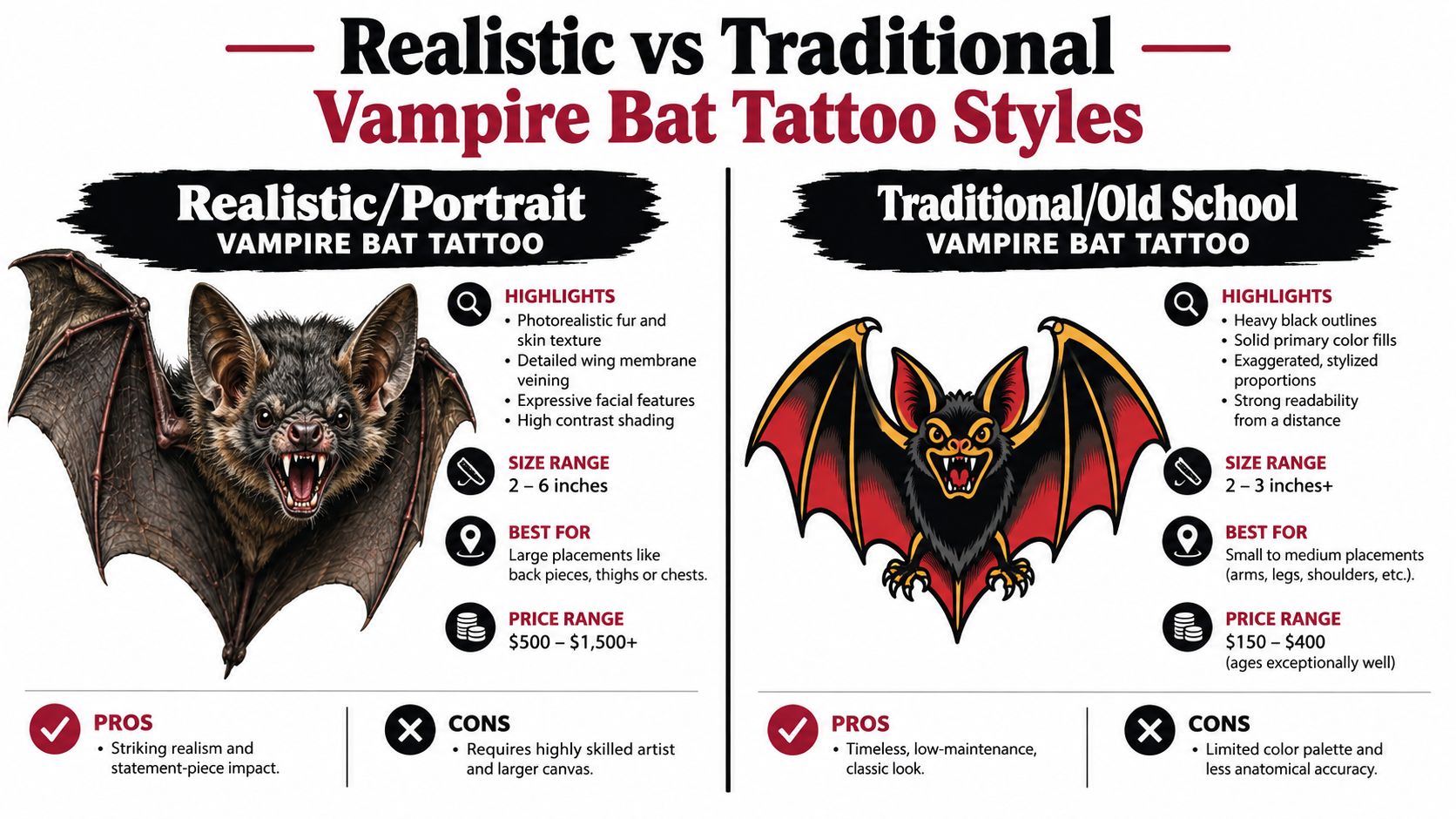
A realistic vampire bat tattoo works best when the animal itself carries the drama. Fur texture, facial structure, membrane wings, claws, and expression can create a design that feels closer to natural-history illustration than costume-shop horror. A close facial portrait can feel watchful and intelligent, while a full-wing composition creates a stronger sense of movement and scale.
The design needs high-quality references. Use clear bat photography that shows the nose, ears, wing joints, and body proportions instead of relying on a generic cartoon silhouette. The Smithsonian's account of vampire bat biology provides useful context for separating the actual animal from the later horror mythology. Only three bat species feed on blood, and only one targets mammals, which gives the subject a distinctive biological identity without requiring exaggerated fangs.
Make detail serve recognition
Realism demands room. A tiny portrait may preserve an intense expression for a short period, but it can't hold every strand of fur, facial shadow, and membrane fold with equal clarity. A flatter area such as the upper arm, outer forearm, thigh, chest, or shoulder blade usually gives the artist more control than a highly moving or sharply curved placement.
Clients seeking a polished portrait should review an artist's portfolio carefully, especially their work with animal faces, black-and-gray shading, and soft transitions. Think Tank Tattoo's guide to good portrait tattoo artists is a useful starting point for that conversation.
Practical rule: Choose the largest size you can comfortably live with if facial expression and anatomical detail matter more than discretion.
A portrait can become the centerpiece of a dark-art sleeve, sit between the shoulder blades with both wings open, or occupy the forearm as a vertical study. The trade-off is clear. You gain depth and individuality, but you also accept a longer design process and a greater need for an artist whose shading approach matches your references.
2. Traditional and Old School Vampire Bat Tattoo
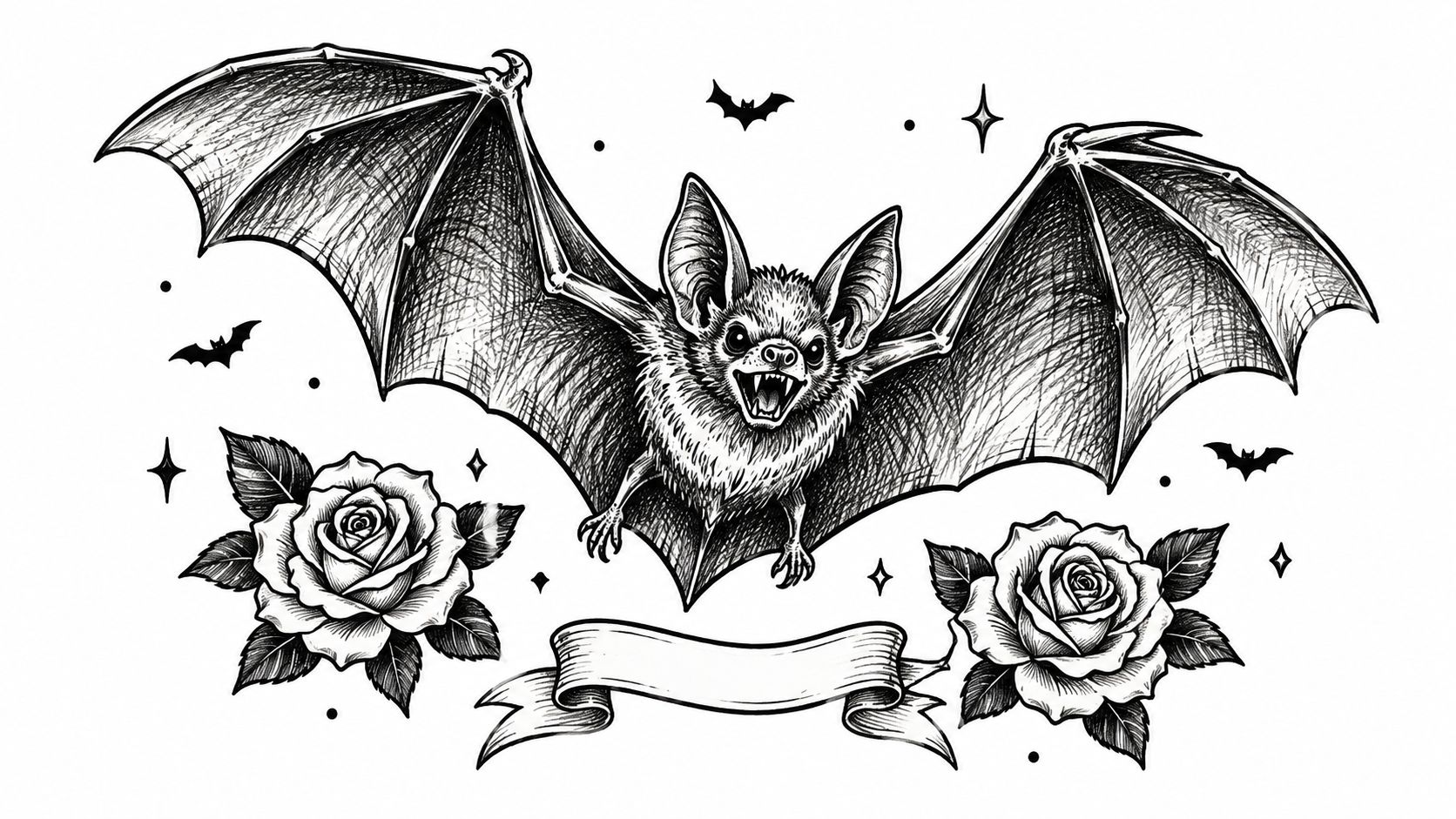
Traditional treatment turns the vampire bat into a bold emblem. Thick outlines, compact color fields, and simplified anatomy make the design readable from across a room. A red-and-black bat with a banner, roses, or a small crescent moon can feel vintage without becoming visually complicated.
This style is a strong choice for a first tattoo or for a collector building an Americana sleeve. It can sit comfortably beside daggers, swallows, roses, snakes, and other classic motifs because the visual language is already unified. A bat on the forearm or calf can work as a standalone flash-inspired piece, while a larger chest or upper-arm design can become an anchor for later additions.
Keep the symbolism direct or personal
Traditional imagery often communicates quickly. A spread-wing bat may suggest independence or night, while a banner can carry a personal phrase or date. If you want the design to feel less like a stock Halloween image, ask the artist to alter the wing posture, add a species-specific nose shape, or replace generic eyes with a more natural facial structure.
The bat tattoo symbolism overview from StyleCraze is useful for broad inspiration because bat imagery can carry meanings beyond darkness. Depending on context, clients may connect bats with transformation, intuition, good fortune, long life, or prosperity. Your design does not have to be “evil” just because it references a vampire bat.
A traditional tattoo succeeds through clarity. If the outline, silhouette, and color grouping work at a glance, the design has a strong foundation.
Ask to see traditional flash references during the consultation, but don't expect a direct copy. An artist can preserve the period feel while adjusting the bat's proportions to your body and choosing colors that fit your existing collection. The result should feel like a deliberate piece of tattoo design, not an image transferred without thought.
3. Geometric and Abstract Vampire Bat Tattoo
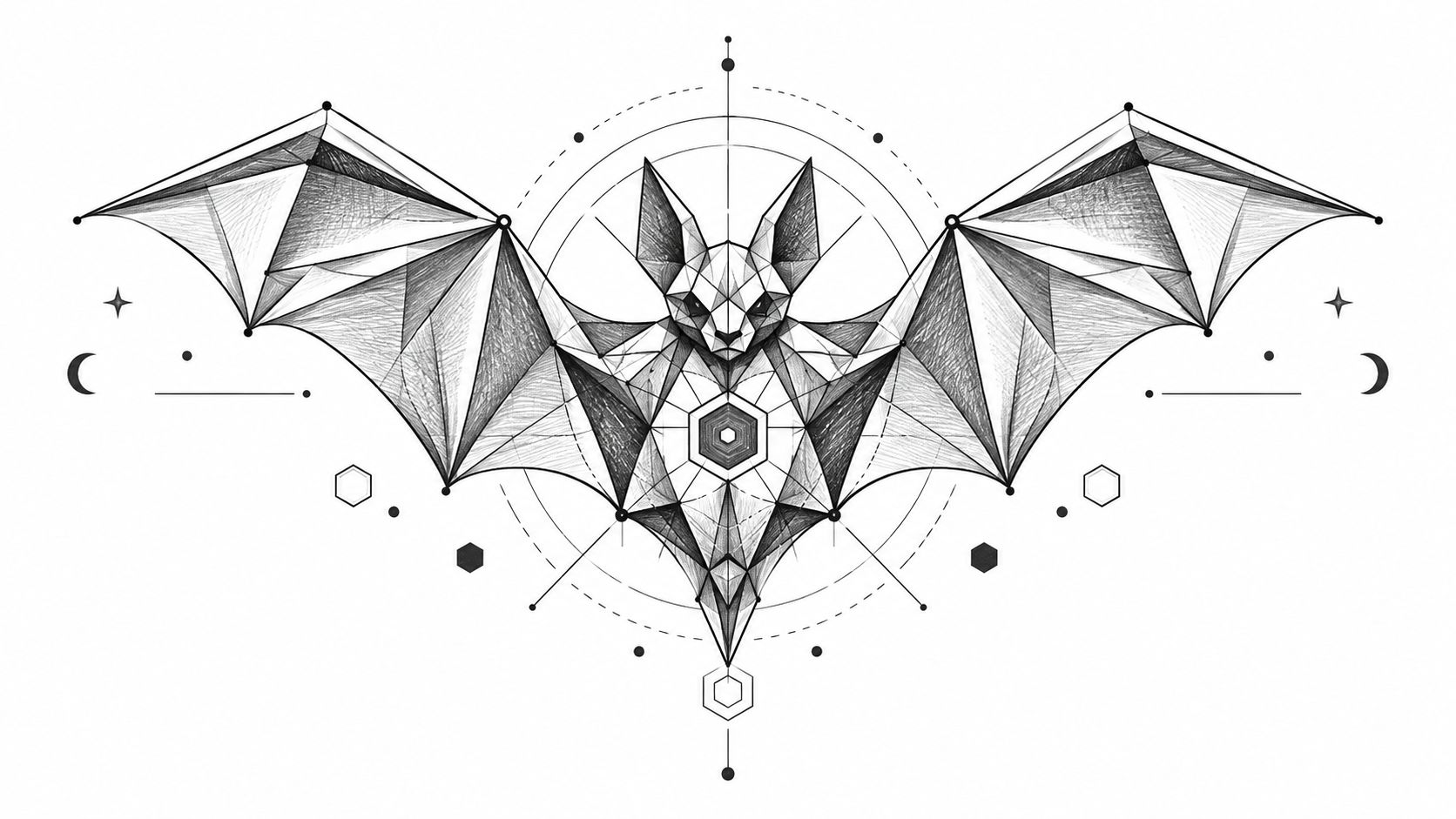
A geometric vampire bat tattoo replaces naturalistic texture with structure. Triangles can describe the wing tips, hexagons can frame the body, and repeated lines can turn the silhouette into a measured composition. The result suits someone who wants bat symbolism with a more architectural, intellectual, or contemporary character.
Symmetry is the obvious route, but it isn't the only one. A centered bat inside a mandala can feel ceremonial and balanced. An angular side profile can follow the length of the forearm. A wing can dissolve into tessellated shapes, creating a transition from recognizable animal to abstract pattern. The best designs decide where recognition ends and abstraction begins.
Protect the geometry on moving skin
Geometric work demands accurate planning. Curved surfaces can distort a symmetrical design, and natural body movement may make a straight line appear uneven from different angles. A shoulder, upper chest, thigh, or broad section of the back generally gives the artist more control than a narrow, highly mobile placement.
Bring pattern references, not only bat images. A consultation should address line density, negative space, symmetry, and how the composition will look when the body is relaxed and moving. Think Tank Tattoo's discussion of geometric blackwork tattoos can help you identify the kind of precision and contrast you prefer.
Use a drawn stencil or detailed line plan before committing. The client and artist can then test whether the wing span feels balanced, whether the central body is too small, and whether the surrounding shapes support or compete with the animal.
4. Watercolor and Splash Vampire Bat Tattoo
A watercolor vampire bat tattoo treats the animal as the focal shape inside a larger field of motion. Purple, blue, black, and diluted washes can suggest moonlight, smoke, blood, storm clouds, or abstract emotion. Splashes and irregular edges create energy that a controlled outline can't provide.
This approach is especially effective when the bat remains recognizable but the background does the expressive work. A realistic face can emerge from a loose color wash, or a simplified silhouette can sit over painterly marks that extend beyond the wings. The design feels artistic rather than literal, which makes it a good fit for clients who want dark subject matter without a strictly gothic presentation.
Plan color before choosing size
Watercolor effects need enough room to breathe. A thigh, back, full arm, or broad shoulder placement allows the artist to separate the bat from the surrounding color and build a meaningful palette. On a very small area, splashes may collapse into a crowded patch, while delicate transitions can lose their intended effect as the tattoo ages.
Discuss the color strategy during the consultation, including which areas will use solid black, which will remain skin breaks, and how the palette relates to your wardrobe or existing tattoos. The watercolor tattoo style guide from Think Tank Tattoo can help you arrive with more precise questions.
Sun exposure is another practical consideration. Once healed, consistent sunscreen use helps protect color saturation, while the artist can advise you about realistic maintenance based on the placement and your skin. Don't treat watercolor as a shortcut around design planning. It still needs strong composition, clear focal points, and enough contrast for the vampire bat to read first.
A useful consultation brief might be: “I want the bat to feel like it's emerging from a storm of indigo and violet, with the face remaining realistic and the wings dissolving into loose marks.” That gives the artist direction without prescribing an impossible copy.
5. Gothic and Dark Art Vampire Bat Tattoo
A gothic vampire bat tattoo can turn the animal into an entire atmosphere. Roses, thorns, skulls, crosses, Victorian filigree, smoke, and pointed architectural forms create a visual world around the bat. The design may feel elegant, mournful, dramatic, or confrontational depending on the balance between ornament and darkness.
Start with the mood rather than a shopping list of symbols. “I want a bat surrounded by every gothic object” usually produces competition between elements. “I want a solemn, cathedral-like composition with the bat as a central ornament” gives the artist a clearer foundation. Symmetry, placement, and heavy black can contour the body in a way that feels more like wearable architecture than a collection of separate images.
Design for the next tattoo as well
Gothic work often grows into a sleeve, back piece, or thigh composition. That makes the first consultation more important than the first appointment. Decide whether the bat will be a finished standalone image or a central feature with open areas reserved for later additions.
A useful mood board might include old architecture, engraved illustrations, wrought iron, stained glass, and references to the specific bat anatomy you want. You can also explore ways to overcome creative block with dark art before the appointment, but treat generated or found images as prompts, not tattoo-ready artwork.
The most common failure is overfilling the design. Dense black, fine ornament, and multiple symbolic objects can merge if the artist doesn't establish clear negative space. Ask where the eye should land first and which details are essential to your meaning.
A gothic vampire bat can represent horror, but it can also express beauty in darkness, outsider identity, transformation, or a personal relationship with the night. That broader interpretation gives the artist more room to create something distinctive instead of repeating fangs, blood, and red eyes.
6. Minimalist Line Work Vampire Bat Tattoo
Minimalist line work communicates through suggestion. Two curved wings, a compact body, a pointed ear, and a small nose may be enough to identify the subject when the proportions are handled carefully. The appeal is discretion, speed, and flexibility. A small bat can sit on the wrist, ankle, finger, or behind the ear, or a larger single-line composition can follow the arm or collarbone.
The key question is whether you want a vampire bat specifically or just a bat. At small sizes, anatomical distinctions disappear quickly. If species recognition matters, retain one or two defining features, such as a more pronounced muzzle, a clear wing structure, or a grounded pose rather than a generic flying silhouette.
Minimal doesn't mean careless
Fine line work leaves little room to hide uneven curves. Ask for several variations at the consultation, including a fully closed silhouette, an open contour, and a version with selective black fill. Compare them at the intended size, not only on a large screen.
A small design can also be a good way to add a new motif to an existing collection. A client with stars, moons, plants, or small animal tattoos might use the bat as part of a quiet night-sky group rather than presenting it as a horror emblem.
The trade-off is longevity. Fine details and very close lines can soften or merge over time, especially when the design is reduced too far. Blackwork guidance recommends strong contrast, adequate line weight, and avoiding details that are too small to remain separate. For a practical reference on creating clean source imagery, see this guide to image line art, then let the tattoo artist adapt the idea to skin.
7. Biomechanical and Cyborg Vampire Bat Tattoo
A biomechanical vampire bat tattoo is built around contrast. Soft fur meets metal plating. Wing membranes reveal gears or circuitry. A natural face may transition into a mechanical jaw, or one side of the bat may remain biological while the other becomes engineered. The concept is a strong fit for science-fiction enthusiasts who want something more specific than a conventional horror design.
This style needs a large canvas because the illusion depends on layered construction. The artist has to show what is skin, what is machine, what is shadow, and what appears to sit beneath the surface. An upper arm, thigh, back, or extended sleeve gives those elements room to connect without becoming a dense block of unrelated texture.
Choose the visual logic before the details
Bring two groups of references. The first should show bat anatomy, including wing joints, body posture, and facial structure. The second should define the machinery, whether you prefer industrial gears, clean cybernetic panels, exposed cables, circuit paths, or a worn mechanical surface.
Black and gray can make the design feel like engraved science fiction, while controlled color can separate metal, energy, and organic tissue. Neither option solves a weak composition. Ask the artist to establish the silhouette first, then explain how the mechanical components will support it.
A common problem is adding technology everywhere. If every section contains gears and cables, the bat disappears. Reserve the most detailed machinery for the areas that need emphasis, such as a wing root, shoulder, or split facial plane. The rest can use broader values and negative space.
This is a concept to book through a serious portfolio review rather than a rushed appointment. You should leave the consultation knowing whether the project is best approached as a single piece or developed across multiple sessions, and whether the artist's existing work shows convincing organic-mechanical transitions.
8. Tribal and Polynesian-Inspired Vampire Bat Tattoo
A tribal or Polynesian-inspired vampire bat tattoo uses bold black shapes, interlocking patterns, and repeated motifs to create a powerful graphic form. The bat may appear as a central silhouette inside a larger composition, or its wings may become the pattern itself. On the chest, back, upper arm, thigh, or calf, the design can function as a substantial body-flow piece rather than a small emblem.
Cultural responsibility has to guide the process. “Tribal” is a broad commercial label that can flatten distinct traditions into a generic look. If you're drawn to Polynesian visual language, research the specific tradition and discuss what is appropriate with an artist who has genuine experience in that design approach. Don't borrow sacred or community-specific motifs only because they look decorative.
Let the pattern follow the body
The strongest compositions use the body's shape. Wing arcs can follow the chest or shoulder, while bands and directional patterns can wrap the arm or calf. A consultation should cover how much solid black you want, where skin breaks will remain, and whether the bat should be obvious at first glance or emerge from the pattern.
Bring references for the overall density and flow, but avoid asking an artist to reproduce a cultural design element without context. The final piece should be developed collaboratively, with clear attention to respectful representation and anatomical readability.
Bold blackwork can make this approach visually durable. Blackwork tattoo guidance emphasizes the value of strong silhouettes, dense saturation, and contrast for long-term readability. For a vampire bat, that means keeping the wings, body, and negative spaces intentional instead of filling every available area.
A bat that disappears completely into the pattern may be visually impressive but fail the original brief. Ask the artist to show you the design as both a complete pattern and a simplified silhouette. If the animal still reads in the second version, the concept has a stronger foundation.
8-Style Vampire Bat Tattoo Comparison
Style | Complexity 🔄 | Resources & Time ⚡ | Expected Outcome ⭐📊 | Ideal Use Cases 💡 | Key Advantages ⭐ |
|---|---|---|---|---|---|
Realistic / Portrait Vampire Bat Tattoo | 🔄 Very high, advanced shading, fine-detail work, multi-hour sessions | ⚡ High time & cost; experienced artist; $500–$1,500+; larger canvas (4–6"+) | ⭐📊 Museum-quality realism, striking visual depth; ages well with touch-ups | 💡 Large placements (back, thigh, chest); collectors; statement pieces | ⭐ Striking realism; showcases technical mastery; strong depth/contrast |
Traditional / Old School Vampire Bat Tattoo | 🔄 Low–Medium, bold, repeatable shapes and clear outlines | ⚡ Low cost & time; quick sessions; $150–$400; easily reproducible | ⭐📊 Timeless, high readability from distance; very durable over time | 💡 First-timers, small–medium placements, traditional sleeves | ⭐ Low maintenance; classic look; consistent results across artists |
Geometric / Abstract Vampire Bat Tattoo | 🔄 Medium–High, precision linework and symmetry required | ⚡ Medium resources; skilled line artist; $300–$800; prep line-drawings | ⭐📊 Modern, sophisticated aesthetic; clean aging if executed precisely | 💡 Design-conscious clients; shoulder/chest/thigh; mandala/ sleeve elements | ⭐ Clean, contemporary look; ages well; high visual design value |
Watercolor / Splash Vampire Bat Tattoo | 🔄 High, complex color layering and blending techniques | ⚡ High cost & upkeep; color-specialist artist; $600–$1,800+; larger pieces | ⭐📊 Unique, vibrant, highly artistic results; color fades faster, needs touch-ups | 💡 Large full-color pieces; artistic clients seeking expressive work | ⭐ Highly individual and expressive; contemporary visual impact |
Gothic / Dark Art Vampire Bat Tattoo | 🔄 High, complex composition with ornamental elements | ⚡ Medium–High time & cost; multi-session projects; $400–$1,500+ | ⭐📊 Dramatic, moody statement pieces; cohesive thematic potential | 💡 Gothic sleeves, back pieces, collectors of dark/horror aesthetics | ⭐ Strong personal symbolism; cohesive theme building; bold presence |
Minimalist Line Work Vampire Bat Tattoo | 🔄 Low, simple, precise fine-line execution | ⚡ Very low time & cost; quick sessions; $100–$300; 30–60 minutes | ⭐📊 Elegant, timeless, subtle impact; ages well with good line work | 💡 First-timers, small placements (wrist, ankle, behind ear), professionals | ⭐ Affordable, fast, versatile; minimal maintenance |
Biomechanical / Cyborg Vampire Bat Tattoo | 🔄 Very high, intricate hybrid of organic and mechanical details | ⚡ Very high cost & sessions; specialist artist; $800–$2,500+; 6–12+ hours total | ⭐📊 Highly unique, conversation-starting; detailed work may need touch-ups | 💡 Sci‑fi/tech enthusiasts; large-scale sleeves or back pieces | ⭐ Unique blend of organic + tech; showcases artist creativity and skill |
Tribal / Polynesian Vampire Bat Tattoo | 🔄 Medium–High, pattern consistency and cultural sensitivity required | ⚡ Medium resources; artist experienced in tribal work; $400–$1,200+; multi-session | ⭐📊 Bold, long-lasting visual impact; strong cultural/personal symbolism | 💡 Large sleeves, chest/back pieces; clients seeking symbolic designs | ⭐ Strong readability; excellent longevity; powerful symbolic presence |
Turn Inspiration Into a Tattoo Plan
The best vampire bat tattoo isn't necessarily the most detailed or the darkest. It's the one that makes a clear decision about style, meaning, scale, placement, and longevity before the needle touches skin.
Begin with the visual direction. Choose realism if the animal's face and anatomy are central to the idea. Choose traditional work if you want bold recognition, strong color grouping, and an easy relationship with classic tattoo imagery. Geometric designs suit clients who prefer order and abstraction, while watercolor works better for people who want movement, atmosphere, and a carefully planned palette.
Then identify the meaning you want to retain. Is the bat a symbol of transformation, independence, intuition, outsider identity, natural history, or horror? You may want a dark mood without presenting the animal as evil. You may want a species-specific design that looks more like a real common vampire bat than a generic Halloween icon. That distinction should shape the reference images, facial structure, wing posture, and surrounding symbols.
Scale comes next. Minimalist and traditional approaches can preserve clarity in compact formats when the artist simplifies intelligently. Realistic and biomechanical concepts need more space because their impact depends on layered texture and separation. Gothic compositions need enough room for ornament and future additions. Watercolor requires a canvas where color fields can breathe, while tribal-inspired work needs space for body flow and culturally respectful development.
Bring references to communicate direction, not to demand an exact copy.
Your references might include a bat photograph, an old engraving, a color palette, a gothic architectural detail, a geometric pattern, or an example of line weight. The artist should adapt those ingredients to your anatomy, skin, existing tattoos, and preferred level of visibility. A consultation is where you decide what belongs in the final design and what should be removed.
Think Tank Tattoo offers complimentary consultations for clients who are 18 and older, with a $100 shop minimum and a non-refundable $100 deposit required to reserve an appointment. Discuss placement, timing, session planning, aftercare, and whether the concept should begin as a standalone tattoo or part of a larger collection. If you need another source of visual prompts before that conversation, you can browse AI tattoo ideas, but use them to explore possibilities rather than replace an artist's custom design process.
Choose the concept you can explain in a sentence, then bring the details that make it yours. A strong vampire bat tattoo should read clearly, fit the body naturally, and still feel personal after the novelty of the image has passed.
Think Tank Tattoo offers custom tattoo consultations in Denver, with artists working across realistic, traditional, geometric, watercolor, gothic, minimalist, biomechanical, and other styles. Visit Think Tank Tattoo to discuss your vampire bat tattoo references, placement, scale, and a design direction made for you.
Comments