
7 Custom Forearm Tattoos Ideas to Explore
You have a strong tattoo idea, but the key decision is still open. Should it become the first anchor of a sleeve, a self-contained image, a lettering piece, or a composition built around the length and taper of your arm? The best custom forearm tattoos aren't merely attractive designs placed on available skin. They account for forearm flow, muscle movement, wrist and elbow transitions, daily visibility, and the possibility of future work.
The seven studios below represent different planning approaches, not a universal ranking. One may suit collaborative sleeve development, another may be better for a traditional design built to age well, while another may offer a direct route to finding an available artist. Compare the relevant portfolios, discuss size and placement during a consultation, and confirm timing, pricing, deposits, age policies, and aftercare instructions directly with the studio. For general skin-care context before and after tattooing, review this guide to natural tattoo skincare.
Table of Contents
1. Think Tank Tattoo - Best fit for planning beyond one tattoo
2. Dedication Tattoo - Choose structure over unnecessary detail
3. Mammoth American Tattoo - Good for turning inspiration into original work
5. Ritual Tattoo & Gallery - Match the artist, style, and calendar
6. Bound By Design - Flexibility helps with touch-ups and multi-session work
7. Certified Tattoo Studios - Convenience still requires portfolio discipline
1. Think Tank Tattoo
Think Tank Tattoo is a strong starting point when the forearm tattoo is part of a larger plan. Established in 2002 on South Broadway, the Denver studio brings together artists with different specialties, creating room for clients to compare approaches before committing to a direction. That range matters when a concept could work as illustrative black and grey, lettering, florals, realism, or a developing sleeve.
The studio offers complimentary consultations, where you can discuss the concept, placement, timing, and artist fit. Its spacious 3,000 sq. ft. collaborative studio also supports a setting where ideas can be refined with input from experienced artists. For a forearm piece, ask how the design should wrap, where the visual center should sit, and whether the wrist or elbow should remain open for future work.
Best fit for planning beyond one tattoo
Think Tank is particularly relevant if you're considering a multi-session piece or a sleeve foundation. A collaborative studio can help you avoid a common planning mistake, choosing an isolated image that later becomes difficult to connect with additional tattoos.
Before booking, clarify the studio minimum, deposit terms, appointment timing, and aftercare process. Think Tank requires clients to be 18 or older, has a shop minimum, and requires a non-refundable deposit, so confirm the current policies directly with the team.
Practical rule: If the forearm tattoo may become a sleeve, tell the artist before the first stencil is placed. Negative space and direction are easier to protect at the beginning than to recover later.
The trade-off is availability. Popular artists may have longer waits, and a custom-focused studio may offer fewer quick-pick options for clients seeking a small walk-in tattoo. Visit Think Tank Tattoo to review the team and request a consultation.
2. Dedication Tattoo
Dedication Tattoo suits clients who want a forearm design with a clear visual language and long-term readability. The South Broadway shop works across American Traditional, Japanese, black and grey, script, and other established approaches. Those styles can translate well to the forearm because they give the artist a defined structure, strong silhouettes, and enough room to balance detail with open skin.
For smaller forearm pieces, walk-ins may be possible, while appointments make more sense for custom work, lettering revisions, or a composition that needs to follow the arm. If you're choosing a snake, dagger, flower, animal, or script design, ask the artist to show how the image will read from the front, side, and natural resting position of the arm.
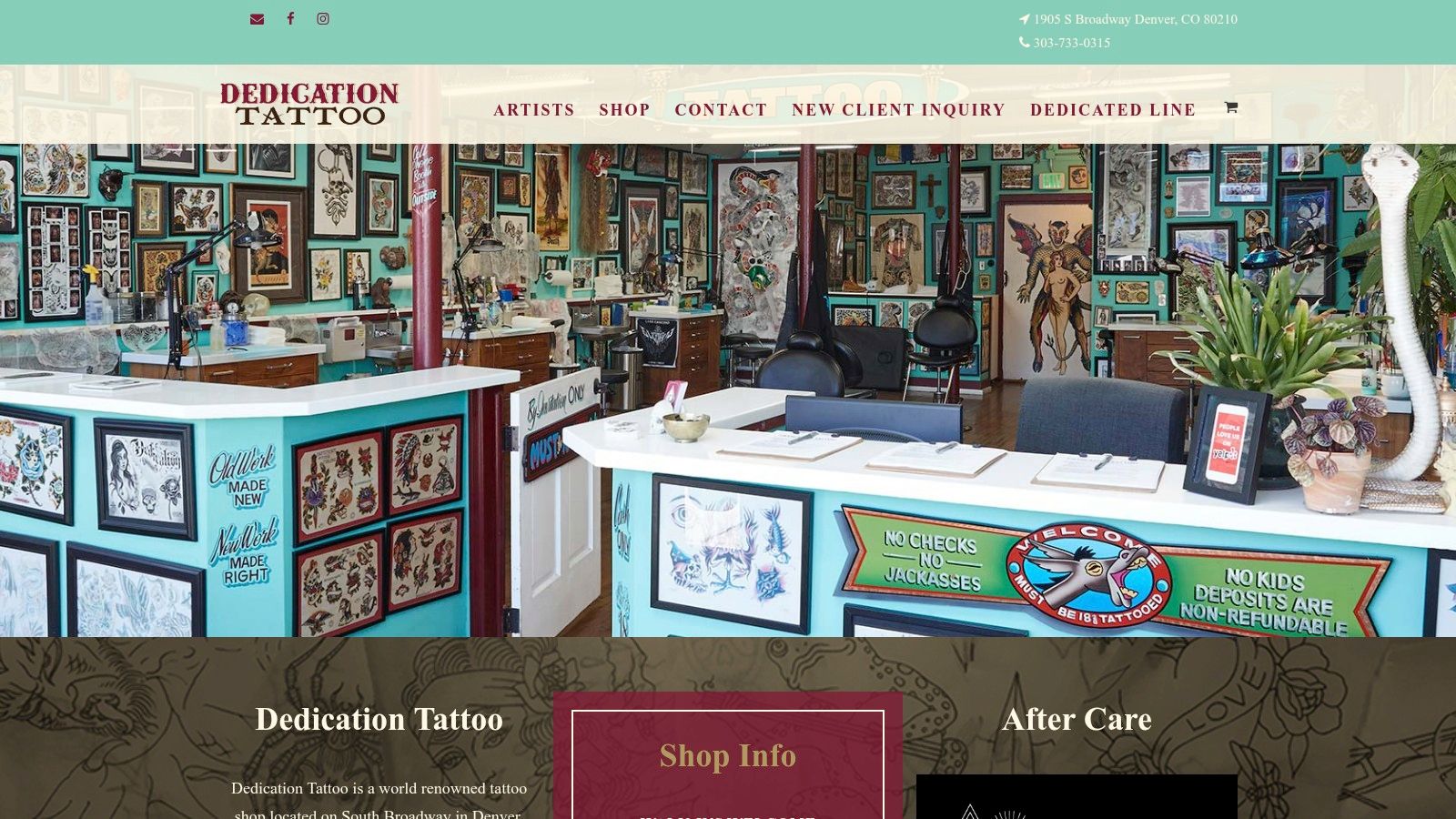
Choose structure over unnecessary detail
The forearm is a visible placement, but it isn't one uniform surface. The outer forearm generally offers a straightforward viewing plane, while the inner forearm can make lettering or personal symbols feel more private. Near the wrist, the design needs enough breathing room to avoid looking crowded against the natural narrowing of the arm.
Dedication's emphasis on established styles makes it worth asking about line weight, spacing, contrast, and aging, not only the reference image. You can also use this tattoo artist portfolio guide to evaluate whether an artist's healed work, composition, and preferred style match your brief.
The main limitation is that hourly rates vary by artist and aren't posted publicly. Popular artists may also book ahead, so ask for an estimate, deposit requirement, minimum, and likely session structure before you treat a walk-in as the right route. For a first tattoo, a scheduled consultation is usually more useful than arriving with an image and no size or placement decision.
3. Mammoth American Tattoo
Mammoth American Tattoo approaches the forearm as an art piece rather than a generic placement. The Whittier studio combines tattooing with a gallery environment and emphasizes original, custom illustrative work. That setting can help first-time clients move beyond copying a reference and instead identify the qualities they want, such as a particular line rhythm, visual mood, or balance of solid black and open skin.
Mammoth has multiple artists with distinct illustrative aesthetics. Review those portfolios carefully, then bring a concise brief to the appointment. A useful brief can state the subject, preferred style, approximate size, orientation, colors, and elements that should remain open. The artist still needs to redraw the concept for your anatomy, but clear constraints make that conversation more productive.
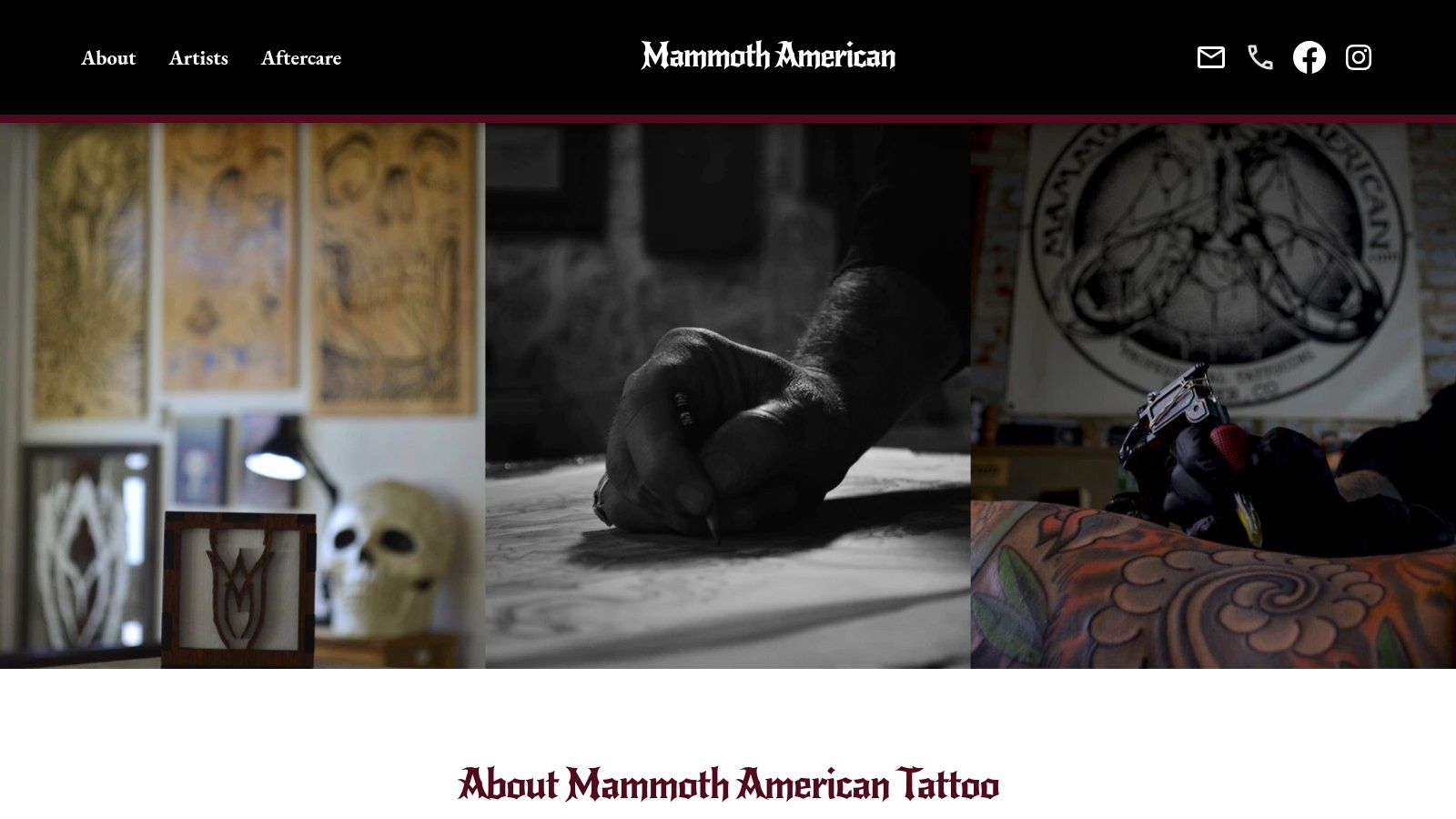
Good for turning inspiration into original work
Walk-ins are welcome, but appointments are recommended for forearm tattoos that require composition and placement planning. An appointment gives you time to decide whether the image should run vertically, angle with the arm, or wrap partially around it. It also lets the artist assess whether fine details will remain legible at the intended scale.
For more inspiration, explore these forearm tattoo ideas for men, then separate the motif you like from the exact execution you want copied. A portrait, botanical arrangement, or animal can be redesigned to fit your arm rather than transferred as a flat image.
Mammoth's regular hours are limited to Wednesday through Saturday, so planning ahead matters. Pricing isn't listed publicly and must be confirmed with the selected artist. Ask about availability, deposit terms, minimums, the number of sessions, and how the studio handles revisions before approving the design.
4. Til Death Tattoo
Til Death Tattoo is built for clients who don't want a standard template. The RiNo studio is appointment-only and focuses exclusively on one-of-a-kind custom work, with an online inquiry process and artist profiles that support direct outreach. That makes it a natural fit for a forearm design where negative space, musculature, and personal symbolism need to work together.
A forearm composition can look balanced when the main subject follows the arm's length, but the same image may feel awkward if it fights the taper or lands poorly at the wrist. During the consultation, ask the artist to show the design in several orientations. You should also discuss whether the piece is meant to be read primarily from your perspective, from across a room, or from both sides of the arm.
Originality requires a slower brief
The advantage of an appointment-only process is focus. You can spend more time explaining why a symbol matters, which visual references are useful, and which elements should not appear in the finished design. That's especially valuable when you want an image that feels personal without filling the forearm with disconnected details.
The trade-off is access. A specific artist may not be immediately available, and pricing isn't posted publicly. Submit a complete inquiry with your concept, placement, approximate size, references, and scheduling needs. Avoid sending a large folder of nearly identical images, because the artist needs to understand the design direction rather than reproduce a collage.
Til Death's curated team offers varied specialties, but portfolio matching remains your responsibility. Look for work with comparable composition and healed readability, not just a single attractive image in an unrelated style. A strong consultation should leave you with a clearer plan for scale, orientation, negative space, session timing, and the relationship between the tattoo and any future forearm work.
5. Ritual Tattoo & Gallery
Ritual Tattoo & Gallery solves a different problem, timing. Its centralized “books open” status and online booking inquiry tool make it easier to see which artists are accepting projects and whether their current availability matches your schedule. That's useful when you already know the style you want but don't want to send inquiries blindly.
The roster includes artists working in illustrative, fine-line, color, and black and grey approaches. Those choices create very different forearm outcomes. Fine line may suit a restrained botanical or symbol, while illustrative or black and grey work can provide more visual weight for a larger standalone image. Color requires a separate conversation about saturation, contrast, and how the design will sit beside future tattoos.
Match the artist, style, and calendar
Start by choosing the design problem, then use the roster to find the artist. If you need a compact piece with delicate spacing, prioritize portfolios showing similar work at a comparable size. If you're planning a larger composition, review how the artist handles transitions, background elements, and open skin across a limb.
A centralized booking system is convenient, but it doesn't replace a detailed consultation. Ask what the artist needs before quoting, whether a deposit is required, how many sessions are expected, and whether the design is finalized before the appointment. Pricing and shop minimums aren't listed publicly, so include those questions in the initial inquiry.
Popular artists' books may close quickly. If your preferred artist isn't accepting submissions, don't automatically switch styles just to secure an earlier date. A forearm tattoo is highly visible, and the better decision is usually to wait for a portfolio match rather than compromise on the artist's ability to execute the idea.
6. Bound By Design
Bound By Design is a practical choice for clients who value scheduling flexibility and a broad artist roster. The Denver studio has operated since 1993 and offers tattooing and piercing at its Colfax location. Multiple artists cover different styles, so the main task is identifying the person whose portfolio matches your desired forearm composition.
Hygiene questions should be direct and specific. Bound By Design describes health board inspection and single-use needles as part of its standards. Still, ask the artist or front desk about preparation, sterile setup, barrier protection, and aftercare at the time of booking, because a professional consultation should cover the actual process rather than rely only on general shop information.
Flexibility helps with touch-ups and multi-session work
The Colfax location lists extended daily hours of 11am to 9pm, which may help clients fit consultations, larger sessions, or touch-ups around work and travel. Walk-in availability varies in a busy location, so flexibility doesn't guarantee that the right artist can start immediately.
Use this custom tattoo planning resource to organize your concept before contacting the studio. Bring a clear explanation of what must remain recognizable, where the tattoo should face, and whether you want space reserved for additional work.
Pricing and minimums aren't posted publicly, so ask for an artist-specific quote. Also confirm the deposit, cancellation policy, age requirements, expected session length, and aftercare materials. The key trade-off is breadth. A large roster increases the chance of finding an opening, but it also means you need to compare portfolios closely rather than choosing a studio based only on convenience.
7. Certified Tattoo Studios
A tight travel schedule, a nearby shop, or uncertainty about which artist fits your idea can make a large studio network useful. Certified Tattoo Studios has several Denver-area locations and a broad artist roster, so you can direct an inquiry to a convenient shop or a preferred artist. That access helps travelers, new residents, and clients coordinating a forearm appointment around work.
Free consultations and a pre-design process give you room to settle the practical choices first. Discuss size, placement, orientation, and how the design should follow the forearm's length and rotation. A consultation should also clarify whether the piece can stand alone or leave space for a future sleeve.
Convenience still requires portfolio discipline
A broad roster gives you more options, while consistency can vary between artists. Review the individual artist's portfolio rather than relying on the studio gallery. Compare forearm examples, healed line clarity, negative-space control, and whether the artist keeps detail readable at your intended size.
Ask how the team matches clients with artists. State whether you want blackwork, realism, fine line, lettering, color, or a sleeve-compatible composition. Bring references, then explain what must remain recognizable and what may change to suit anatomy, movement, and long-term aging.
Pro tip: confirm who will draw and tattoo the piece before paying a deposit. The right artist should be able to explain how the design will wrap, face, and remain legible on the forearm.
Pricing and shop minimums are not listed publicly, so request a quote after discussing the design. Confirm booking requirements, deposit terms, age policies, the selected location, session timing, and aftercare instructions. Certified's strength is access across locations. The trade-off is that you must take greater responsibility for artist selection, making sure the convenient appointment also matches the design and execution you want.
Top 7 Custom Forearm Tattoo Studios Comparison
Studio | Process / Complexity 🔄 | Scheduling & Resources ⚡ | Expected Quality ⭐📊 | Ideal Use Cases 💡 | Key Advantages |
|---|---|---|---|---|---|
Think Tank Tattoo | Collaborative, multi-artist workflow; complimentary consults; custom multi-session planning | Large 3,000 sq ft studio; clear deposit/minimum policies; popular artists may have wait times | ⭐⭐⭐⭐⭐ · High custom work that follows forearm anatomy | Multi-session forearm projects, sleeve planning, clients who want artist input | Diverse team; thorough consults; studio scale |
Dedication Tattoo | Flexible, appointments for custom work; walk-ins for smaller pieces | Convenient S. Broadway location; walk-ins possible; hourly rates vary by artist | ⭐⭐⭐⭐ · Durable, time-tested designs built to age well | Single-session forearm tattoos; traditional/Japanese styles; clients wanting longevity | Consistent local reputation; style breadth; walk-in option |
Mammoth American Tattoo | Custom-forward, gallery-style process; appointments recommended | Gallery environment; walk-ins welcome but limited hours (Wed–Sat); pricing by artist | ⭐⭐⭐⭐ · Original illustrative results with strong communication | First-timers; illustrative/original forearm pieces; clients who value atmosphere | Welcoming gallery setting; clear appointment guidance |
Til Death Tattoo | Appointment-only; online inquiry workflow; curated artist selection | Strict bookings via inquiry; likely wait times; quotes after consult | ⭐⭐⭐⭐⭐ · Highly personalized, one-of-a-kind compositions | Clients prioritizing originality and close artist collaboration | Focused on unique, anatomy-aware designs; direct artist contact |
Ritual Tattoo & Gallery | Centralized "books open" process; online booking inquiry; rotating roster | Efficient availability matching; online tool for timing projects; quotes after inquiry | ⭐⭐⭐⭐ · Quality varies by artist but strong options across styles | Selecting an artist based on current availability; multi-session planning | Easy artist selection; variety of aesthetics under one roof |
Bound By Design | Established studio processes; visible hygiene standards and inspections | Extended daily hours (11am–9pm Colfax); busy location; walk-in availability varies | ⭐⭐⭐⭐ · Reliable, professional results with strong safety practices | First-timers and collectors needing flexible scheduling or touch-ups | Long-standing reputation; strict hygiene; extended hours |
Certified Tattoo Studios | Multi-location, standardized pre-design workflow; free consultations | Multiple shops for scheduling flexibility; online booking and routing | ⭐⭐⭐ · Structured visualization process; quality varies across large roster | Travelers or clients needing quicker scheduling and location options | Multiple locations; structured design reviews; practical scheduling |
Turn a Strong Idea Into a Wearable Plan
Start by naming the design problem. A standalone forearm tattoo needs a complete silhouette and a satisfying endpoint. The first piece in a sleeve needs to leave intentional room for future work. Lettering needs a readable orientation, appropriate spacing, and a size that won't force the artist to compress the words. A larger illustrative piece needs a composition that follows the arm instead of looking like a rectangle pasted onto it.
Then review the specific artist's portfolio. A studio may list many styles, but the relevant question is whether the artist has handled work resembling your subject, scale, line density, and level of realism. Ask to see healed examples when available. A design that looks sharp in a fresh photograph may need different spacing or line weight to remain readable after healing.
Placement deserves its own conversation. Discuss inner versus outer forearm, wrist and elbow clearance, orientation, wraparound movement, negative space, and whether the tattoo should be visible in ordinary clothing. If you're planning more work later, mark the areas that should stay open. The forearm is popular because it's visible and adaptable, and a 2025 YouGov poll reported that 8% of Americans have a forearm tattoo, matching the upper arm and exceeding the shoulder in that survey's reported locations according to the cited forearm placement overview. That popularity makes thoughtful planning even more important, because the placement is often seen and frequently expanded.
Healing also affects the schedule. One aftercare guide reports that the surface layer of a forearm tattoo typically heals in 2 to 3 weeks, with peeling often appearing around days 4 to 6, while deeper recovery continues for about 3 to 4 months in this forearm aftercare guide. Follow your artist's instructions, clean gently, moisturize appropriately, and protect the area from unnecessary rubbing while it heals. Controlled aftercare research has also associated specific products with reduced discomfort after 7 days and good skin repair quality after 14 days in this clinical aftercare study, but your artist's instructions should remain the practical starting point.
Before committing, ask about the deposit, booking requirements, shop minimum, age policy, cancellation terms, session timing, revision process, and aftercare. Trend-driven designs deserve extra scrutiny. Recent coverage highlights graphic blackwork, animal realism, Japanese-inspired work, fine-line botanicals, micro-realism, and AI-assisted concepts, but highly detailed small designs may not age as gracefully on an exposed forearm as this forearm trend overview explains. Choose the visual language that serves the placement, not only the image that looks impressive on a screen.
Think Tank Tattoo's complimentary consultation is a relevant next step if you want collaborative help refining a custom forearm tattoo or planning the beginning of a sleeve. Bring your references, preferred style, approximate size, and any future-work ideas so the team can discuss placement, timing, and artist fit before you book.
Think Tank Tattoo offers complimentary consultations for custom tattoo concepts, including forearm placement, timing, and sleeve planning. Visit Think Tank Tattoo to review the artist roster, bring your forearm idea to the team, and start shaping a design that fits both your arm and your longer-term plans.
Comments