
7 Skeleton Hand Tattoos and Design Ideas
You've decided you want a skeleton hand tattoo, but the reference folder has started creating more questions than answers. One image is stark blackwork, another leans into anatomical realism, a third uses illustrative symbolism, and a bold color design looks impossible to ignore. The right choice depends on more than the picture itself. Line weight, contrast, hand movement, visibility, artist fit, and your willingness to follow aftercare guidance will shape how the tattoo looks both fresh and healed.
The seven references below take different approaches to motif, style language, anatomy, visibility, and suitability for a high-wear placement. Use them as consultation material, not as designs to copy. The strongest result usually comes from combining the visual parts you like with an artist's adjustments for your hand, work, lifestyle, and long-term maintenance. If you're also choosing accessories for a seasonal look, ideas for seasonal costume jewelry can help you think about how the tattoo will work with the rest of your style.
Table of Contents
1. Think Tank Tattoo - Motif and style fit - Practical booking trade-offs
3. Artistic Impressions Tattoo, Mike Valadez - Motif and composition - Practical trade-offs
4. Sueno Tattoo - Visibility and meaning - Booking and maintenance questions
5. Shane Klos at Crescent City Tattoo and Museum - Why bold color can work - The travel calculation
7. Theo Ivanov - Pricing clarity and logistics - How to use the reference responsibly
1. Think Tank Tattoo
A skeleton hand can look compelling in a reference folder yet lose clarity on an actual hand. Think Tank Tattoo offers a practical starting point for resolving that gap. The Denver studio has operated since 2002 in a 3,000-square-foot shop on South Broadway. Its team works across fine-line, color, black-and-grey realism, graphic blackwork, sleeves, and larger custom pieces. Review the Think Tank Tattoo website for studio information and contact options.
Motif and style fit
Start the consultation with the meaning behind the motif. A skeleton hand may suggest mortality, transformation, horror, humor, protection, or a personal relationship with impermanence. A complimentary consultation can turn that idea into a composition sized for a moving, high-wear surface instead of shrinking a full illustration until its details compete.
For stark blackwork, request a readable silhouette with controlled negative space. For anatomical realism, bring references showing the amount of bone detail you prefer. Expect small joints and finger structures to be simplified so they remain legible after healing. Think Tank's black-and-grey realism guidance is useful for evaluating shadow depth, skull-like structure, and a photographic finish.
The back of the hand provides the broadest canvas. Fingers and knuckles need stronger restraint because movement, friction, and exposure affect both detail and longevity. A compact skeleton hand gripping an object may read more clearly from a distance than a complete anatomical study packed with fine structures.
Practical booking trade-offs
The collaborative process suits first-time clients and collectors developing a larger concept. Booking requires a non-refundable $100 deposit, and the shop has a $100 minimum. Appointments are arranged by phone or email rather than through an apparent online booking portal, while final pricing is not posted publicly. Factor those requirements into the consultation plan.
Consultation tactic: Bring one motif reference, one style reference, and a photo of your actual hand. Ask the artist to adapt the proportions, contrast, and detail to your placement instead of copying an image exactly.
2. Mario Ink
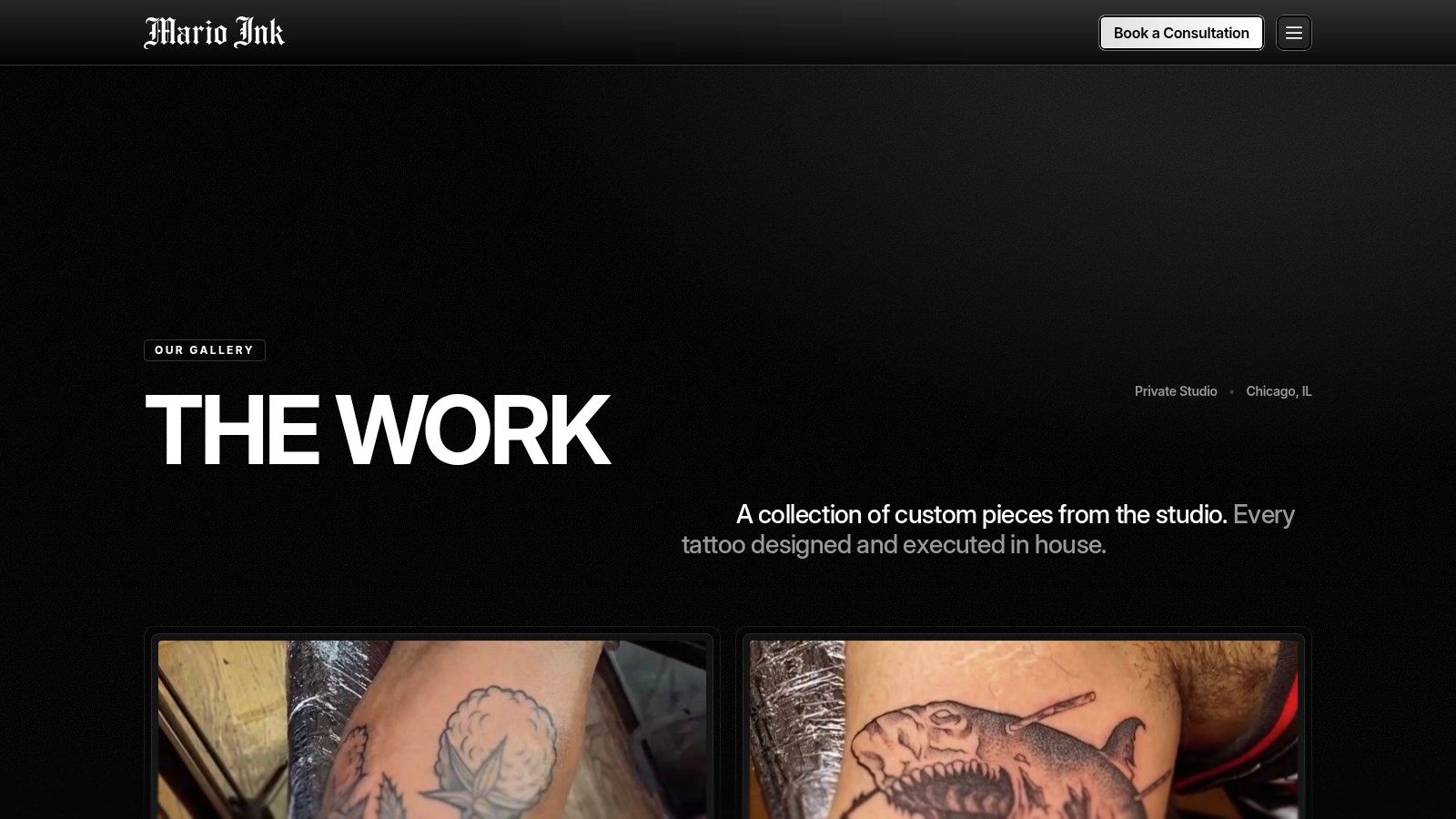
Mario Ink is a focused option for clients who want a realistic skeleton hand with a strong black-and-grey foundation. The Chicago studio operates by appointment and its online gallery includes a dedicated “Skeleton Hand” example, which makes the consultation more concrete than a vague request for “something anatomical.” You can review the Mario Ink gallery before booking.
The reference's main strength is its anatomy-first style language. Bone structure is the subject, not just a decorative texture. That makes it suitable for someone who wants visible knuckles, finger bones, and tonal depth rather than a simplified cartoon or traditional flash treatment. The risk is detail density. On a hand, every extra crease, shadow, and small joint competes with movement, friction, and exposure.
What to ask for
Ask whether the artist would preserve the full anatomical structure across the back of the hand or use a simplified focal area with heavier outer contours. A strong approach might keep the palm-facing fingers visually open, then place the deepest shadows around the knuckles and wrist transition. That creates contrast without filling every gap with pigment.
Mario Ink's gallery includes size and hours-per-piece notes, which helps you think about scheduling before the consultation. It doesn't publish a standard hourly rate, so expect the final price to be quoted after the artist reviews the concept, size, and placement.
Suitability for high wear
Realism can look striking when fresh, but subtle gradients need a careful maintenance conversation on a hand. Ask to see healed work, discuss how much contrast the artist recommends, and ask whether the design should be enlarged to protect small details. The studio offers free consultations and online booking, while the independent guide to choosing a tattoo artist is useful preparation for comparing portfolios beyond a single impressive image.
Best fit: clients who want a dedicated black-and-grey realism conversation and enough planning information to discuss time before committing.
3. Artistic Impressions Tattoo, Mike Valadez
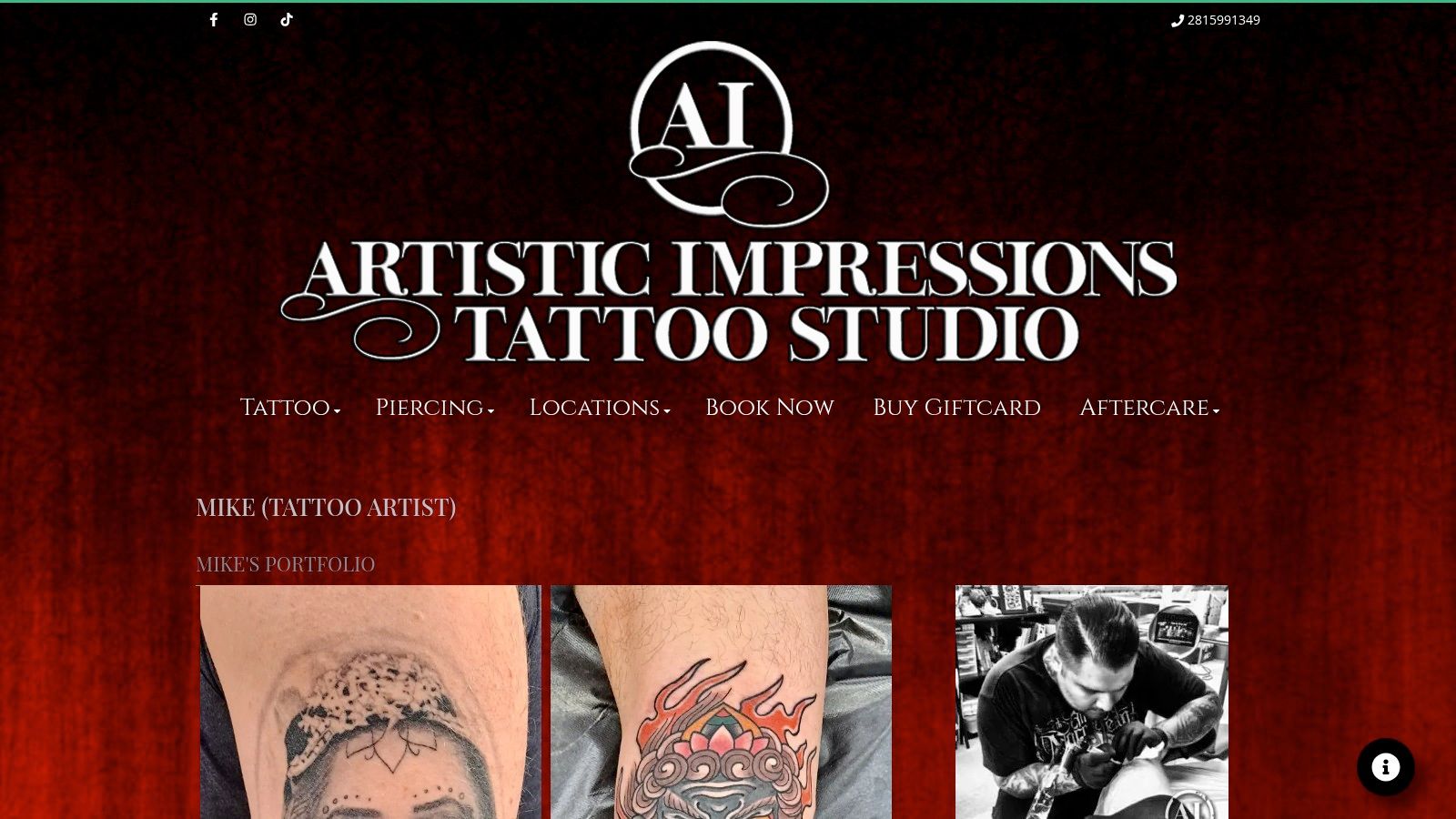
Mike Valadez's reference takes the skeleton hand away from a straightforward anatomical portrait. The blackwork hand grabs a card alongside an anatomical heart, creating a narrative image with a clear object interaction. That choice gives the tattoo more personality than a bare skeletal hand, while the contrast between dense black areas and open skin helps the composition remain legible.
Artistic Impressions Tattoo serves the Katy, Cypress, and Sugar Land areas, so the multi-location setup may be useful if one studio is more convenient for your schedule. Review Mike Valadez's artist portfolio before reaching out.
Motif and composition
This reference works because the hand does something. Gripping a card, heart, blade, flower, or small symbol gives the bones a relationship to another object, which can turn a familiar motif into a personal story. During consultation, decide whether the object should sit inside the hand's silhouette, cross the fingers, or extend toward the wrist. Each option changes how much skin the design needs.
The negative-space approach is especially valuable for hands. Solid blackwork can produce a bold result, but open gaps between bones and around the object stop the image from becoming a dark block as the tattoo ages. Ask the artist where the strongest darks should sit and which small details can be removed without weakening the idea.
Practical trade-offs
Mike Valadez's portfolio shows experience with traditional and black-and-grey approaches, giving you room to push the concept toward illustrative symbolism or keep it closer to realism. The artist page doesn't publish rates or a deposit policy, so scheduling and pricing will need to be confirmed during consultation.
Use the reference to discuss action, negative space, and object scale, not to request an identical tattoo. If your hand is narrow, the artist may need to reduce the heart or card, adjust finger angles, or move part of the composition onto the wrist.
4. Sueno Tattoo
Sueno Tattoo's realistic skeleton hand with a drink and cigarette has a strong editorial quality. It reads as a character and a mood, not just a diagram of bones. That makes the reference a good fit for someone who wants dark humor, nightlife symbolism, rebellion, or a still-life composition with a human gesture at its center.
The Silver Spring shop's gallery includes style filters for Traditional, Realistic, and Illustrative work, so you can compare the same general subject through different visual systems. Browse the Sueno Tattoo gallery and use those distinctions to decide whether your own design should look photographic, graphic, or deliberately stylized.
Visibility and meaning
A hand holding an object creates an immediate focal point, but it also adds detail that can crowd the fingers. The artist may recommend placing the most recognizable elements on the back of the hand and using the fingers for larger structural lines rather than tiny surface details. If the drink or cigarette carries the meaning, protect that silhouette first. If the skeleton is the priority, simplify the props.
Sueno's process-focused presentation is useful for a client who wants to discuss contrast before committing. Realistic work needs enough tonal separation to read clearly, but a hand placement often benefits from stronger outlines and darker anchors than a protected arm placement.
Booking and maintenance questions
Free consultations and online booking reduce friction at the start. Rates aren't published, so ask for a quote based on the proposed size and complexity. The site notes that the shop is open Wednesday through Sunday, which matters if you're traveling or coordinating a healing period around work.
Ask how the artist plans to handle knuckles, finger sides, and areas that crease. Those locations can be visually compelling, but they're also the parts most likely to need conservative design decisions and future maintenance.
5. Shane Klos at Crescent City Tattoo and Museum
Klos offers a clear alternative to the heavily realistic references. The labeled “Hypercolor Skeleton Hand and Rose” uses a bold, neo-traditional and cyberpunk-influenced design language, with saturated color, graphic anatomy, and a strong decorative object. See the Shane Klos portfolio to evaluate the color treatment and related skeletal themes.
This style makes a practical argument for hand placement. A skeleton hand needs to read quickly, and bold contours, solid color fields, and deliberate exaggeration can communicate more effectively than delicate shading. The rose also introduces contrast in shape and texture. Instead of treating every bone as equally important, the design can establish a hierarchy between the hand, the flower, and the surrounding negative space.
Why bold color can work
Color doesn't automatically make a tattoo more durable, and no style removes the need for proper healing. However, a graphic design gives the artist clearer tools for a high-wear area. Larger shapes, heavier outlines, and fewer fragile details can remain recognizable even as the skin changes.
Ask whether the color should fill the rose, the bones, or only selected accents. A limited palette may keep the hand from becoming visually noisy. You can also discuss whether the design should stop at the wrist or use the wrist as a transition into a larger sleeve.
The travel calculation
Shane Klos works from Crescent City Tattoo and Museum in Evansville, Indiana. The portfolio provides a strong reference for consultation, but pricing is case by case and clients outside the region may need to travel. Appointments are by request, with deposit details disclosed through the booking process.
Best fit: clients who want the skeleton hand to feel graphic, energetic, and unmistakable rather than subdued or medically realistic.
6. Steve Phipps
Steve Phipps's gallery includes a piece specifically titled “Skeleton Hand” in the Hand Tattoos category, with the work also connected to black-and-grey and realistic galleries. That organization makes the reference easy to discuss because the subject, placement, and style direction are clearly identified. Review the Steve Phipps hand tattoo gallery before making contact.
The design is useful for clients who want a direct skeleton-hand treatment without adding a prominent prop or color system. Its emphasis is the hand itself, including bone anatomy and the relationship between the fingers. That simplicity can be an advantage if you want a recognizable symbol rather than a crowded scene.
A useful consultation question
The portfolio notes that this skeleton-hand image was his first, so ask to see more recent work with comparable anatomy, placement, and healed results. One strong reference can show capability, but a broader set of current examples tells you more about consistency and how the artist handles different hands.
A one-on-one independent setting may appeal to clients who prefer direct communication and flexible scheduling. Booking details and pricing are handled through phone or email consultation, so prepare a short brief before reaching out:
Motif: skeleton hand alone, or hand with a small secondary symbol.
Style: realistic, black-and-grey, illustrative, or a blend.
Placement: back of hand, fingers, knuckles, or wrist transition.
Visibility: always exposed, partially concealable, or designed around work requirements.
This reference suits someone who wants the anatomy to carry the image. Keep the line hierarchy clear, avoid cramming every finger with tiny marks, and ask how the artist would adapt the design to your hand's width and movement.
7. Theo Ivanov
Theo Ivanov's portfolio gives you more than one way to use a skeletal-hand motif. Examples include a skeletal hand gripping a dagger and a reaper sleeve that incorporates a skeletal hand into a larger dark-realism composition. That range matters because it shows how the subject can function as a standalone focal point or as part of a broader narrative. Visit the Theo Ivanov booking page to review current booking information.
The dagger version has a strong directional pose. The blade creates a line through the composition, while the fingers provide tension and grip. For a hand tattoo, that kind of action can be more distinctive than a flat, front-facing skeleton. It also raises practical questions about orientation. Decide whether the object should point toward the fingers, wrist, or outer edge so the image reads correctly when your hand is relaxed.
Pricing clarity and logistics
Theo Ivanov publishes an hourly rate of $230 per hour and requires a $100 nonrefundable deposit, according to the booking information on the artist's site. The artist is available in Seattle and New York and travels in the United States, which may help clients who want dark realism but aren't local to one studio.
The site noted that the studio address was under renovation when the booking information was reviewed, so confirm the current location and appointment logistics before sending a deposit. Cash is preferred according to the booking details, and payment arrangements should be verified directly.
How to use the reference responsibly
Multiple skeletal-hand examples make this portfolio useful for comparing anatomy, gesture, and narrative scale. Bring the dagger or reaper image as a direction reference, then ask the artist to redraw the structure for your hand instead of reproducing a finished composition. The tattoo artist portfolio guide can help you compare fresh and healed work, stylistic consistency, and the practical evidence behind a portfolio.
Skeleton Hand Tattoo, 7-Artist Comparison
Title | Process / Complexity 🔄 | Cost & Booking ⚡ | Quality / Results ⭐📊 | Ideal Use Cases 💡 | Key Advantages ⭐ |
|---|---|---|---|---|---|
Think Tank Tattoo | Collaborative consultations; multi-session workflow; phone/email booking | $100 nonrefundable deposit; $100 shop minimum; no posted rates | High-quality custom work across many styles; consistent professional outcomes | First tattoos, sleeves, large custom pieces, collectors | Large, experienced team; 20+ years local reputation; professional studio |
Mario Ink (Chicago, IL) | By-appointment; online consultation booking; gallery shows time estimates | No public hourly rate; final pricing after consult; online booking available | Strong black-and-grey realism with time-per-piece transparency | Anatomy-focused hand work where time estimates matter | Transparent time estimates; central Chicago location |
Artistic Impressions, Mike Valadez | Multi-location bookings; portfolio thumbnails for vetting; consult-driven process | No posted rates; scheduling and pricing via consult; multiple studio locations | Capable blackwork and traditional/illustrative skeleton-hand work | Illustrative or traditional-influenced skeletal hand designs | Multi-location convenience; stylistic versatility |
Sueno Tattoo (Silver Spring, MD) | Free consults; online booking; process- and aftercare-focused guidance | Rates not published; consult-based pricing; limited open days (Wed–Sun) | Realistic examples emphasizing contrast and planning for realism | Realism projects needing careful planning and aftercare | Transparent process, aftercare guidance, and style filters in gallery |
Shane Klos, Crescent City Tattoo & Museum | Appointments by request; disclosed deposit policy; works from museum-affiliated shop | No published hourly rate; case-by-case pricing; may require travel | Bold, neo-traditional high-saturation pieces built for hand longevity | Bold, colorful hand pieces requiring strong graphic readability | Strong graphic/neo-traditional style suited for high-wear areas |
Steve Phipps (Columbia, SC) | Independent artist; direct phone booking; smaller one-on-one setting | Pricing and booking via phone/email; fewer recent similar examples | Realistic hand-bone anatomy example available; veteran execution | Clients preferring independent, personal bookings | Direct contact; clear portfolio example of a “Skeleton Hand” |
Theo Ivanov (Seattle/NY) | Clear booking and pricing; multi-city availability and travel; free consults | $230/hr posted; $100 nonrefundable deposit; transparent payment details | Multiple dark-realism skeletal-hand examples; detailed, consistent results | Detailed dark-realism work with transparent pricing expectations | Posted rates; multi-city/travel availability; multiple reference pieces |
Turn Inspiration Into a Wearable Plan
Start by choosing the dominant motif. Do you want the skeleton hand to symbolize mortality, transformation, danger, humor, memory, or a specific story? A hand holding a rose or dagger communicates differently from an isolated anatomical study, and a strong concept makes it easier for the artist to remove details without losing the meaning.
Next, choose the style and contrast level. Blackwork depends on silhouette, solid coverage, and negative space. Black-and-grey realism depends on tonal transitions and controlled anatomy. Neo-traditional color uses bold contours and graphic shapes. Illustrative work can combine symbolic objects with simplified bone structure. Don't ask one artist to imitate a reference outside their normal portfolio. Choose someone whose existing work already demonstrates the visual decisions you want.
Visibility deserves an honest answer. A back-of-hand tattoo is difficult to hide and may affect work, family expectations, or your comfort in formal settings. Finger and knuckle details can make the design feel more integrated, but they also demand careful spacing and realistic expectations about maintenance. Hands fade quickly because they're washed, exposed to friction and UV light, and constantly moving. Guidance on hand placement notes that visible fading or patching commonly appears within the first 1 to 3 years, with thin lines and finger-adjacent elements aging especially poorly. Read the hand placement guidance before you finalize the layout.
The skin can look crisp immediately after tattooing, while some pigment is lost through exudation during the early process. A medical-toxicology review measured pigment concentrations in excised pig and human skin at 0.60 to 9.42 mg/cm² immediately after tattooing and discussed rapid loss through puncture channels, while histology research has found carbon-black pigment inside epidermal and dermal cells years later. That distinction explains why maintenance can improve surface appearance without meaning the tattoo has disappeared. Review the medical-toxicology discussion of tattoo pigment with your artist if you want a more technical explanation.
Plan for healing, too. Surface healing commonly takes about 2 to 4 weeks, while full healing can take 2 to 3 months, and touch-ups are often normal for hand tattoos because the placement is exposed, washed, and flexed constantly. Follow the artist's instructions rather than improvising a product routine.
Bring one or two references to your consultation, then discuss:
Anatomy: Which bones need to remain recognizable, and which details can be simplified?
Line weight: Will the smallest lines survive the placement, or should the design use stronger contours?
Movement: How does the image change when your hand opens, closes, and turns?
Visibility: Do you want the tattoo exposed at all times, or should part of it sit closer to the wrist?
Maintenance: What touch-up needs should you expect, and when should the artist assess the healed work?
Aftercare: Clean gently, use only the moisturizer your artist recommends, avoid picking, and reduce friction while the tattoo heals.
Booking: Confirm the studio's current deposit, payment, location, schedule, and aftercare instructions before reserving.
“The best skeleton hand tattoo is not simply the most dramatic reference. It is the design, placement, and care plan that fit how you actually live.”
A consultation should end with a plan you understand, not just an image you like. If the artist can explain why the design will read on your hand, how the line work will be adjusted, and what maintenance may involve, you're making a considered choice rather than chasing a fresh photograph.
Think Tank Tattoo offers complimentary consultations, a stylistically diverse team, and a collaborative Denver studio environment for refining custom skeleton hand designs. If you want to discuss motif, placement, contrast, and long-term wear with an experienced team, visit Think Tank Tattoo and contact the studio before booking.
Comments