
Tattoo Aftercare Sheet: Your Printable Healing Guide
A tattoo aftercare sheet gives you a printable routine from day 1 through week 3: follow your artist's bandage instructions, then wash gently and moisturize approximately twice daily while the tattoo heals, generally within 2–3 weeks. It should also tell you which changes need medical attention, so you're not guessing with fresh ink under a bandage.
You've just left the studio, the area feels tender, and you're trying to remember what the artist said about washing, lotion, and sleeping. Keep the instructions somewhere you can reach with clean hands, not buried in a message thread. A useful sheet makes the next action obvious and separates everyday maintenance from symptoms you shouldn't manage yourself.
Table of Contents
Why Every New Tattoo Needs a Written Aftercare Sheet - What a useful sheet actually contains
Immediate Aftercare in the Studio - Before removing the dressing - The first wash
Daily Cleaning and Moisturizing Schedule - Your morning and evening checklist - Ointment and lotion aren't interchangeable instructions
Healing Stages and What to Expect Week by Week - The opening week - The middle week - The later week and the return to ordinary care
Do's and Don'ts During the Healing Window - Tattoo Aftercare Do's and Don'ts - Choose the less irritating option
Denver-Specific Lifestyle Adjustments - Sun, dry air, and outdoor work - Make the activity fit the placement - Showering isn't soaking
Red Flags That Require Professional Attention - Recognize a worsening pattern - Use the right escalation pathway - Don't try to treat the diagnosis yourself
Printable Tattoo Aftercare Sheet Reference - Immediate care - Daily routine - Everyday restrictions - Red flags and contacts
Why Every New Tattoo Needs a Written Aftercare Sheet
The appointment ends before the responsibility does. Once you're home, you're the person checking the dressing, choosing products, and deciding whether a change in the skin needs attention.
A tattoo aftercare sheet turns that responsibility into a repeatable process. Verbal advice is useful, but it's easy to confuse the bandage instructions with the washing schedule when you're tired, sore, or distracted. A written reference lets you check the actual instructions rather than reconstruct them from memory.
The starting point is straightforward: a fresh tattoo is a healing skin wound. Cleaning and appropriate moisturization support comfort while the skin repairs, but adding more products or handling it constantly isn't the same as taking better care of it.
What a useful sheet actually contains
A practical studio handout needs more than a list of things to avoid. It should connect each instruction to a decision you'll face at home.
Dressing details: The product applied, the artist's removal instructions, and whom to contact if it loosens or irritates your skin.
A repeatable routine: What to wash with, how to dry the area, and which moisturizer or ointment to use.
Lifestyle restrictions: Clear guidance for clothing, water exposure, sunlight, and activities that rub the tattoo.
Medical escalation: Symptoms that require a clinician, not another layer of aftercare cream.
Follow-up information: A way to reach the artist about non-urgent questions.
Date the sheet and write down any instructions specific to your placement or dressing. A forearm tattoo and a piece beneath a waistband don't present the same practical problems, even when the basic cleaning routine is similar.
Studio rule: Keep one written plan. Don't combine your artist's instructions with a friend's bandage schedule and a product advertisement.
The most useful handout is readable when you're standing at the sink. Save a phone copy, keep the printed version clean, and make sure someone helping with a hard-to-reach placement understands it too.
Immediate Aftercare in the Studio
Before leaving, ask the artist to identify the dressing and explain exactly how to manage it. There isn't one universal bandage wear time. Clear adhesive films and other dressings require instructions that account for the product and how it was applied.
The European standard NF EN 17169, published in January 2020, describes covering the fresh tattoo with a dressing, followed by cleaning and a thin layer of aftercare ointment two or three times daily for 2–3 days, as discussed in the clinical tattoo aftercare literature. That's a described approach, not permission to override the instructions for the dressing you're wearing.
Keep the early routine calm and uncomplicated.

Before removing the dressing
Check the written removal instructions while your hands are still clean. If an edge curls, distinguish a loose outer edge from a dressing that no longer covers the tattoo properly.
Don't improvise a repair using household tape or assume a leaking film can stay in place unchanged. Contact the artist for product-specific guidance, particularly if the dressing shifts, exposes the tattoo, or causes irritation. The studio's tattoo aftercare bandage guide is a useful place to check dressing-related questions.
The first wash
Prepare the cleanser, disposable towel, and recommended product before beginning. Then follow this sequence:
Wash your hands: Do this before touching the dressing or tattoo.
Remove as instructed: Follow the artist's method rather than pulling at the covering abruptly.
Clean gently: Use warm water and a mild, fragrance-free cleanser. Don't scrub or use an abrasive washcloth.
Pat dry: Use a clean disposable towel without rubbing.
Apply a thin layer: Use the uncomplicated moisturizer or ointment specified in your instructions.
Some early drainage can occur, but appearance alone doesn't establish that everything is fine. Note whether symptoms are improving, whether drainage becomes significant or foul-smelling, and whether pain or redness is increasing. Those changes belong in the medical decision pathway, not a discussion about which lotion to buy.
Daily Cleaning and Moisturizing Schedule
Once the dressing instructions allow direct care, anchor your routine to familiar moments, such as getting ready in the morning and preparing for bed. Cleveland Clinic recommends washing and moisturizing approximately twice daily, and cautions against tight clothing, exfoliation, petroleum jelly, sunscreen before healing, and immersion in pools, hot tubs, or baths in its tattoo aftercare guidance.
Use this visual as an orientation aid, not a deadline or a reason to dismiss symptoms.
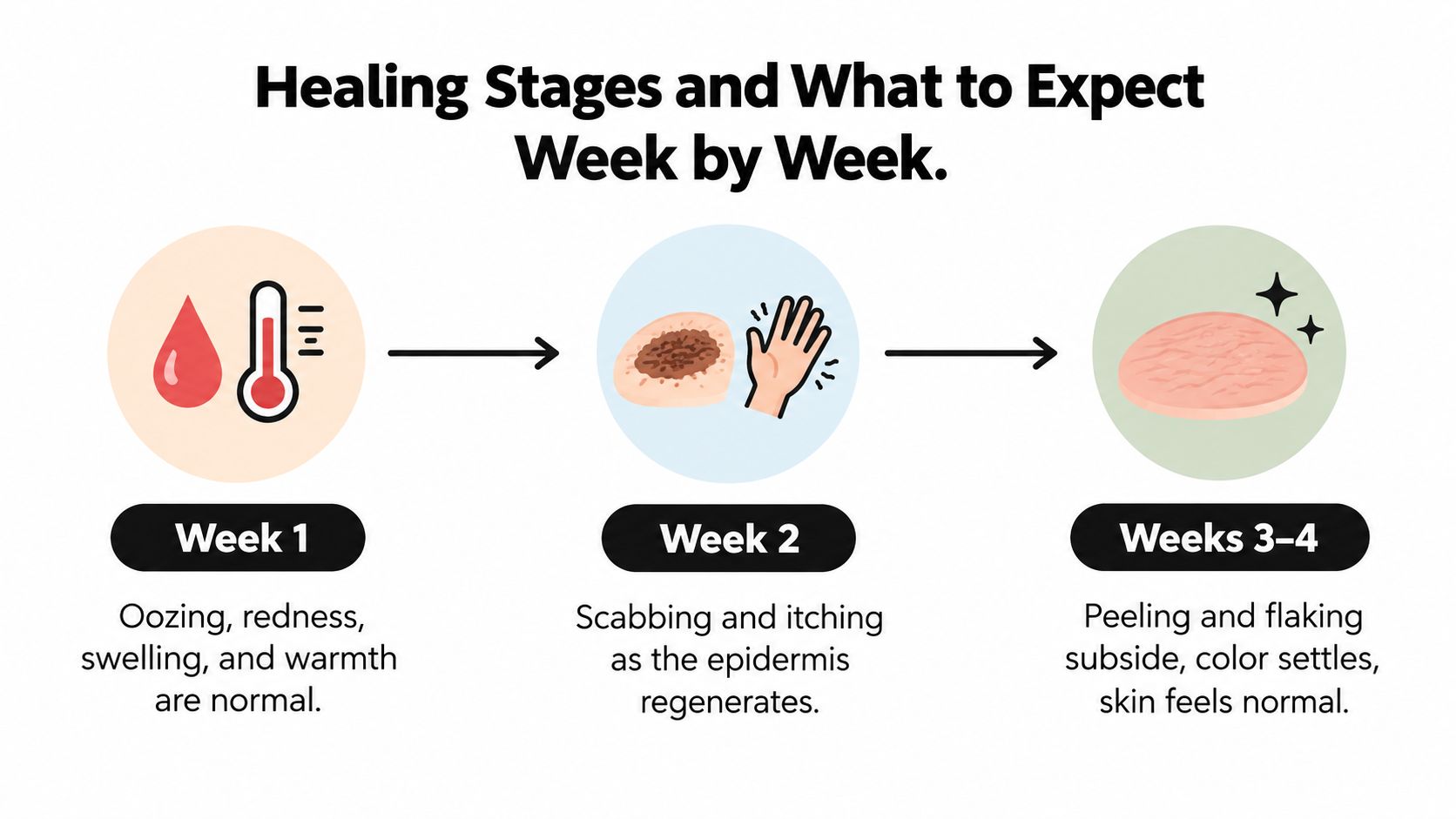
Your morning and evening checklist
The routine should stay simple enough that you'll repeat it.
Clean hands first: Set out what you need before handling the tattoo.
Gentle wash: Clean with warm water and the mild, fragrance-free cleanser selected for your aftercare plan.
Careful drying: Pat with a clean disposable towel. Don't rub away peeling skin.
Thin moisturization: Spread a light layer over the area rather than leaving a heavy coating.
Clothing check: Choose a clean, loose garment that doesn't drag across the placement.
Thin application matters because the aim is appropriate moisturization, not a visible blanket of product. If you're repeatedly adding cream because the tattoo feels uncomfortable, reassess what's happening instead of assuming dryness is the only explanation.
Ointment and lotion aren't interchangeable instructions
An early ointment phase may be followed by an unscented moisturizer, as described in the standard discussed earlier. Write down the intended transition with your artist so you're not using an early-stage product indefinitely or switching because someone online prefers another brand.
For product-selection questions, consult the studio's guide to choosing tattoo lotion. Start with mild, fragrance-free, uncomplicated products, rather than assembling a collection of balms, oils, exfoliants, and fragranced lotions.
For broader body-care planning after healing, ALODERMA's radiant skin guide offers a separate resource to explore. Keep general cosmetic routines separate from fresh-wound instructions, and don't assume every body-care product belongs on a new tattoo.
If you prefer a video format, keep your written dressing and product instructions beside you while viewing this resource.
Don't add extra washing to feel productive. Maintain the agreed routine, and ask for guidance if the tattoo becomes contaminated or the products appear to irritate your skin.
Healing Stages and What to Expect Week by Week
The difficult part of healing isn't always the cleaning. It's watching a crisp new tattoo change and deciding whether those changes make sense.
Use the direction of change, not just the calendar, to judge progress. Limited early redness, mild swelling, some drainage, flaking, and scabbing can occur during healing. Increasing pain, spreading redness, or hot skin shouldn't be waved away because an illustration labels that stage as normal.
The graphic below is a visual reference, not a required healing duration or a clinical timetable.
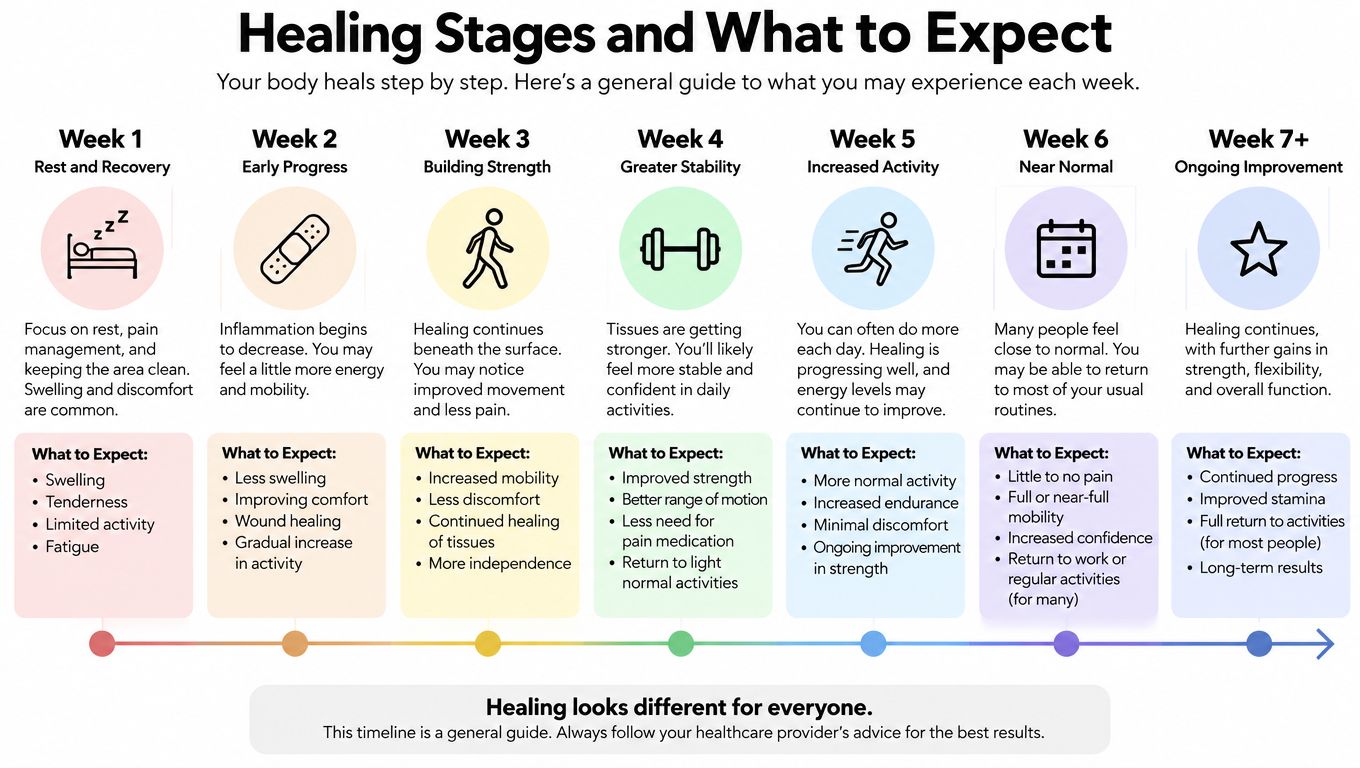
The opening week
Early on, the tattoo may feel tender and look irritated. Your task is to carry out the dressing plan and daily routine without repeatedly touching the area to check it.
For example, redness that remains limited and becomes less noticeable presents a different situation from redness that expands beyond the tattoo. The same distinction applies to discomfort: improvement is reassuring, while increasing pain calls for assessment.
Don't test healing by pressing the skin, rubbing it, or repeatedly lifting a dressing. Observe during the care routine and make a note of a meaningful change.
The middle week
Flaking, scabbing, or itching may become the main thing you notice. This is when patience matters more than adding another product.
Let loose skin and scabs separate on their own. Don't turn the morning wash into a removal session, and don't use exfoliation to make the tattoo look smoother. Continue the established routine unless your artist or clinician advises a change.
A calendar can organize care. It can't certify that your skin has healed.
The later week and the return to ordinary care
As symptoms settle, it's tempting to resume swimming, sun exposure, and your usual skin-care products all at once. Make those decisions based on the condition of the skin, not the fact that you've reached the final box on a timeline.
Recovery varies with tattoo size, placement, skin condition, and technique, as noted in the clinical literature cited earlier. Don't compare your progress rigidly with someone else's smaller piece or different placement.
If the skin remains open, irritated, draining, or otherwise unsettled, keep restrictions in place and ask for guidance. Persistent or worsening symptoms need assessment rather than an extended home-care experiment.
Do's and Don'ts During the Healing Window
Most aftercare decisions happen outside the bathroom. You're getting dressed, climbing into bed, packing a gym bag, or deciding whether a bath is worth the risk.
The practical question is whether an action adds friction, contamination, irritation, or immersion to healing skin. A choice that's harmless elsewhere on your body may be unsuitable directly over the tattoo.
Tattoo Aftercare Do's and Don'ts
Do | Don't |
|---|---|
Follow the written dressing plan. | Borrow a wear time from a different bandage product. |
Carry out the established handwashing and cleaning routine. | Handle the tattoo repeatedly to check it. |
Use the recommended fragrance-free product thinly. | Layer multiple creams, oils, or fragranced products. |
Choose loose, clean clothing around the placement. | Let a tight waistband or strap rub the area. |
Let scabs and peeling skin release naturally. | Scratch, pick, or exfoliate the tattoo. |
Keep showers gentle and avoid immersion. | Soak in baths, pools, or hot tubs while healing. |
Protect healing skin from direct sun. | Treat sunscreen as protection for an open wound. |
Keep bedding clean and limit unwanted contact. | Allow pets to lick or rub the tattoo. |
Keep your aftercare supplies personal. | Share open products or apply them with unwashed fingers. |
Leave the healing surface undisturbed. | Shave directly over irritated or healing skin. |
Some rows are direct extensions of the clinical guidance already cited. Others are practical housekeeping choices that make the basic plan easier to follow.
Choose the less irritating option
If a sleeve catches on the placement every time you bend your arm, change the garment. If a work belt presses against a fresh hip tattoo, arrange a different fit or discuss timing before the appointment.
Clean bedding and personal supplies don't need to become an elaborate ritual. The objective is to reduce avoidable contact while keeping your routine manageable.
Practical trade-off: Temporarily changing an activity is usually simpler than trying to make a fresh tattoo tolerate constant rubbing.
Don't compensate for a poor clothing choice with extra ointment. Likewise, a careful evening wash doesn't make picking acceptable during the afternoon. The checklist works best when the surrounding habits support it.
Denver-Specific Lifestyle Adjustments
Denver aftercare questions tend to be practical: you work outdoors, you've planned a hike, your cycling gear fits tightly, or your skin feels dry. The answer isn't to add more products automatically. Adjust the exposure or activity that makes the care plan difficult.
Mayo Clinic advises avoiding sunlight until healing and avoiding pools, hot tubs, rivers, and lakes during healing in its tattoo safety and aftercare guidance. Build those restrictions into your plans before you're standing beside the water or leaving for a trail.
Use the lifestyle graphic as a prompt for planning, with your written aftercare instructions taking priority.

Sun, dry air, and outdoor work
Fresh-wound protection and sunscreen care are different stages. During healing, arrange shade and loose clothing that protects the placement without rubbing it. Don't apply sunscreen to unsettled skin just because an outdoor shift is unavoidable.
Once healed, follow the broad-spectrum, water-resistant sunscreen guidance described in the clinical aftercare recommendations: choose appropriate protection and maintain it during exposure. If you're unsure whether the skin is ready, ask before changing stages.
Dryness is a reason to check your moisturizer use, not to leave the tattoo coated all day. Follow the thin-layer routine and seek advice if discomfort persists despite it.
Make the activity fit the placement
Outdoor workers: Plan clothing and breaks around sun exposure and equipment contact. A fresh tattoo beneath a harness needs a different arrangement than one on an uncovered forearm.
Hikers and cyclists: Check where backpack straps, sleeves, and fitted shorts touch. Postpone an outing if you can't avoid rubbing or protect the area appropriately.
Gym-goers: Choose movements that don't drag the tattoo against benches, mats, or equipment. Keep healing skin away from shared surfaces rather than relying on a wash afterward.
Travelers: Pack your established cleanser, moisturizer, and disposable drying supplies. Choose clothing and luggage arrangements that don't press on the placement.
Showering isn't soaking
Use a gentle shower for washing, without scrubbing or aiming forceful spray at the tattoo. Don't turn it into prolonged water exposure.
Swimming and hot tubs belong after healing, not after an arbitrary date on your booking calendar. If a trip revolves around swimming, the easier solution is often to schedule the tattoo after the trip.
Red Flags That Require Professional Attention
The most important sentence on a tattoo aftercare sheet is the one that tells you when home care stops being enough. A studio can clarify dressing and product instructions, but it can't diagnose or treat an infection.
Independent medical reviews place post-tattoo infection prevalence broadly between 0.5% and 6%, according to this medical review of tattoo-related complications. That range isn't a prediction for your tattoo; the practical decision depends on your symptoms.
Recognize a worsening pattern
Seek medical assessment when pain increases, redness expands, the skin becomes hot, drainage becomes significant or foul-smelling, pus appears, red streaks extend away from the tattoo, or you develop fever. The NHS medical tattooing aftercare leaflet likewise advises contacting a clinician for increasingly inflamed, moist, red, or hot skin and identifies extreme redness or pus as possible infection indicators.
You don't need every symptom before asking for help. Don't wait for a photograph to look dramatic, and don't assume a problem is harmless because you followed the aftercare routine carefully.
Use the right escalation pathway
Situation | Appropriate action |
|---|---|
Uncertainty about the dressing, lotion, or an otherwise improving heal | Contact the artist for non-urgent guidance. |
Suspected infection, including worsening redness, pain, heat, or pus | Contact a primary-care clinician promptly. |
Severe swelling, fever with rapidly worsening redness, systemic illness, or uncontrolled bleeding | Seek urgent or emergency evaluation. |
Persistent or changing allergic or inflammatory reaction | Arrange assessment with a board-certified dermatologist. |
Studio contact must not delay medical care. If symptoms suggest infection, don't wait for the artist to reply before contacting a clinician.
For general questions about feeling unwell after an appointment, the studio's tattoo flu discussion is an additional resource. It shouldn't be used to explain away fever or other warning signs.
If shared exercise spaces are part of your routine, MRSA prevention tips for gyms from BacteriaFAQ.com provides a separate hygiene resource. General prevention advice doesn't replace evaluation of a symptomatic tattoo.
Don't try to treat the diagnosis yourself
Adding topical antibiotics, disinfectants, or extra ointment without clinical advice can distract from getting the right assessment. Suspected infection requires medical guidance, not product experimentation.
Allergic and inflammatory reactions can also occur despite professional procedures and careful aftercare. A persistent or changing reaction deserves evaluation rather than blame or repeated switching between creams.
Printable Tattoo Aftercare Sheet Reference
Appointment date: ____________________Artist and contact channel: ____________________Dressing product: ____________________Removal instructions: ____________________Recommended cleanser and moisturizer: ____________________
Immediate care
Keep the dressing plan: Follow the instructions recorded above.
Report dressing problems: Ask about lifting, leakage, exposure, or irritation rather than improvising.
First wash: Clean hands, gentle warm-water cleansing, disposable towel, and a thin layer of the recommended product.
Daily routine
Morning: Handwash, gently cleanse, pat dry, moisturize thinly, and check clothing.
Evening: Repeat the established routine and note meaningful symptom changes.
Observe without disturbing: Check during care rather than repeatedly touching the tattoo.
Everyday restrictions
Choose: Loose clothing, clean bedding, shade, gentle showers, and your agreed products.
Avoid: Picking, scratching, exfoliation, soaking, rubbing, and sunscreen before healing.
Plan ahead: Adjust outdoor work, exercise, and travel when they conflict with the care plan.
Red flags and contacts
Artist: Non-urgent dressing, product, or routine questions.
Clinician promptly: Increasing pain, expanding redness, hot skin, pus, foul odor, significant drainage, or fever.
Urgent or emergency care: Severe swelling, rapidly worsening symptoms with fever, systemic illness, or uncontrolled bleeding.
Dermatologist: Persistent or changing allergic or inflammatory reactions.
Keep this reference visible, and keep your individual instructions attached.
Contact Think Tank Tattoo for Follow-Up Questions
Use the studio's phone or email booking channels for non-urgent aftercare questions, and include your appointment details, dressing type, products used, and a description of what changed. Check its website for current contact information before sending a message.
The South Broadway studio in Denver offers complimentary consultations to discuss design direction, placement, and timing. Confirm current age requirements, appointment minimums, and deposit terms when booking rather than relying on an older saved handout.
Ask specific questions instead of guessing. For suspected infection or urgent symptoms, contact medical services directly.
Think Tank Tattoo offers custom tattoo work and complimentary consultations, so you can discuss placement and timing alongside the practical demands of healing. Visit Think Tank Tattoo to arrange a consultation and ask for written aftercare instructions for your appointment and dressing.
Comments