
What to Avoid After Getting a Tattoo While Healing
You just walked out of a Denver shop with fresh ink under a wrap, and the piece looks finished. Your skin is not. Friends will text pool plans, the gym bag is still in the car, and the drugstore aisle is full of creams that promise a faster heal.
What to avoid after getting a tattoo depends on the healing window, not one forever ban. Some habits pull ink in the first days. Others fade color long after the sting is gone.
The next pages sort soaking and sweat, sun and tanning, picking or peeling, tight or dirty clothing, and unapproved creams, sunscreen, or fragrance. You'll also see a normal-versus-not timeline so you can choose between watching, checking the artist's written steps, and seeing a clinician.
Table of Contents
Why a New Tattoo Is Still an Open Wound - What can get through that break - How you keep the entry quiet
Behaviors and Products to Skip While Skin Heals - Water that sits on the skin - Sweat, sun, cloth, and fingers
What Changes Across the First Weeks of Healing - Days 1 to 3 - Days 4 to 14 - After the surface closes
When Itching and Redness Mean More Than Healing - What to skip while you watch - Normal healing versus red flags
How Think Tank Tattoo Guides Aftercare Choices - What the written steps outrank
Protect the Piece and Take the Next Step - One daily check for two weeks
Leaving the Studio with a Fresh Tattoo
The wrap is still warm when you hit traffic. The lines look sharp through the plastic, and that finished look is the confusing part. Under it, skin can weep, sting, and catch whatever rubs it on the ride home.
Advice shows up before you've even opened the door. A friend says let it breathe tonight. A gym buddy says a light workout won't hurt. A bottle on the shelf says "healing" in big type. None of those people watched how the piece was dressed, or where it sits when you sit, sleep, and reach.
Placement changes the next two nights more than a group chat will. Ribs catch a bra band or a seatbelt. Elbows bend every time you lift a mug. Hands bump sinks, sleeves, and sheets. Those spots aren't a second design lesson. They're a friction map.
Five exposures cause most of the trouble, and each one expires on a different clock:
Soaking and sweat: Pools, baths, hot tubs, and hard workouts while the surface is open.
Sun and tanning: Direct light and tanning beds before the skin has closed, plus sunscreen put on too early.
Picking or peeling: Pulling scabs or flakes because the itch feels urgent.
Tight or dirty clothing: Fabric that scrapes, traps sweat, or wasn't washed.
Unapproved products: Creams, fragrance, makeup, or sunscreen the artist didn't name.
Match those avoids to the weepy first days, the itchy scab weeks, and the later stage when the surface has closed. Then use the symptom check to decide whether to watch, ask about the written steps, or see a clinician.
If the wrap question is already looping, start with when and how to remove a fresh tattoo bandage, not a screenshot from someone else's heal.
Practical rule: Leave knowing which habits can pull ink, invite bacteria, or fade color, and which simple swaps keep the piece intact.
Why a New Tattoo Is Still an Open Wound
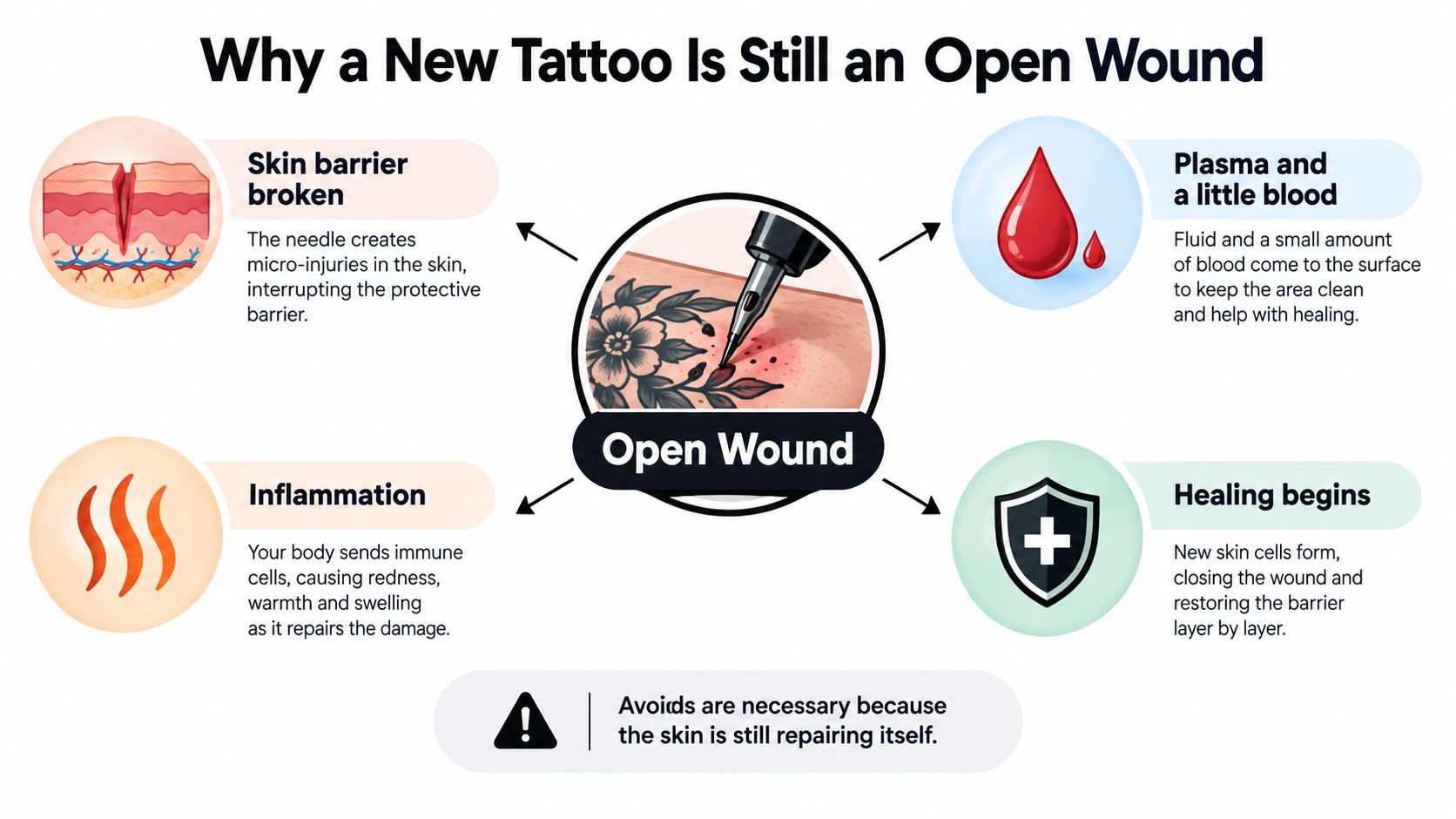
A tattoo is a controlled break in the skin barrier. The needle opens a path so pigment can settle deeper than the surface, and that path stays an entry point until the skin seals over it.
Plasma, a little blood, warmth, and soreness in the first day or two are normal open-wound signs. They mean repair has started, not that the art failed.
What can get through that break
A tidy station and a pretty first photo don't close the window early. Bacteria only need the opening.
A 2021 literature review reported bacterial infections in approximately 1%–5% of tattoo recipients, with risk varying by hygiene, ink contamination, personal health, and aftercare, according to a review of tattoo-associated infections. Case reviews keep tracing outbreaks back to the same short list: hygiene gaps during the session, contaminated ink, the person holding the machine, and aftercare that went wrong at home. Severe infections can escalate quickly once they take hold, so a symptom that looks small in the first days still deserves attention.
The documented problems have ordinary names: impetigo, folliculitis, abscess, cellulitis, erysipelas, and, in rare cases, illness that spreads through the body. Scratching, picking scabs, peeling flakes, rubbing clothing, and unapproved products all reopen or irritate that entry, whether the wound is still weepy or deep into the itchy scab stage.
How you keep the entry quiet
Wash your hands before any touch. Follow the dressing and wash steps you were given, including when the cover comes off and whether it goes back on.
While the barrier rebuilds, routines that reduce dryness and support skin comfort beat a thick coat of whatever is already in the cabinet. A thin layer of the product your artist named is enough. Heavy ointment seals the piece at the stage when it needs to breathe.
The written aftercare instructions from Think Tank draw the line between watching and calling: itch and light flaking belong to healing, while a tattoo that doesn't appear to be healing, or develops a rash with fever, goes to a healthcare professional. Spreading redness, worsening pain, drainage, a stalled heal, chills, or sweats belong in that call.
Pro tip: Treat aftercare as wound care that happens to hold a picture. Match every habit to the healing window it threatens, and a normal itch stays easy to tell from a real problem.
Behaviors and Products to Skip While Skin Heals
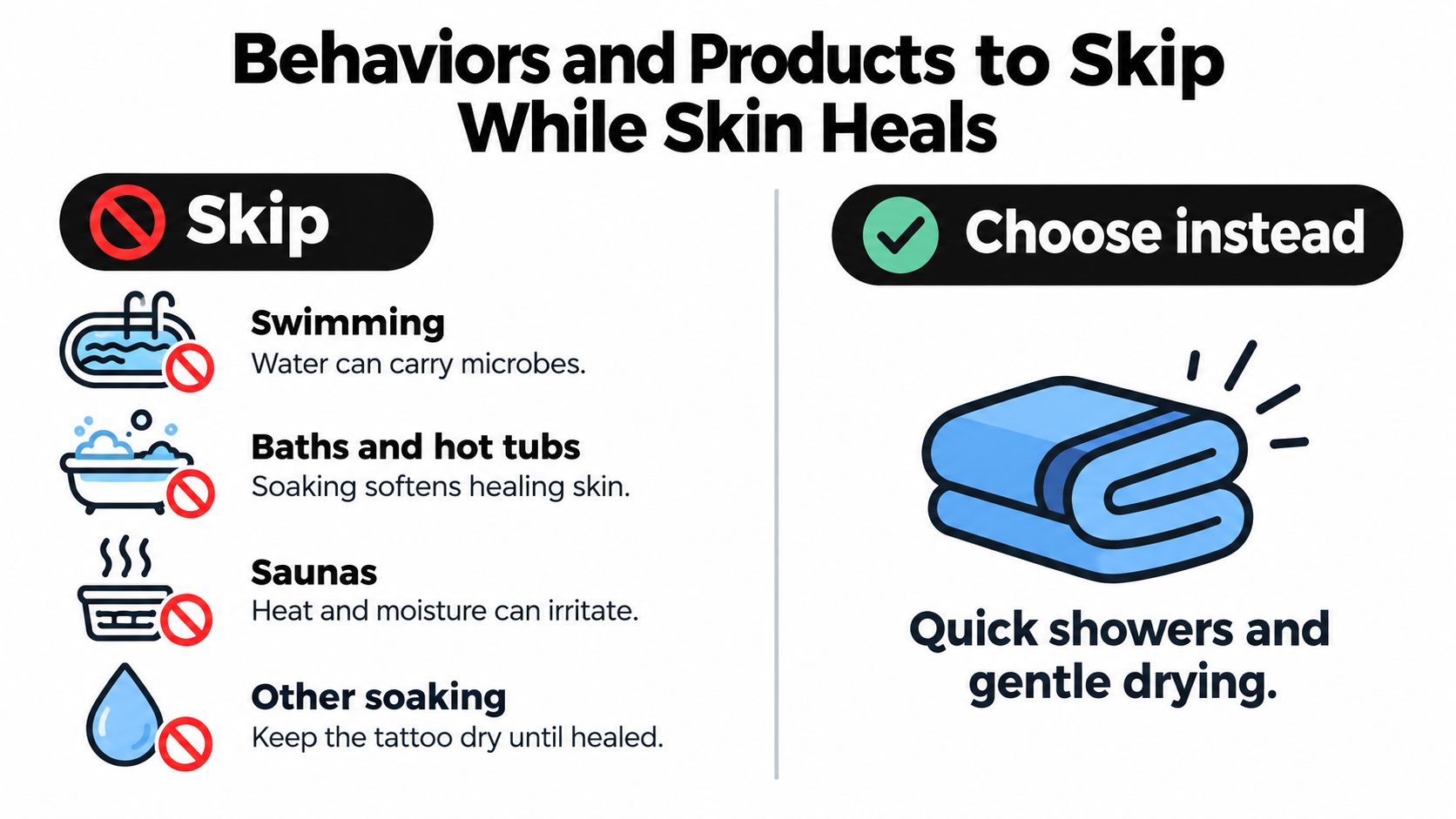
A fresh tattoo can look settled before its surface has fully healed. Keep the limits tied to what the skin is doing, not just how it feels today.
Water that sits on the skin
During the early healing period, avoid swimming, baths, hot tubs, saunas, and other soaking until the skin has healed. Water can carry microbes, and soaking softens scabs before the new surface is ready.
From 2003 through 2019, tattoo-ink companies conducted 15 voluntary recalls, and 14, about 93%, were prompted by microbial contamination, according to the FDA's tattoo and permanent makeup fact sheet. The FDA also reports infections from contaminated inks, including cases where artists followed hygienic procedures. Those risks are another reason to keep a healing tattoo out of shared or natural water.
Use this instead: Take a short shower, keep strong spray off the tattoo, and follow your dressing instructions for washing. Pat the area dry rather than rubbing it.
Sweat, sun, cloth, and fingers
While the skin is tender or peeling, skip workouts that leave the tattoo damp or rub it repeatedly. Gentle movement is different from a session that soaks a waistband or sports bra with sweat.
Sun exposure can irritate healing skin and fade tattoo pigment. Keep the open or peeling area out of direct sun, and wait until the surface has healed before applying sunscreen. After healing, broad-spectrum sunscreen helps protect the color. Sun can also cause itching or swelling, so pay attention to whether symptoms ease when you're out of the sun.
Choose loose, clean clothing while the tattoo is sore or flaky. Tight or rough fabric can scrape the area and hold sweat against it. Leave flakes and scabs alone, even when a loose edge catches on clothing.
Once the surface has closed, a fragrance-free lotion suited to tattooed skin can help with dryness. If a product stings, causes a new rash, or makes redness spread, stop using it and ask your artist or a healthcare professional for guidance.
Pro tip: Use one thin layer of the product your artist recommended. Mild itching and light peeling can happen as skin heals. Worsening pain, spreading redness, drainage, or a rash that appears after using a product needs attention.
What Changes Across the First Weeks of Healing
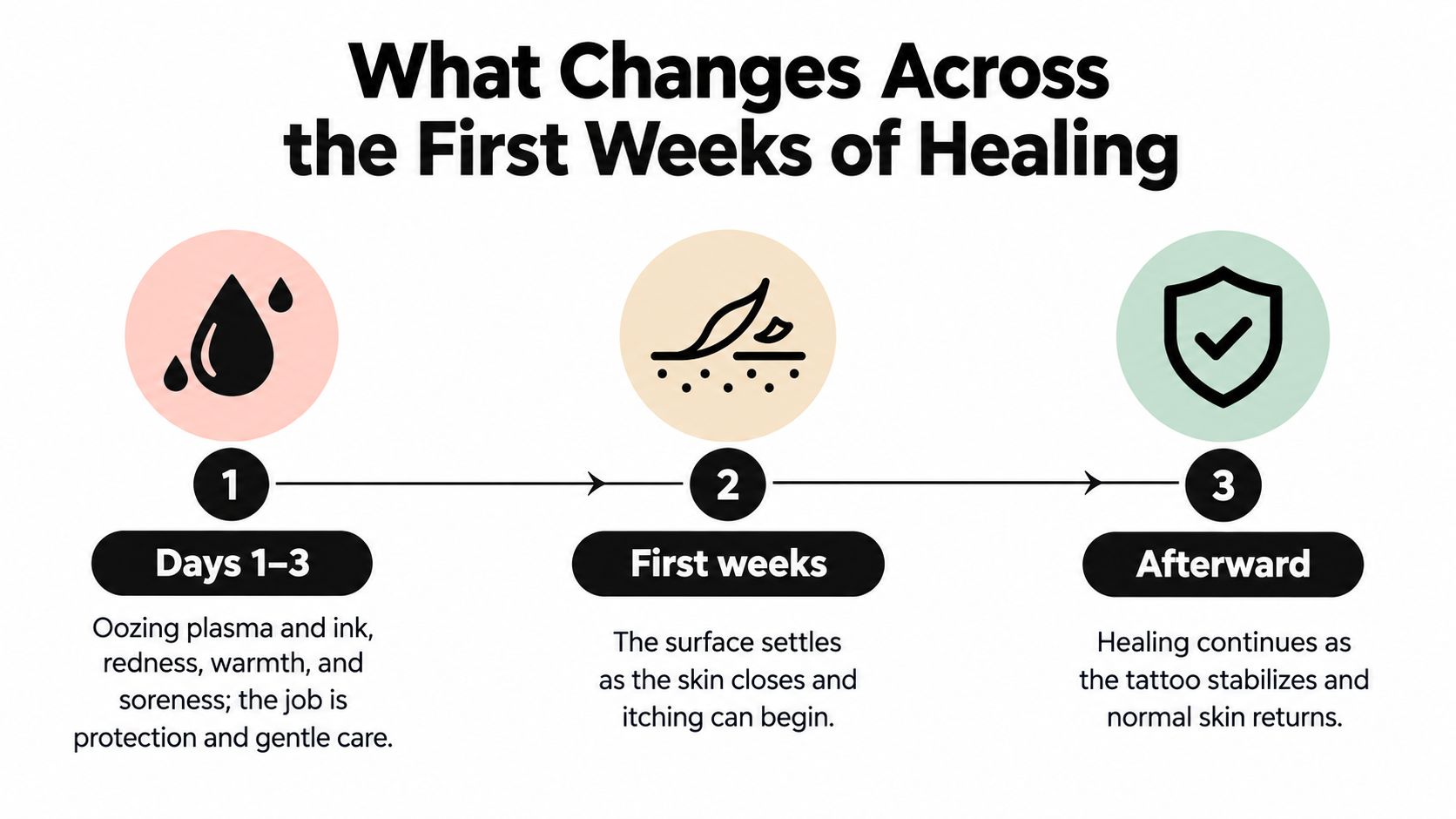
The same avoids don't weigh the same on day two and day twelve. Match what you see today to the stage, then keep the restriction that still applies.
Days 1 to 3
Plasma and a little ink can weep onto the wrap or the first paper towel. Redness, warmth, and soreness are common. The job is protection: a gentle wash if you were told to wash, a thin layer of the ointment that was named, and no new cover unless you were told to re-dress it.
This is the worst window for pools, lakes, rivers, hot tubs, baths, saunas, and hard workouts. Mayo Clinic guidance on tattoos and piercings advises avoiding pools, hot tubs, rivers, lakes, and other bodies of water while a tattoo heals. NHS guidance recommends avoiding chemically treated pools until scabs have fallen off, and some NHS clinical guidance advises avoiding exercise, saunas, bathing, and chlorinated water until healing is complete.
Days 4 to 14
Scabs and itch arrive. Flakes can be light dust or thicker plates, depending on size and how much the area moves. Moisturize with a fragrance-free lotion, wear loose clothes, and sleep so the piece isn't crushed. Still no scratching, picking, or peeling. Pulling a scab can extract pigment, delay closure, and increase secondary infection and scarring.
Elbows, knees, hands, fingers, and feet bend and bump, so they often need longer caution and sometimes a later touch-up. Upper arms and thighs are easier to keep still, which is why a friend's calf heal isn't your timeline.
After the surface closes
Sunscreen and sun-smart clothing protect pigment for years. They are not permission to soak or scrub while skin is still open or shedding. If redness, warmth, swelling, pain, or discharge is increasing, or a fever shows up, you are past "the itchy stage."
A dull, tight, flaking tattoo can still be on schedule. A tattoo that looks angrier today than yesterday is not.
When Itching and Redness Mean More Than Healing
Mild redness early, itch sitting on scabs, and light flaking are the ordinary cluster. They should trend calmer, not hotter, across a few days.
Allergic reactions are a different story from a dirty heal. They can show up days, weeks, or years later, and they can be triggered by pigment or by an aftercare cream. Washing well doesn't rule them out.
A Danish tattoo-clinic study reported that 11% of complications were bacterial infections and 37% were allergic reactions, as described in reporting on tattoo aftercare and safety. That split is why "it's probably normal" is a weak plan. In May 2025 the FDA warned consumers, tattoo artists, and retailers to avoid certain Sacred Tattoo Ink products contaminated with microorganisms. Careful studio habits still can't erase every ink or product risk.
What to skip while you watch
Don't scratch. Don't switch to a fragranced lotion because the drugstore one smells milder. Don't add an unverified "healing" cream on top of the product you were already using.
Your artist can clarify the written steps. They shouldn't be asked to diagnose a spreading rash. Mayo Clinic advises contacting a healthcare professional when infection or abnormal healing is suspected. Feeling wiped out after a long session is a separate issue from a hot, streaking tattoo, and a plain note on tattoo flu versus a skin problem helps you sort fatigue from a wound that is getting worse.
Normal healing versus red flags
What you notice | Usually part of healing | Get medical care |
|---|---|---|
Color and feel | Mild redness, warmth, and soreness that ease | Redness that spreads, increasing warmth, or pain that climbs |
Surface | Itch with scabs and light flaking you don't pick | Pus or other drainage, or a heal that stalls |
Beyond the piece | Itch that stays on the tattoo | Fever, red streaks, or a rash that travels past the tattoo |
Timing | Changes that fit the stage you're in | A reaction days, weeks, or years later after pigment or a new cream |
Check the mirror once, compare with yesterday, and don't add a new product to "see if it helps" before that call.
How Think Tank Tattoo Guides Aftercare Choices
A generic internet routine treats every tattoo like the same sticker. Placement, session length, and the dressing you left with change clothes, sleep, and when you can train again.

Think Tank Tattoo, on South Broadway in Denver, uses a complimentary consultation for design, placement, and timing. A non-refundable $100 deposit holds the appointment, the shop minimum is $100, and services are for clients 18 and older. Booking is by phone or email. That visit is where you ask how a rib piece, a hand, or a sleeve changes the first nights, instead of copying a stranger's ointment schedule.
What the written steps outrank
Sleeves, back pieces, and other multi-session work change return-visit timing. A long day on the back means sleep position and shirt fabric matter more than they do for a small upper-arm mark. One universal cream calendar is a poor fit.
After the session, keep the artist's dressing and cleansing plan. Use only the recommended thin ointment or a fragrance-free moisturizer. Skip sunscreen, cosmetics, and harsh cleansers on skin that is still open or peeling. Until the surface has closed, loose clean clothing beats tight garments that trap sweat.
The American Academy of Dermatology recommends broad-spectrum, water-resistant SPF 30 or higher once tattooed skin is sufficiently healed, applied 15 minutes before exposure and reapplied at least every two hours, in its guide to caring for tattooed skin. Tanning beds deliver concentrated UV to newly injured skin, so they stay off the list. NHS-style aftercare lines up with the same habits: gentle cleaning, patting dry, no rubbing, and the treating professional's dressing and moisturizer instructions.
A short walk-through of early care makes the order easier to remember than a screenshot of ten products.
Ask in the consultation who handles the wash plan, which signs go back to the artist, and which signs go to a clinician. The artist owns the dressing and the product name. A clinician owns infection and abnormal healing.
Protect the Piece and Take the Next Step
Treat the tattoo as an open wound until the surface has closed. Keep water brief and unsoaked. Block sun with clothing before sunscreen is appropriate. Let scabs leave on their own. Wear cloth that doesn't scrape or trap sweat.
One daily check for two weeks
Look once a day, in the same light if you can.
Edges: Redness should shrink, not march outward.
Pain and drainage: Worse pain, pus, or streaks are not the itchy stage.
Whole body: Fever means you call a healthcare professional, not a new cream.
If those signs are absent, stay on the plan you were given. Don't add a second ointment because day six feels tight.
If the piece is still on the calendar, book the complimentary consultation by phone or email, confirm the $100 deposit and the 18-and-older policy, and use that visit to lock placement, session timing, and the exact wash and ointment plan. Collectors adding a sleeve or a back piece can ask how the gaps between sessions change sun, gym, and clothing limits. The aim is a healed tattoo that still matches the art you walked out with, and a clear person to call for the next question.
Think Tank Tattoo walks Denver clients through placement, timing, and the aftercare limits that protect fresh ink while it heals. Bring your questions about water, sun, clothing, and which symptoms need a clinician, then leave with a plan that matches your piece. Visit Think Tank Tattoo to set up a complimentary consultation by phone or email.
Comments