
7 Color Geometric Tattoo Ideas to Inspire Your Design
Color changes a geometric tattoo more than its appearance. It changes how the eye reads scale, how clearly each shape separates from the next, and how much maintenance the design may need as pigments age. Geometric tattooing itself has ancient roots, with tattooed skin dating back at least 5,000 years and Ötzi the Iceman, who lived about 5,300 years ago, carrying simple geometric marks. The history of geometric tattooing is older than the modern category, which became especially prominent in the 2010s.
These seven color geometric tattoo ideas treat style as a design decision, not a gallery label. Each one connects structure with palette control, placement, artist expertise, session planning, longevity, and aftercare. Color and geometric work are both popular within the broader tattoo market, with an estimated 32% of U.S. adults having at least one tattoo, while geometric patterns and script or lettering together account for 43% of common tattoo designs. The reported tattoo market figures explain the interest, but your skin, placement, and artist should determine the final direction. A complimentary consultation at Think Tank Tattoo can help refine the design, placement, and timing before you commit.
Table of Contents
2. Watercolor Geometric Fusion Tattoos - Choose the artist for both skills
4. Minimalist Geometric Shapes With Bold Color Blocking - Let the body part shape the design
5. 3D Geometric Tattoos With Dimension and Shading - Review the artist's healed work
6. Geometric Constellation and Celestial Tattoos - Design for viewing distance
7. Geometric Animal and Nature Tattoos With Color - Match the animal to the anatomy
1. Mandala Geometric Tattoos With Vibrant Color
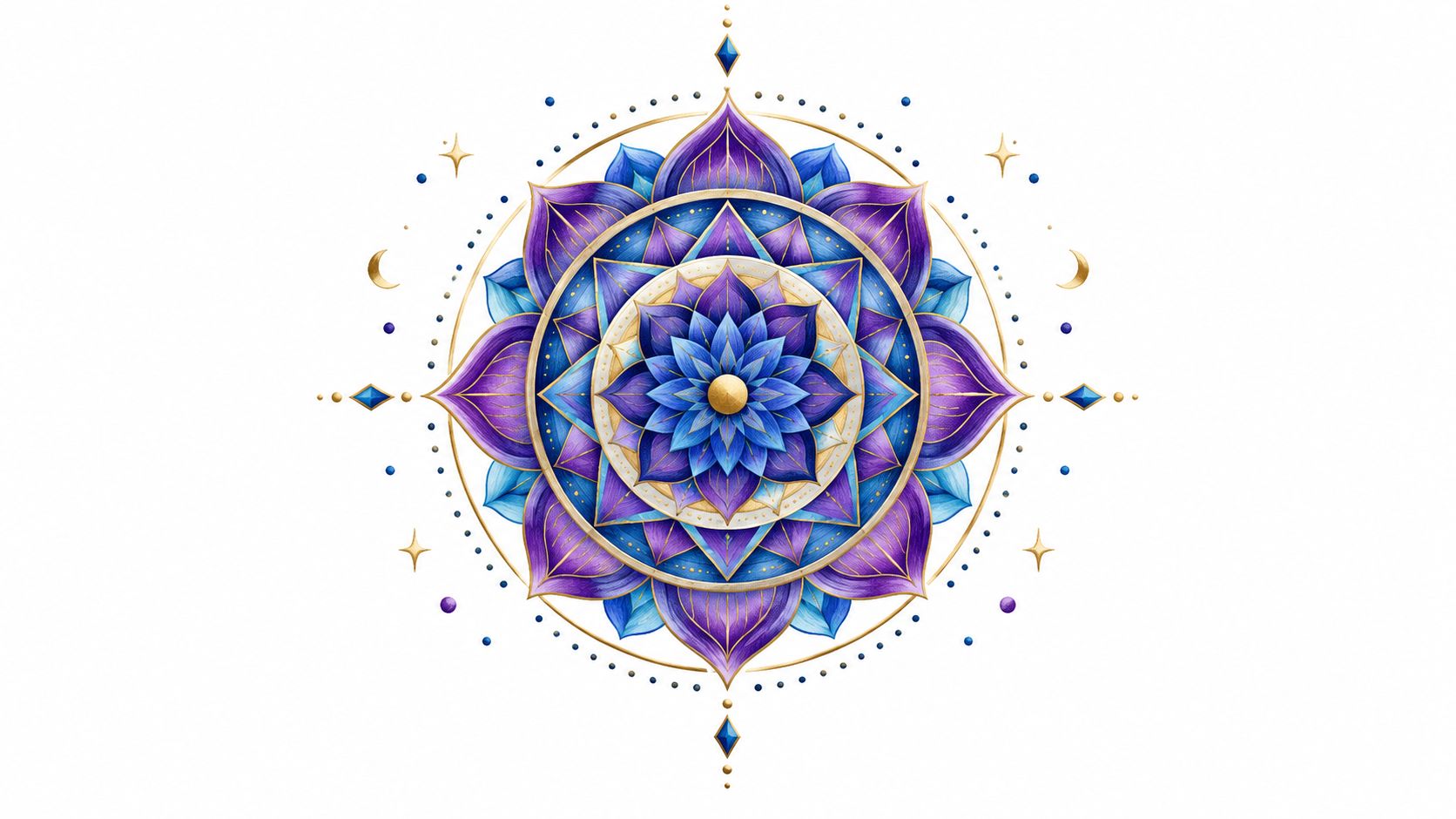
A mandala works because the structure gives color a clear route through the design. Concentric rings, repeated petals, radial lines, and controlled negative space create a visual rhythm, while color can establish a focal point at the center or guide attention outward. Blues and purples can create a cooler, meditative effect, while oranges, reds, and golds produce more heat and visual urgency.
The main decision is whether color should reinforce the symmetry or interrupt it. A chest-centered mandala with consistent color repetition feels formal and balanced. A shoulder mandala with a red-to-orange transition feels more dynamic, but uneven color distribution can make the composition look heavier on one side.
For larger work, a flat area such as the back, chest, thigh, or calf usually gives the artist more control than a highly mobile joint. A full back mandala can preserve circular geometry more effectively than the same design wrapped tightly around an elbow. Bring palette references, but let the artist adapt them to your skin tone, line weight, and intended scale.
Practical rule: The more detailed the mandala, the more important scale becomes. Tiny repeated shapes can lose separation if the design is compressed.
A mandala also deserves a realistic healing plan. Ask how the artist will divide outlining, shading, and color packing across appointments, and discuss when the piece can be assessed for a touch-up. Use the artist's aftercare instructions, avoid picking at peeling skin, and protect healed color from sun exposure with high-SPF sunscreen. For design language and placement ideas, review these symmetrical tattoo design principles.
2. Watercolor Geometric Fusion Tattoos
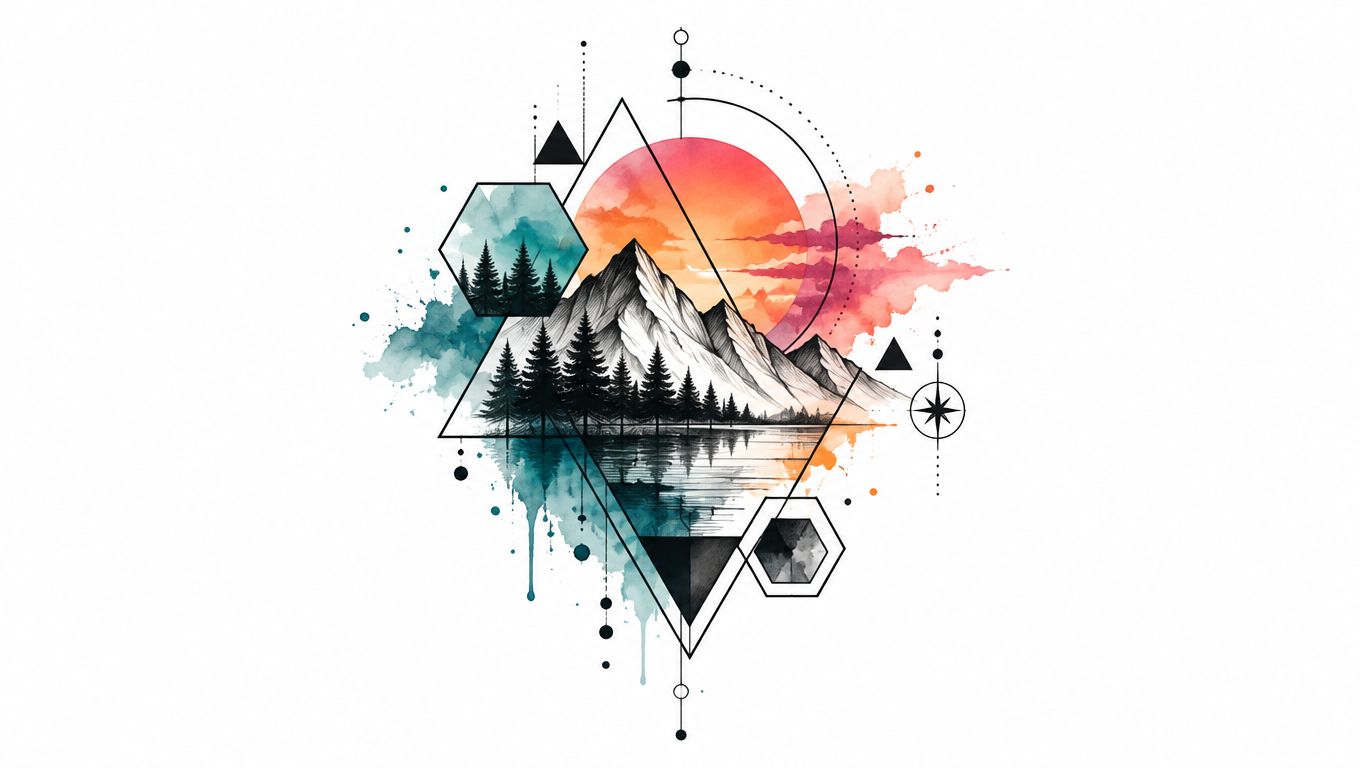
Watercolor geometry works when structure and atmosphere have distinct roles. Triangles, hexagons, circles, and linear grids establish the readable framework. A translucent-looking wash in teal, violet, coral, or blue can extend beyond selected edges, giving the design movement without softening every boundary.
The key decision is where the geometric structure ends and where the atmospheric color begins. If the wash spreads across the whole design, crisp edges and internal divisions may become difficult to read. If it stays fully contained, the watercolor character can disappear. Mark the wash boundary clearly in the mockup, including which edges fade, which remain hard, and where negative space should separate adjacent colors.
A sunset-colored triangle might keep its outer lines black while orange and pink fade beyond one edge. A galaxy-inspired hexagon can place blue and teal behind the pattern, provided the internal divisions retain enough contrast. Limit the palette before the session. Too many diluted colors can make a geometric composition look cloudy rather than deliberate.
Choose the artist for both skills
Select an artist whose portfolio shows accurate linework, controlled color transitions, and healed compositions that follow the body. One attractive watercolor piece does not prove geometric precision, and one precise geometric tattoo does not prove wash control. Review this watercolor tattoo style guide alongside healed examples from the artist.
Ask how the design will be divided across appointments. Outlining, geometric fills, and soft washes may require different working periods, especially on larger placements or areas that move frequently.
Pro Tip: Request a mockup with the wash boundaries labeled. Plan a later review specifically for diluted areas, since a touch-up may need to restore selected color without strengthening every geometric line.
Sun protection still matters for pale palettes. Follow the artist's healing instructions, avoid picking peeling skin, and ask how placement and chosen pigments may affect maintenance. This geometric tattoo durability guide offers additional background.
3. Sacred Geometry With Metallic Color Accents
Sacred geometry can carry a strong symbolic presence through the pattern alone. Flower of life arrangements, interlocking circles, spirals, and Platonic solids create an ordered foundation. Metallic-looking gold, silver, or copper accents should support that foundation rather than compete with it.
Think of metallic color as a highlight layer. Gold can trace selected intersections in a flower of life. Copper can warm the center of a geometric spiral. Silver can define the edges of a three-dimensional solid. Covering every line in a metallic shade may sound dramatic, but it can flatten the hierarchy and make the design harder to read.
The artist should also understand that tattoo ink doesn't behave like paint or foil on paper. The finished result depends on pigment, skin tone, saturation, contrast, and healing. Ask to see healed examples of similar work, not only fresh photographs. Discuss whether the metallic color is being used for fine accents, filled shapes, or broader sections, because each choice affects visual weight.
The strongest sacred-geometry tattoos leave some areas quiet. Negative space gives the accent color somewhere to work.
Placement should match the pattern's precision. A flat sternum, upper back, chest, or thigh can support a carefully centered composition. Areas that bend or twist may distort circles and symmetrical intersections. During consultation, ask the artist to map the design to your body rather than approving a generic image in isolation.
Color selection should happen early, particularly if the design has spiritual symbolism that depends on a deliberate palette. Think Tank Tattoo's guidance on sacred geometry tattoo designs can help you identify the difference between a meaningful structural system and decoration added after the fact.
4. Minimalist Geometric Shapes With Bold Color Blocking
Bold color blocking looks simple because the structure is simple. A circle, square, triangle, or a few intersecting lines leaves no room for sloppy spacing, uneven saturation, or uncertain edges. Every choice shows.
Treat the palette as a design decision, not decoration. Navy beside white feels restrained and architectural. Orange beside blue creates sharper tension. Red next to black carries more visual weight, but the black can overpower the composition if the colored shape is too small. The mockup should show exactly where each fill stops and where the skin break begins.
Let the body part shape the design
Forearm, outer upper arm, calf, and shoulder all handle bold blocks well because the forms stay readable. Curved areas need more adjustment. A rectangle that looks balanced on a screen can tilt on the forearm, and a circle can flatten near a joint.
Ask the artist to place the stencil while you move normally. Flex the arm, rotate the wrist, and let the placement be judged in motion, not only in a static pose. That check shows whether the geometry still reads cleanly and whether the piece should stay small or be scaled up to protect the separation between shapes.
Use saturated color where you want the eye to land, and keep enough skin or black linework around it for contrast. Specify the gap width between fills in the stencil, even if it is only a few millimeters, and confirm that the negative space still reads when the forearm bends. Ask your artist how flat fills and open space will hold their edges on your chosen placement. Healed work matters here, because clean blocks rely on crisp boundaries as much as on color choice.
5. 3D Geometric Tattoos With Dimension and Shading
A three-dimensional color geometric tattoo depends on a consistent visual explanation. The viewer needs to understand where the light comes from, which planes face forward, and which surfaces recede. If one cube has a bright upper plane while another uses an unrelated highlight direction, the illusion breaks.
Cubes, spheres, interlocking forms, and impossible structures all benefit from a restricted lighting plan. Darker color can push a plane backward. A lighter accent can pull an edge forward. A narrow highlight can suggest a reflective surface, but too many highlights can make the design look noisy instead of dimensional.
Review the artist's healed work
This style demands more than clean lines. Look for evidence of perspective, smooth gradients, controlled shadows, and consistent color packing. A portfolio full of realistic portraits doesn't automatically demonstrate the ability to build precise geometric volume. Ask specifically for healed 3D geometric tattoos and discuss how the artist handles movement on the intended body area.
A floating cube may suit the forearm or outer calf, where the form can remain visible from several angles. An optical illusion that wraps around a joint may be more dramatic, but movement can interrupt the perspective. Large interlocking structures often need enough surface area for the planes and shadows to remain distinct.
The medical side deserves attention too. A dermatology review of a 301-patient retrospective complication series recorded 308 tattoo-related complications, with inflammatory reactions lasting more than three months making up most medical consultations. The review of tattoo-related risks reinforces why you should disclose skin sensitivities, follow professional aftercare, and contact a qualified medical professional if a reaction persists or worsens.
For a visual example of how color blocking and geometric complexity can be compared, watch the following reference:
6. Geometric Constellation and Celestial Tattoos
Celestial geometry gives you two systems to balance, the astronomy and the composition. A constellation can be rendered as a simple network of dots and lines, or it can sit inside a larger framework of circles, polygons, arcs, and orbit-like paths. Color then establishes atmosphere, symbolism, or a focal point.
Start with the specific star map you want. A zodiac sign, a favorite constellation, or a date connected to a personal event can all guide the design, but the reference should be clear before the artist interprets it. Ask the artist to verify the arrangement if astronomical accuracy matters to you. A visually attractive pattern isn't necessarily the constellation you intended.
Color can be subtle or dominant. Galaxy blues and nebula purples create depth behind fine lines, while gold accents can identify selected stars. Birth-month colors or a muted monochrome palette may connect the tattoo to an existing collection without overwhelming it.
Design for viewing distance
Small celestial tattoos often look beautiful in a sketch and lose clarity when reduced to skin. If the design includes tiny text, dates, coordinates, or numerous star points, discuss whether the elements need more scale. A shoulder, upper back, chest, or outer arm can provide a readable field, while a narrow wrist placement may force uncomfortable compromises.
Artist selection question: Can the artist show both precise linework and controlled color atmosphere in healed tattoos?
Think about how the piece will sit beside other work. A constellation with gold accents may bridge colorful tattoos, while a restrained blue and black design can act as a quieter anchor. The trend toward color in geometric work includes muted lavenders, dusty blues, muted corals, and stronger accents, but recent tattoo trend coverage doesn't replace a placement-specific consultation. The palette still has to preserve contrast and structure on your body.
7. Geometric Animal and Nature Tattoos With Color
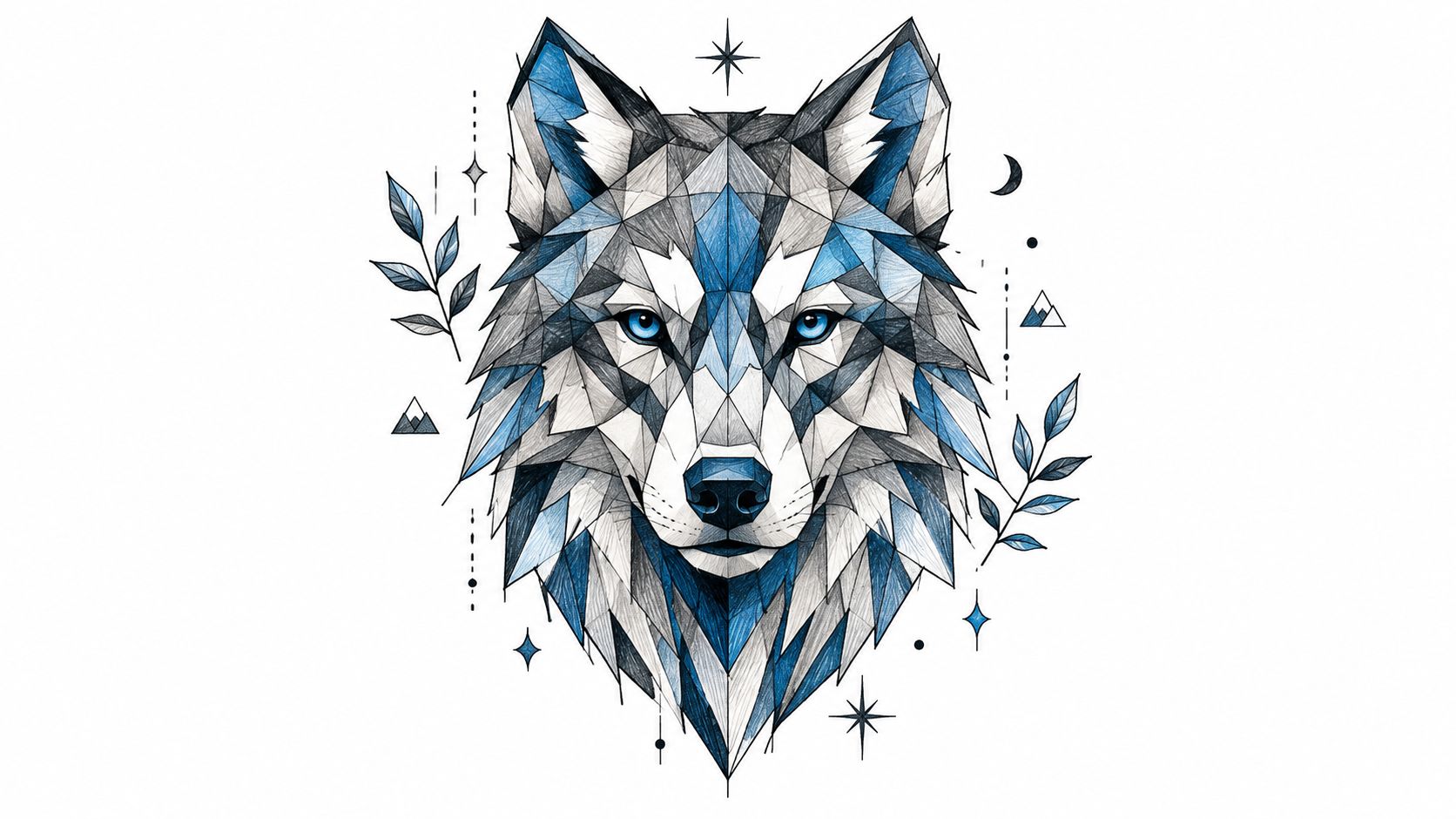
A geometric animal tattoo has to satisfy two visual tests. The animal must remain recognizable, and the geometric construction must remain visible. Color can help separate the planes of a lion, wolf, eagle, or deer, but it shouldn't cover the landmarks that make the subject readable.
Start with the animal's strongest feature. For a lion, that might be the mane and the shape of the face. For an eagle, it may be the wingspan and feather direction. For a wolf, the ears, muzzle, and angular cheek structure often carry the identity. Ask the artist to show an initial sketch before discussing detailed color, because the geometric interpretation needs to work in black linework first.
A gold and orange mane can create a clear focal zone, while blue and silver facets can make a wolf feel cooler and more graphic. Green and brown may suit a deer surrounded by botanical geometry, but gradients should follow the form rather than appear as random decoration.
Match the animal to the anatomy
Flying birds often benefit from the shoulder or upper back, where the wings can follow a broader plane. A vertical wolf or deer can suit the upper arm, calf, or thigh. A compact animal head can work on the forearm, but the artist needs enough room for the linework to remain distinct as the tattoo ages.
Bring several references that show the animal from useful angles, not a single image you expect to be copied. Also explain what the color means to you. Is it meant to emphasize the eyes, the mane, the environment, or the animal's symbolic role? That answer helps the artist decide where to use saturation and where to leave breathing room.
Bold outer lines can protect the silhouette, while finer internal lines describe facets and texture. Dense color should stay subordinate to the animal's structure. If every polygon has a different hue, the design may read as a mosaic instead of a living subject.
7-Style Color Geometric Tattoo Comparison
Style | 🔄 Complexity | ⚡ Resources & Cost | ⭐ Expected outcomes | 📊 Key advantages | 💡 Ideal use cases |
|---|---|---|---|---|---|
Mandala Geometric Tattoos with Vibrant Color | High, intricate radial symmetry; multi-session (3–5) | High, expert linework, long chair time, premium color inks | ⭐⭐⭐, very strong visual & spiritual impact | Photogenic, highly customizable, ages well when executed by pros | Spiritual collectors; large-scale focal pieces; clients wanting bold color |
Watercolor Geometric Fusion Tattoos | High, requires both geometric precision and watercolor technique | Medium–High, skilled artist, color theory expertise, regular touch-ups | ⭐⭐, highly artistic and unique but color stability varies | Striking contrast of order vs. fluidity; each piece is distinctive | Creative clients seeking one-of-a-kind, medium-sized pieces |
Sacred Geometry with Metallic Color Accents | High, mathematical precision plus metallic application | High, specialty metallic inks (costly) and expert execution | ⭐⭐⭐, meaningful, dimensional results with reflective accents | Deep symbolic meaning; unique reflective quality in photos | Spiritually-minded collectors; clients wanting symbolic, premium work |
Minimalist Geometric Shapes with Bold Color Blocking | Low, simple shapes and flat fills; quick sessions | Low, shorter sessions, less ink/time, budget-friendly | ⭐⭐, strong graphic impact with long-lasting color | Fast to execute; ages well; versatile placement; cost-effective | First-time clients; professionals; those seeking modern minimalism |
3D Geometric Tattoos with Dimension and Shading | Very High, advanced shading, perspective rendering; 2–3 sessions | Very High, highly specialized artist, longer sessions, higher budget (+30–50%) | ⭐⭐⭐, dramatic, eye-catching three-dimensional illusion | Exceptional visual depth; conversation-starting; showcases skill | Experienced collectors; investment-level artwork; optical-illusion lovers |
Geometric Constellation and Celestial Tattoos | Medium, precise star placement and clean lines | Medium, reference materials, accurate mapping, moderate color work | ⭐⭐, personally meaningful and visually appealing | Highly personal (zodiac/constellations); combines science & art | Astronomy/astrology enthusiasts; clients wanting personalized symbolism |
Geometric Animal and Nature Tattoos with Color | Medium–High, anatomy + geometric interpretation; 2–3 sessions | Medium, skilled artist balancing recognition and abstraction | ⭐⭐, distinctive, symbolic, and scalable results | Unique animal symbolism; contemporary aesthetic; versatile sizes | Nature lovers; clients seeking recognizable yet stylized animal art |
Turn Inspiration Into a Tattoo You Can Live With
Choose the visual priority before choosing the reference. If symmetry matters most, a mandala or sacred-geometry design may be the right direction. If atmosphere matters more, watercolor fusion or celestial color may suit you. If you want immediate graphic impact, bold color blocking offers a cleaner route. For recognizable subject matter, geometric animals give you a balance between representation and abstraction.
Then test the practical decisions:
Palette: Decide whether color will act as an accent, a contained fill, a gradient, or the main subject. Ask how the selected colors may behave as they heal.
Placement: Check the design on the actual body area while standing and moving. Joints, narrow spaces, and high-movement zones can distort precise geometry.
Scale: Make sure circles, small gaps, text, and internal facets have enough room to remain readable.
Artist portfolio: Compare healed examples that combine both geometric precision and color execution. A generic tattoo reference can't show you how a particular artist works on skin.
Consultation questions: Ask about color contrast, line weight, stencil placement, session planning, healing, and the process for evaluating a future touch-up.
Timing: Allow the artist to divide complex work into sensible appointments and let the skin heal according to their instructions before additional work.
Aftercare: Clean and protect the fresh tattoo exactly as directed. Once healed, use unscented lotion as advised and protect the color from sun exposure with high-SPF sunscreen.
Pigment can remain in the deep dermis and local lymph nodes for more than 40 years, and red ink is the color most frequently associated with adverse reactions, although any pigment can cause a reaction. This 2024 clinical review is a useful reminder to discuss allergies, previous reactions, and concerns with your artist and a medical professional when appropriate.
Think Tank Tattoo offers complimentary consultations in Denver, where you can discuss design direction, placement, and timing before booking. The studio requires a non-refundable $100 deposit, has a $100 shop minimum, and serves clients 18 and older. Booking is available by phone or email, and you can also explore a relevant tattoo shop referral program if you're comparing local options.
Bring your preferred references, but don't ask an artist to reproduce a design without adapting it to your anatomy and goals. Confirm the mockup before inking, follow the healing instructions you receive, and treat long-term sun protection as part of the tattoo plan rather than an afterthought.
Think Tank Tattoo offers complimentary consultations for custom color geometric tattoos, including help with palette, placement, scale, and session timing. Visit Think Tank Tattoo to discuss your design with the Denver team, ask practical questions, and plan a piece built for your skin and your goals.
Comments